
In few global sports does the playing surface exert as profound an influence on the outcome as in cricket. While a tennis court, basketball hardwood, or football pitch offers predictable consistency across venues, a cricket pitch is a living, dynamic ecosystem. Twenty-two yards of compacted soil, clay, and grass dictate every interaction between bat and ball, transforming tactical blueprints long before a single delivery is bowled.
Understanding pitch curation is no longer just the domain of veteran head groundskeepers operating heavy rollers. Modern captains, tactical analysts, and players must evaluate soil chemistry, compaction rates, and atmospheric moisture to anticipate how a surface will behave across hours or days. From the thunderous bounce of hard, dry decks to the slow, crumbling turn of sun-baked tracks, pitch science remains cricket’s ultimate strategic variable.
The Geology Beneath the Deck: Clay Content and Soil Mechanics
At the foundation of every cricket pitch lies its soil composition, specifically the proportion and type of clay present in the turf matrix. Groundskeepers select specific clay varieties—often rich in expanding minerals like smectite or montmorillonite—because of their unique ability to shrink, swell, and bind under pressure.
When a high-clay pitch is heavily rolled and dried, the soil particles lock together to form a dense, rock-hard block. This rigidity allows kinetic energy from a fast bowler's delivery to transfer directly into the ball upon impact, yielding true, high bounce and fast pace off the deck. Conversely, soils high in silt or fine sand lack this cohesive bonding strength; they compress less effectively and absorb the ball's energy, resulting in low, sluggish bounce.
- High-Clay Soil (40%+ Clay): Yields maximum structural density when dry, producing fast decks with steep, true bounce.
- Silty Soil Profiles: Tend to crumble under foot traffic, encouraging low bounce and early spin sideways.
- Sandy Clay Blends: Offer rapid water drainage but struggle to maintain surface integrity during multi-day matches.
The Art of Moisture Control: Rolling, Compaction, and Evaporation
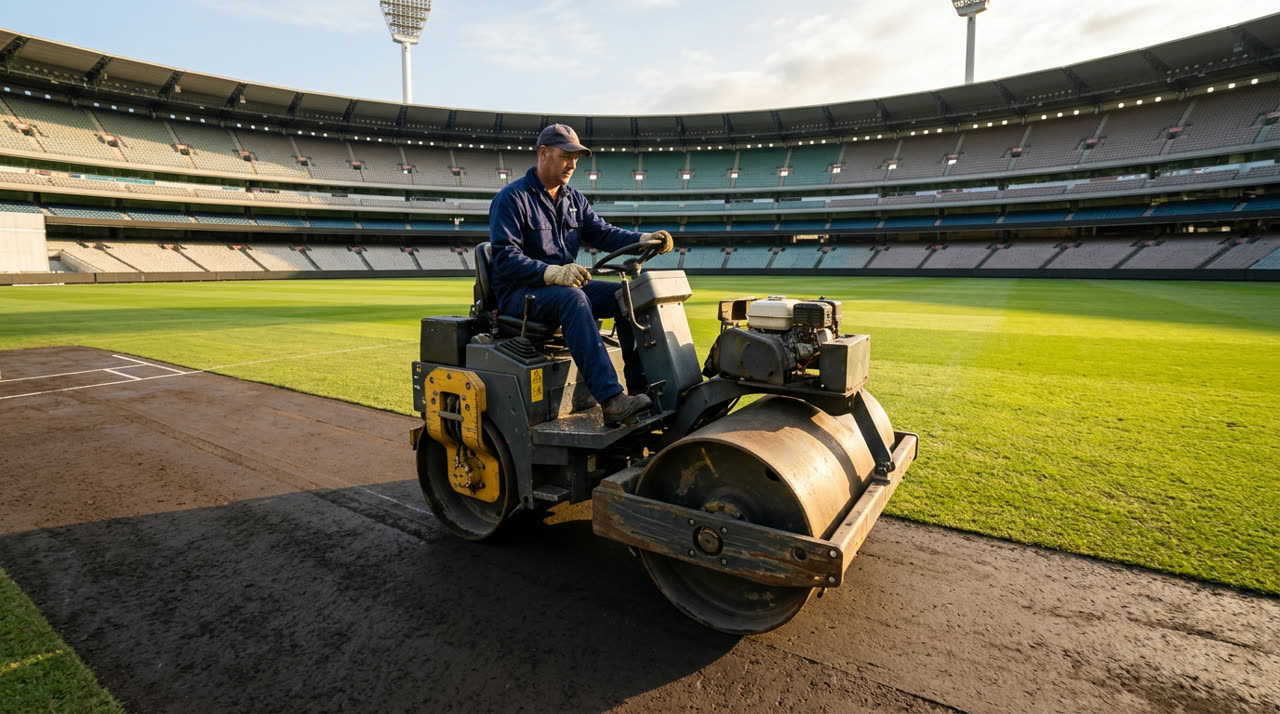
Moisture is the primary control knob for pitch preparation. The balance between water content and compaction determines whether a pitch acts as a batter’s paradise or a bowler’s dream. During preparation, groundskeepers flood the deck to soften the soil, allowing heavy rollers to squeeze out air pockets and compact the clay layers into a unified mass.
As the pitch dries out under solar heat, moisture evaporates from the top layer downwards. If a pitch retains subsurface moisture while the top layer dries hard, it can create treacherous playing conditions. The ball may seam unpredictably when striking damp pockets or pop up unexpectedly off hardened zones. Controlling this evaporation rate through shaded covers and strategic watering schedule is a fine delicate balance.

Grass Management: Seam Movement, Friction, and Ball Pace
The vegetation growing on top of the 22-yard strip plays a dual role in pitch dynamics. Living grass acts both as a structural anchor for the soil and as a mechanical lubricant for the cricket ball. A healthy root system binds the topsoil together, preventing early surface degradation and keeping the pitch firm across long periods of play.
From a tactical standpoint, the height and density of grass foliage alter seam movement and surface friction. Fresh, green grass blades reduce friction when the ball lands, allowing it to skid through to the wicketkeeper without losing significant forward speed. When the ball’s raised seam catches these grass blades, it nips sideways off the deck—a phenomenon known as seam movement. As the grass dies off or is trimmed short, surface friction increases, scuffing the ball quickly and slowing its transit.
Atmospheric Interaction: How Overhead Conditions Alter Surfaces
A cricket pitch does not exist in isolation from its surrounding environment; it reacts dynamically to humidity, wind, solar radiation, and cloud cover. Heavy cloud cover and high relative humidity suppress evaporation, trapping surface moisture within the upper turf layer. This causes the ball to damp down slightly on impact, skidding through low and giving fast bowlers an edge.
Conversely, bright sunlight and low humidity act as an oven, accelerating surface drying and expanding tiny surface stress lines into visible cracks. Wind speed also plays a subtle role by drying the top layer unevenly across the two ends of the wicket strip. Captains must account for these microclimatic factors when deciding whether to bat or bowl after winning the toss.
Wear and Tear: Cracks, Footmarks, and Day-Five Breakdown
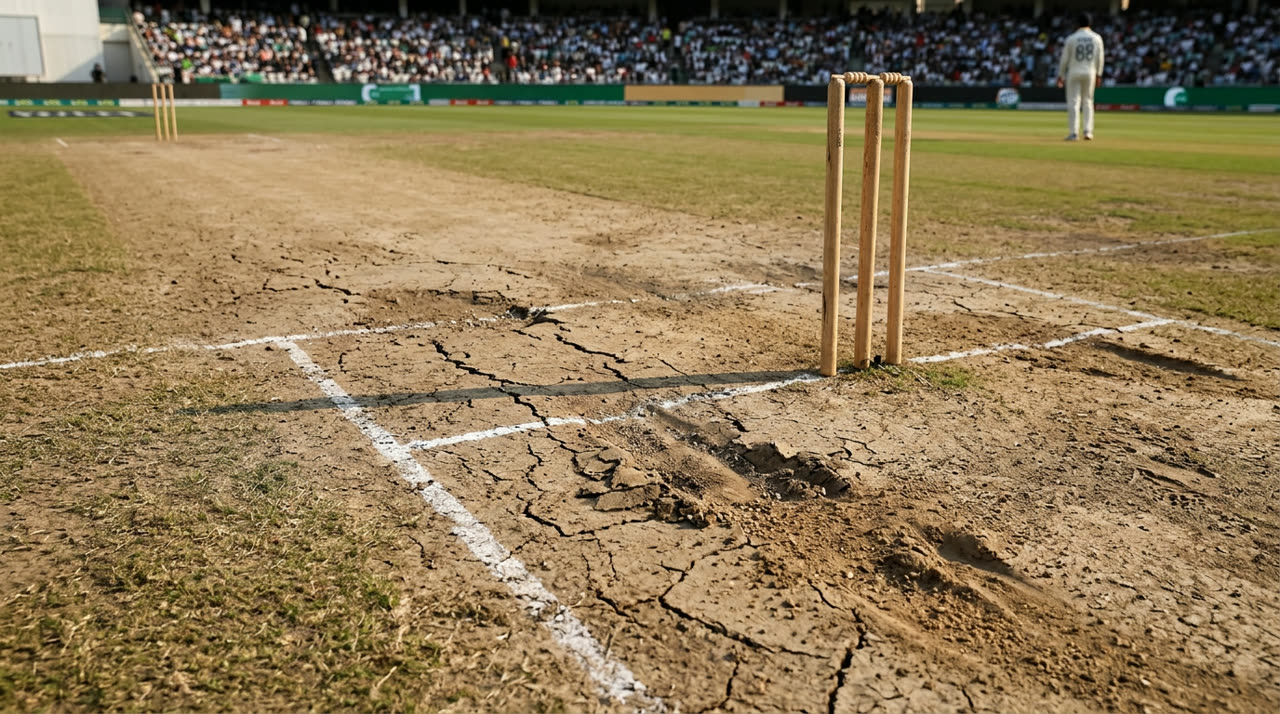
In long-format cricket, the physical evolution of the pitch over several days creates a constantly shifting tactical landscape. As fast bowlers pound their heels into the landing areas, they create rough, churned-up depressions on either side of the stumps. These footmarks provide natural footholds of loose dust and uneven terrain.
As sun exposure bakes the deck across four or five days, natural fractures widen along the clay lines. When spin bowlers land the ball on these cracks or deep footmarks, the ball grips unevenly, deviating sharply off line or keeping unexpectedly low. Managing this natural pitch breakdown dictates team strategy, often making batting last on a deteriorating pitch one of the hardest challenges in world sport.
Pitch Standardisation vs. Home Advantage in Modern Cricket
The debate over pitch preparation touches the core of international sport economics and ethics. Host nations naturally tailor surface conditions to favor their home team's traditional strengths—whether that involves preparing dry, turning decks for elite spin attacks or green, bouncy wickets for premier pace bowling units.
However, international governing bodies enforce quality controls to prevent dangerous or substandard pitches that deteriorate too rapidly or exhibit excessive, unpredictable bounce. Modern groundskeepers must balance national tactical preferences with strict regulatory guidelines, ensuring a fair contest between bat and ball that lasts long enough to satisfy broadcasting schedules and spectators.
Cricket’s unique charm lies in its resistance to uniform, artificial standardization. While advanced soil testing, specialized rolling machinery, and moisture sensors have made pitch curation far more precise, natural forces still dictate how the surface behaves hour by hour.
The 22-yard strip remains a captivating battleground where geology, botany, meteorology, and athletic skill converge. Mastering the science behind the pitch allows teams to turn environmental variables into tactical advantages, ensuring that no two matches are ever contested on the exact same stage.






0 Comments