
Walking a Golden Retriever should ideally be one of the most enjoyable parts of your day. With their cheerful demeanor, soft coats, and affectionate personalities, these dogs make fantastic walking companions. However, when an enthusiastic seventy-pound Golden decides to haul you down the sidewalk toward every squirrel, person, or fire hydrant, a relaxing stroll quickly becomes a frustrating physical workout.
Because Golden Retrievers are naturally energetic, curious, and eager to explore their environment, leash pulling is one of the most common complaints among owners. Fortunately, teaching your Golden Retriever to walk on a loose leash is entirely achievable with patience, consistency, and the right approach. In this guide, we will explore why Golden Retrievers pull and lay out a clear, step-by-step training strategy to build calm, enjoyable leash manners.
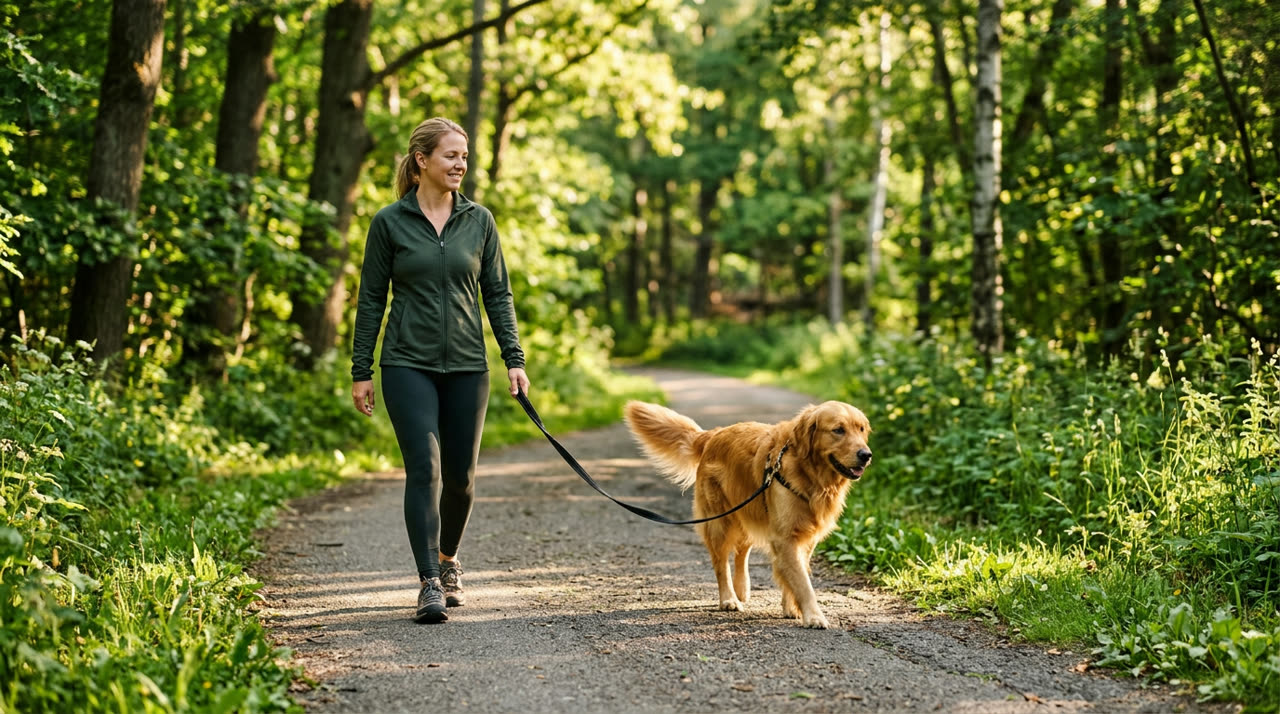
Understanding Why Golden Retrievers Pull on the Leash
Before you can correct leash pulling, it helps to understand why your dog does it in the first place. Dogs do not pull out of dominance or a desire to disrespect you. In reality, leash pulling is functional behavior: pulling gets them closer to things they find interesting. If pulling forwards allows them to reach a bush they want to sniff or a friendly neighbor they want to greet, the behavior is instantly reinforced.
Furthermore, dogs naturally walk at a faster pace than humans. While our comfortable walking pace is around two to three miles per hour, a Golden Retriever's natural trot is significantly faster. When restricted by a short tether, their default reaction is to lean forward. Combine this with opposition reflex—a natural instinct to pull against pressure—and you end up in a perpetual tug-of-war.
Selecting the Right Gear for Leash Training
Using the appropriate equipment makes a massive difference in your training success while keeping your dog safe and comfortable. The goal of gear is not to pain or discomfort the dog into submission, but rather to give you physical leverage while you teach proper habits.
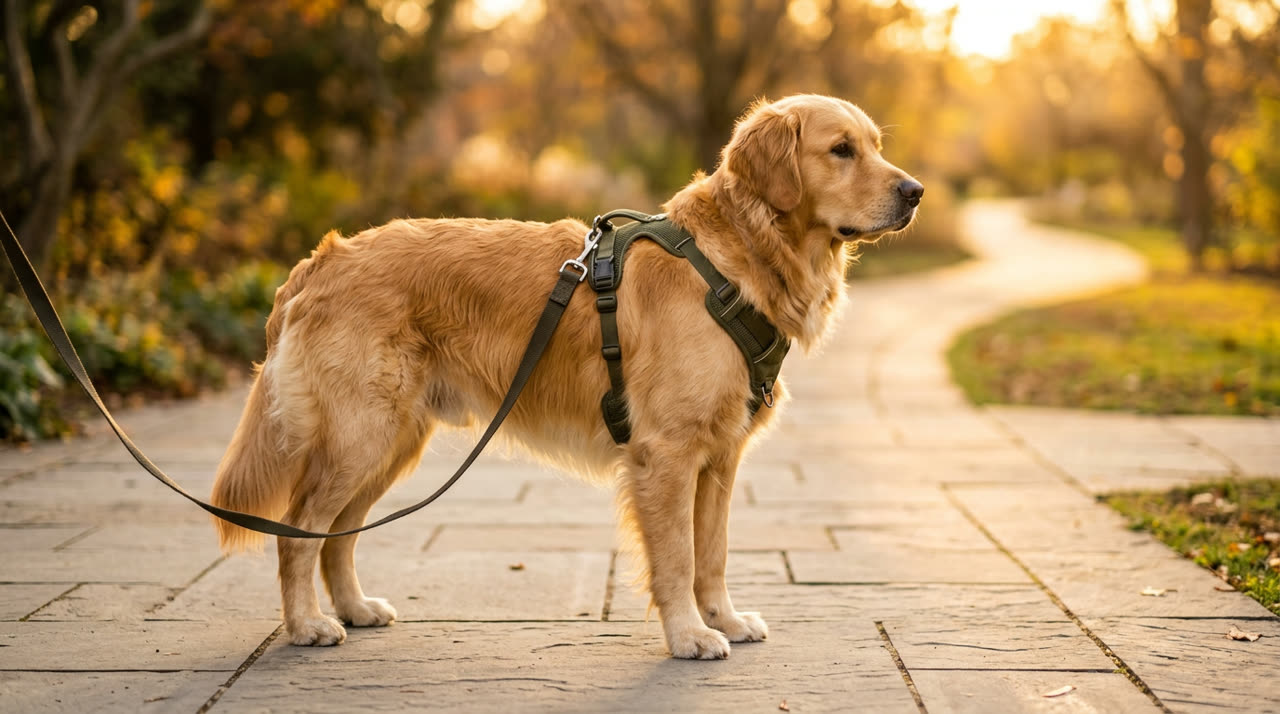
A well-fitted front-clip harness is usually the best tool for strong pullers. When your dog pulls while wearing a front-clip harness, the leash tension gently redirects their torso back toward you, making forward momentum difficult without causing neck strain.
- Front-Clip Harness: Redirects forward momentum toward you naturally without placing pressure on the throat or trachea.
- Standard 6-Foot Nylon or Leather Leash: Provides optimal control and distance. Avoid chain leashes or heavy metal hardware that adds unnecessary weight.
- Avoid Retractable Leashes: Flexi-leads actually teach dogs to pull because constant pressure is required to extend the cord.
- Skip Pinch or Choke Collars: Aversive collars can create negative emotional associations with outdoor stimuli like other dogs or people.
The 'Red Light, Green Light' Method
The fundamental rule of loose leash walking is simple: moving forward is the ultimate reward. The 'Red Light, Green Light' technique relies on making sure pulling never results in reaching a destination, while a slack leash always allows movement.
Start walking with your Golden in a quiet area with minimal distractions, such as your hallway, backyard, or driveway. Hold the leash comfortably with both hands near your waist, leaving enough slack for the leash to form a loose 'J' curve between you and your dog. Begin walking forward at a brisk, purposeful pace.
The instant you feel tension on the leash, freeze in your tracks like a statue. Do not jerk the leash back or yell. Simply stop and wait. Your dog will eventually pause, turn around, or step back to figure out why movement stopped. As soon as the leash goes slack again, praise softly and resume walking forward ('Green Light'). Repeat this consistently every single time tension occurs.
The 'Change of Direction' Strategy for High-Energy Pullers
If your Golden Retriever is particularly stubborn or focused on an object ahead, stopping in place may not fully engage their brain. In these situations, turning around completely is an effective way to reset their focus.
When your dog reaches the end of the leash and starts pulling, say a cheerful cue word like 'Turn!' and immediately turn 180 degrees to walk in the opposite direction. Do not yank your dog, but move briskly away. Your Golden will have to turn around and catch up with you to keep going.
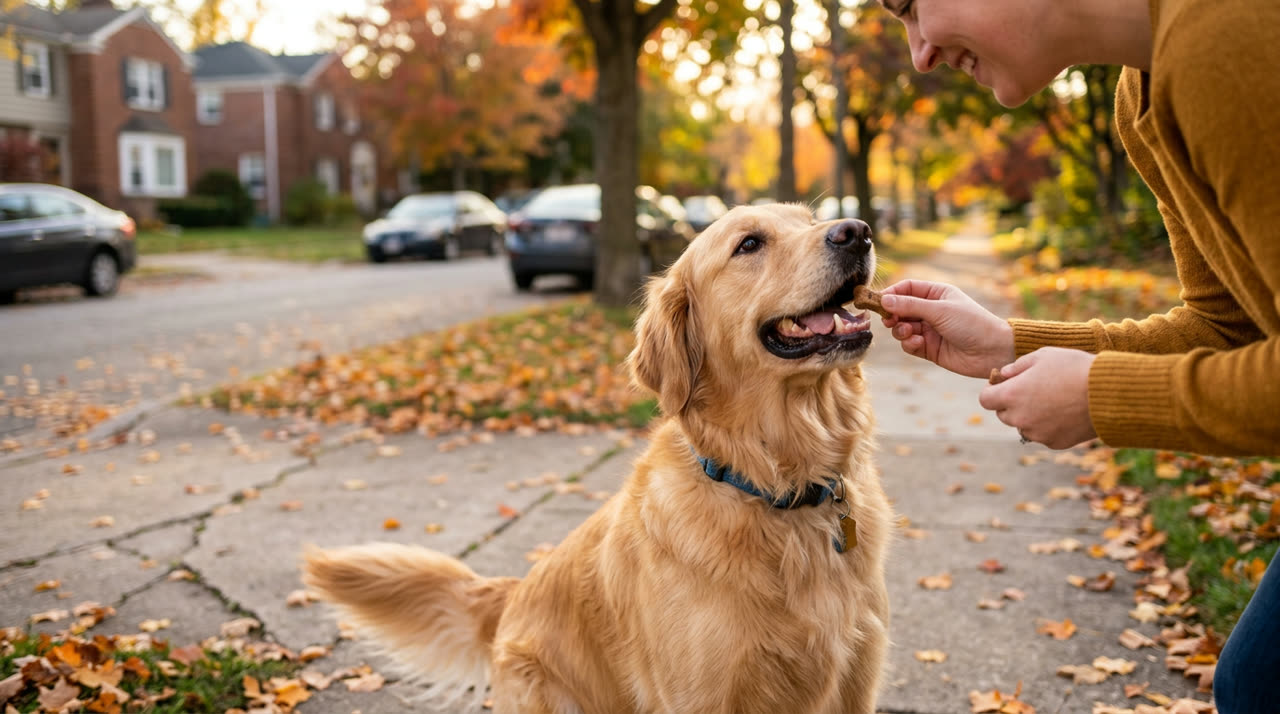
- Mark the Pivot: As your dog turns to catch up and aligns with your side, deliver a high-value treat right at your hip level.
- Keep Movements Unpredictable: Turn left, turn right, or reverse direction frequently during early practice sessions so your dog learns to pay close attention to your body language.
- Use High-Value Rewards: Use small pieces of real chicken, cheese, or soft commercial training treats to maintain high motivation outdoors.
- Short Practice Sessions: Limit dedicated leash practice to 5 to 10 minutes at a time to prevent mental fatigue for both you and your Golden.
Rewarding the Ideal Heel Position
Stopping unwanted pulling is only half the equation; you also need to teach your Golden Retriever where you do want them to walk. The goal is to make standing or walking right beside your hip the most rewarding place on earth.
Begin rewarding your dog frequently whenever they happen to be walking beside you with a slack leash. Deliver treats directly beside your pant leg so your dog associates that specific spatial zone with food delivery. Over time, your Golden will naturally drift into this 'sweet spot' because that is where good things happen. As their consistency improves, you can gradually fade out constant treats and reward every ten paces, then every block.
Common Mistakes That Set Back Training
Leash training takes time, and small inconsistencies can cause confusion for your Golden Retriever. Avoiding a few common pitfall habits will accelerate your progress and keep training positive.
One major mistake is allowing pulling on 'casual' walks while expecting perfect manners on 'training' walks. Dogs do not distinguish between different types of walks based on your intentions. If you allow your Golden to pull you to the dog park on Tuesday, they will pull you on the neighborhood sidewalk on Wednesday. Consistency across all family members who walk the dog is essential.
- Inconsistent Rules: Ensure everyone in the household enforces the same zero-tolerance policy for leash tension.
- Holding the Leash Too Short: Pulling the leash taut continuously creates constant tension, trigger instinctual opposition pulling.
- Skipping Sniff Breaks: Golden Retrievers need mental stimulation. Build dedicated 'sniff breaks' into walks as a reward for polite walking.
- Training While Stressed or Rushed: If you only have ten minutes to get your dog to potty before work, use a harness and focus on business rather than getting frustrated during a strict training session.
Teaching a Golden Retriever to walk politely on a leash requires patience, clear communication, and consistent daily reinforcement. Remember that your dog isn't trying to frustrate you; they are simply excited about the wide world around them. By rewarding loose leash position and making sure pulling never pays off, you will build a solid foundation of trust and teamwork.
Celebrate small improvements along the way, keep training sessions light and fun, and soon enough, your Golden Retriever will be walking peacefully at your side on every adventure.





0 Comments