
Golden Retrievers are practically synonymous with water. Originally bred in the Scottish Highlands to retrieve waterfowl from icy lakes and rivers, these dogs possess physical adaptations specifically designed for aquatic environments. Their webbed paws, water-repellent double coat, and sturdy athletic frame make them naturally inclined to enjoy a good swim.
However, a natural affinity for water does not mean every Golden Retriever is automatically a proficient or safe swimmer from day one. Swimming requires confidence, physical stamina, and proper technique. Without guidance, even water-loving dogs can panic, suffer from exhaustion, or encounter hidden environmental hazards. Understanding how to introduce your Golden Retriever to water safely—and how to manage potential risks—ensures that every aquatic adventure remains fun, healthy, and stress-free.
The Instinct vs. Reality of Golden Retriever Swimming
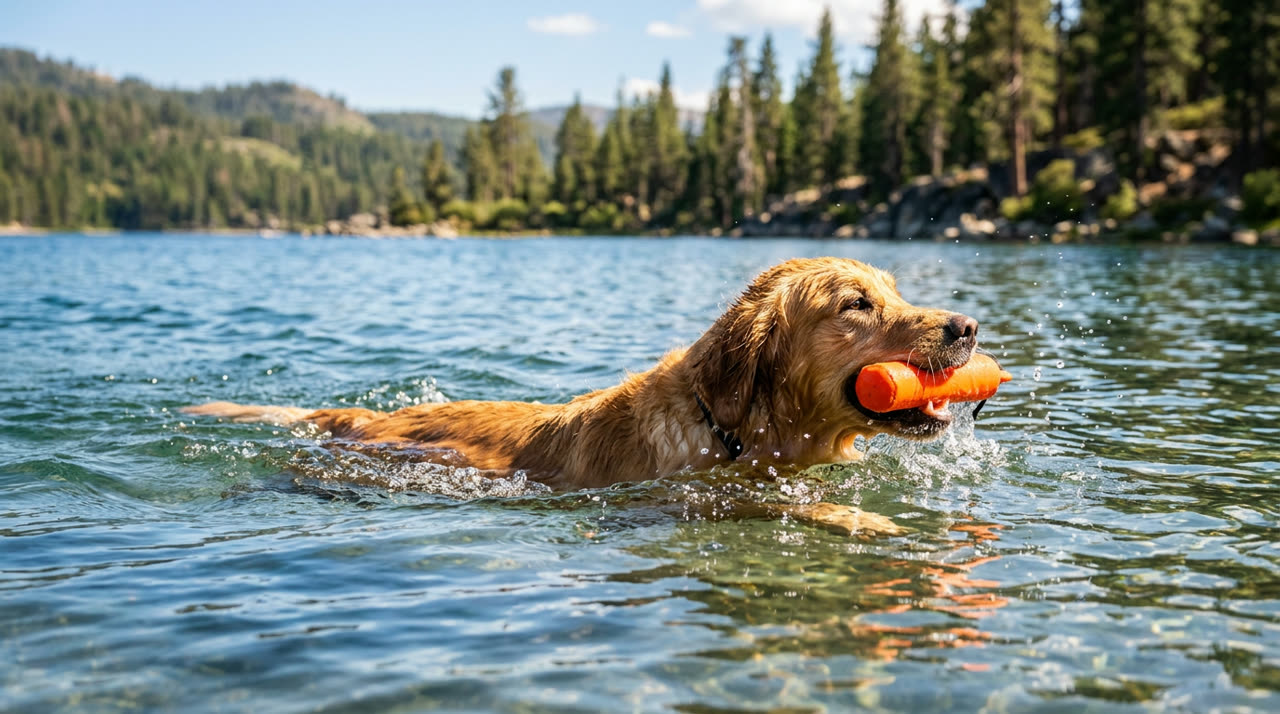
It is a common myth that all Golden Retrievers instinctively know how to swim gracefully the first time they enter deep water. While their genetic background gives them a distinct advantage, initial fear or confusion can overcome instinct. A nervous Golden Retriever often panics when its feet leave the ground, causing it to thrash its front paws while its hind legs sink. This vertical swimming posture is exhausting and can lead to quick fatigue or submersion.
A confident swimmer maintains a horizontal body position in the water, using both front and hind legs in a smooth rhythm while keeping its head elevated comfortably above the surface. Achieving this level of comfort requires patience and gentle exposure rather than assuming your dog will figure it out on its own.
Recognizing your dog's individual comfort level is the first step toward building a lifetime of safe swimming habits. Never force a hesitant dog into deep water, as a single traumatic experience can create a lasting fear of water environments.
- Webbed Paws: Act as natural paddles to push water efficiently.
- Water-Resistant Double Coat: Keeps skin dry and provides natural insulation.
- Heavy Otter Tail: Functions like a rudder to assist in steering and balance.
How to Introduce Your Golden Retriever to Swimming
Introducing your Golden Retriever to water should always be a gradual, positive process. Choose a quiet location with a smooth, sloping shoreline, such as a calm lake bay or a zero-entry pool. Avoid areas with loud noises, strong waves, steep drop-offs, or crowded beaches during initial training sessions.
Start by walking along the shallow edge where the water barely covers your dog's paws. Allow them to sniff the water, splash around, and explore at their own pace. Use high-value treats or a favorite floating toy to reward curious behavior. Wade into knee-deep water yourself and gently encourage your dog to follow you. Being in the water alongside your pet provides immense emotional reassurance.
When your dog reaches the depth where floating begins, gently support their belly with your hands to help them maintain a flat, horizontal position. Praise them warmly as they begin paddling with all four legs. Keep these early lessons short—around 5 to 10 minutes—so your dog finishes the session feeling accomplished rather than exhausted.
Essential Water Safety Gear for Dogs
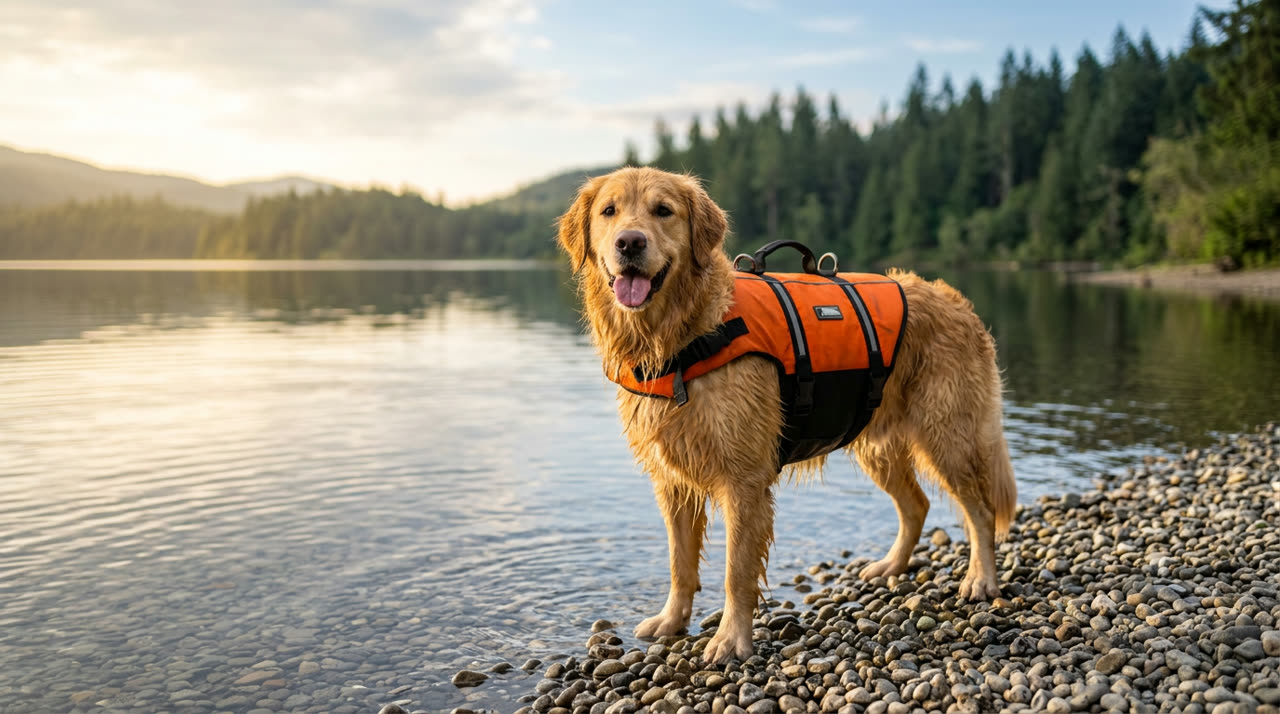
Even strong, experienced swimming dogs benefit from wearing proper safety gear. A high-quality canine life jacket (also known as a dog floatation device or PFD) is the single most important investment you can make for your Golden Retriever's aquatic safety. Life jackets provide necessary buoyancy, keeping your dog afloat if they grow tired or encounter unexpected currents.
A key advantage of a dog life jacket is the sturdy grab handle on the top back panel. This handle allows you to quickly guide your dog toward safety or haul them out of the water onto a boat deck, dock, or steep pool edge. Bright colors like neon orange, yellow, or pink paired with reflective strips also make your dog easy to spot from a distance or in low-light conditions.
When choosing additional gear, opt for waterproof, non-absorbent leashes made of biothane or coated webbing for open-water control. Standard nylon or leather leashes absorb water, becoming heavy, slippery, and prone to tangling around your dog's legs underwater.
- Top Grab Handle: Essential for lifting your dog out of deep water or off boats.
- Chest & Neck Support: Keeps the dog's head above water without straining the neck.
- Bright Color & Reflective Trim: Maximizes visibility in open water or dusk conditions.
Navigating Pools, Lakes, Oceans, and Rivers
Different bodies of water present unique safety challenges for swimming dogs. Backyard swimming pools offer controlled environments, but dogs must explicitly learn where the exit stairs are located. Dogs cannot climb pool ladders; if they fall in or grow tired, they will instinctively head to the nearest edge and try to claw their way out. Spend time training your Golden to swim toward the steps from any point in the pool.
Lakes and ponds are popular swimming spots, but stagnant water poses subtle health risks. Harmful algal blooms, particularly blue-green algae (cyanobacteria), produce toxins that are extremely dangerous to dogs. Always check local water quality warnings and avoid murky, scummy, or foul-smelling water. Additionally, inspect shoreline areas for hidden fishing lines, submerged branches, or sharp rocks that could cut paw pads.
Ocean swimming involves fighting tides, waves, and currents. Rip currents can easily carry a dog out to sea. Ingesting ocean water is another major concern; drinking saltwater leads to sodium poisoning, severe dehydration, and gastrointestinal distress. Always bring fresh drinking water and a bowl to prevent your dog from drinking from the sea.
Rivers and streams require caution regarding water velocity. Fast-moving currents can sweep even powerful retrievers downstream into dangerous hazards like fallen trees or strainers. Stick to slow-moving, shallow river bends.
Recognizing Fatigue, Overexertion, and Water Risks
Golden Retrievers are famous for their high energy and desire to please. Because of their intense fetch drive, many Goldens will continuously retrieve floating toys until they are on the verge of total collapse. It is up to you as the owner to enforce rest breaks before exhaustion sets in.
Signs of swim fatigue include a low-hanging tail, heavy panting, hips sinking lower in the water, a frantic paddling motion, or lagging behind while swimming. As soon as you notice any of these signs, call your dog out of the water for a mandatory shade break and fresh water.
Be aware of secondary drowning (dry drowning), a rare but serious condition that occurs when a dog inhales small amounts of water into its lungs during swimming. Symptoms may develop hours after leaving the water and include lethargy, difficulty breathing, coughing, pale gums, or unusual distress. If your dog accidentally submerged or swallowed significant amounts of water during a swim, monitor them closely and consult a veterinarian immediately if abnormal symptoms appear.
Post-Swim Clean-Up: Ears, Skin, and Coat Care
The fun doesn't end when your dog steps out of the water; a thorough post-swim care routine is essential for maintaining your Golden Retriever's coat and health. Chlorinated pool water, salt water, and muddy lake water can dry out skin, cause itching, and leave harmful bacteria trapped deep within the dense undercoat.
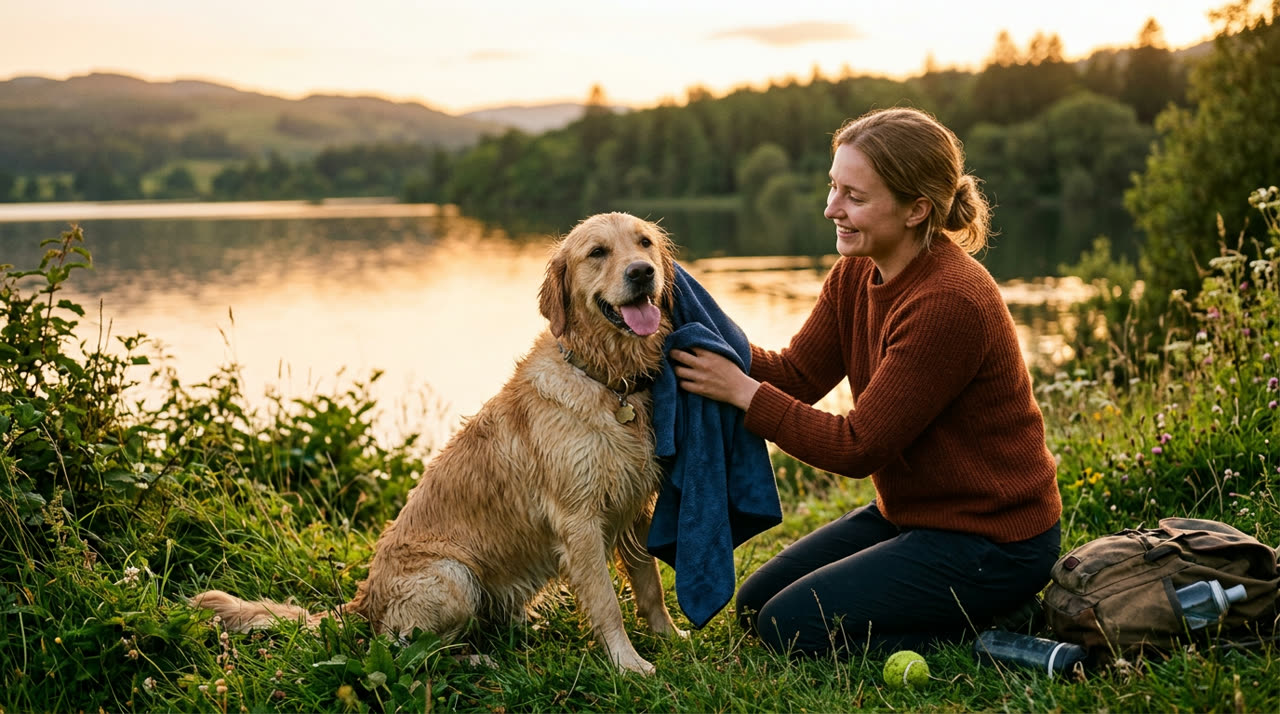
Rinse your Golden Retriever completely with fresh, clean water immediately after every swim. Use your fingers to work the fresh water through the dense undercoat to flush out salt, sand, or pool chemicals. Once rinsed, dry your dog thoroughly with towels or a dog dryer, paying special attention to areas prone to moisture retention like the chest, groin, and underneath the collar.
Golden Retrievers are particularly prone to ear infections due to their long, floppy ears which trap moisture and warm air. Trapped water in the ear canal creates an ideal environment for yeast and bacterial growth. After every swim session, gently dry the visible inner ear flap and apply a veterinarian-recommended ear-drying cleaner to keep the ears healthy and clear.
- Fresh Water Rinse: Removes salt, chlorine, mud, and microscopic parasites.
- Thorough Ear Drying: Crucial for preventing trapped moisture and ear infections.
- Coat Check: Look for lingering debris, ticks, or early signs of skin hot spots.
Swimming is one of the best physical activities for a Golden Retriever. It offers excellent cardiovascular exercise, builds muscle strength, and provides low-impact joint relief—making it ideal for young dogs and seniors alike. By introducing your dog to water patiently, investing in proper safety gear like a life jacket, and remaining vigilant about environmental hazards, you can make every water outing a safe and joyful experience.
Remember that every dog progresses at its own pace. Respect your Golden's comfort level, prioritize safety over distance or speed, and maintain a consistent post-swim hygiene routine. With a thoughtful approach, your Golden Retriever can safely enjoy a lifetime of splash-filled adventures.






0 Comments