
Golden Retrievers consistently rank among the most beloved dog breeds in the United States, and for good reason. Renowned for their gentle temperaments, radiant golden coats, and unwavering devotion to their human families, these dogs possess a unique combination of playfulness and affection. Whether you have recently brought home a fluffy golden puppy or share your life with a sweet senior companion, learning how to meet their specific emotional and physical needs is the key to a happy, healthy relationship.
While Golden Retrievers are generally eager to please and highly adaptable, living with one comes with distinct responsibilities and delightfully humorous quirks. From managing heavy seasonal shedding to directing their working instincts into positive exercise routines, caring for a golden requires thoughtful planning. This comprehensive guide breaks down everything you need to know about Golden Retriever behavior, daily maintenance, dietary habits, and long-term care.

The Iconic Golden Temperament: Friendly, Loyal, and Social
At the core of the Golden Retriever's popularity is its gentle and outgoing personality. Bred originally as hunting companions designed to retrieve waterfowl without damaging it, these dogs possess a soft mouth and an inherently friendly disposition toward humans and other animals alike. They thrive on companionship and generally prefer being in the middle of family activities rather than left alone for extended periods.
Their social nature means they welcome visitors with enthusiasm, but it also means they require consistent early socialization and gentle guidance. Because they are highly sensitive to their owner's emotions and tone of voice, positive reinforcement methods work best when teaching good manners. Harsh training techniques can easily dampen their joyful spirit and slow down their learning process.
- Eager to please and highly responsive to reward-based training
- Naturally social with children, strangers, and other household pets
- Thrives on close emotional bonds and frequent family interaction
- Sensitive disposition that responds best to encouragement and praise
Decoding Golden Logic: Understanding Unique Breed Quirks
Every Golden Retriever owner quickly learns that this breed comes with a distinct set of endearing behaviors often referred to as 'golden logic.' One of the most common habits is their desire to carry something in their mouth whenever they are excited. Whether it is a shoe, a favorite plush toy, or a pillow, presenting a gift when you return home is their primary way of expressing happiness.
Another signature move is the 'golden lean.' When looking for affection, a golden will often walk up to you and lean their full body weight against your legs. Far from being a pushy dominant behavior, this is simply a physical expression of warmth and trust. Understanding these natural tendencies helps owners appreciate their dog's unique communication style rather than viewing it as unwanted behavior.
- Carrying soft toys or household objects as greeting gifts
- Leaning their body against your legs to seek physical affection
- An irresistible attraction to mud puddles, ponds, and garden hoses
- Sleeping upside down on their back with paws in the air when fully relaxed
Exercise Needs: Keeping an Energetic Working Breed Active
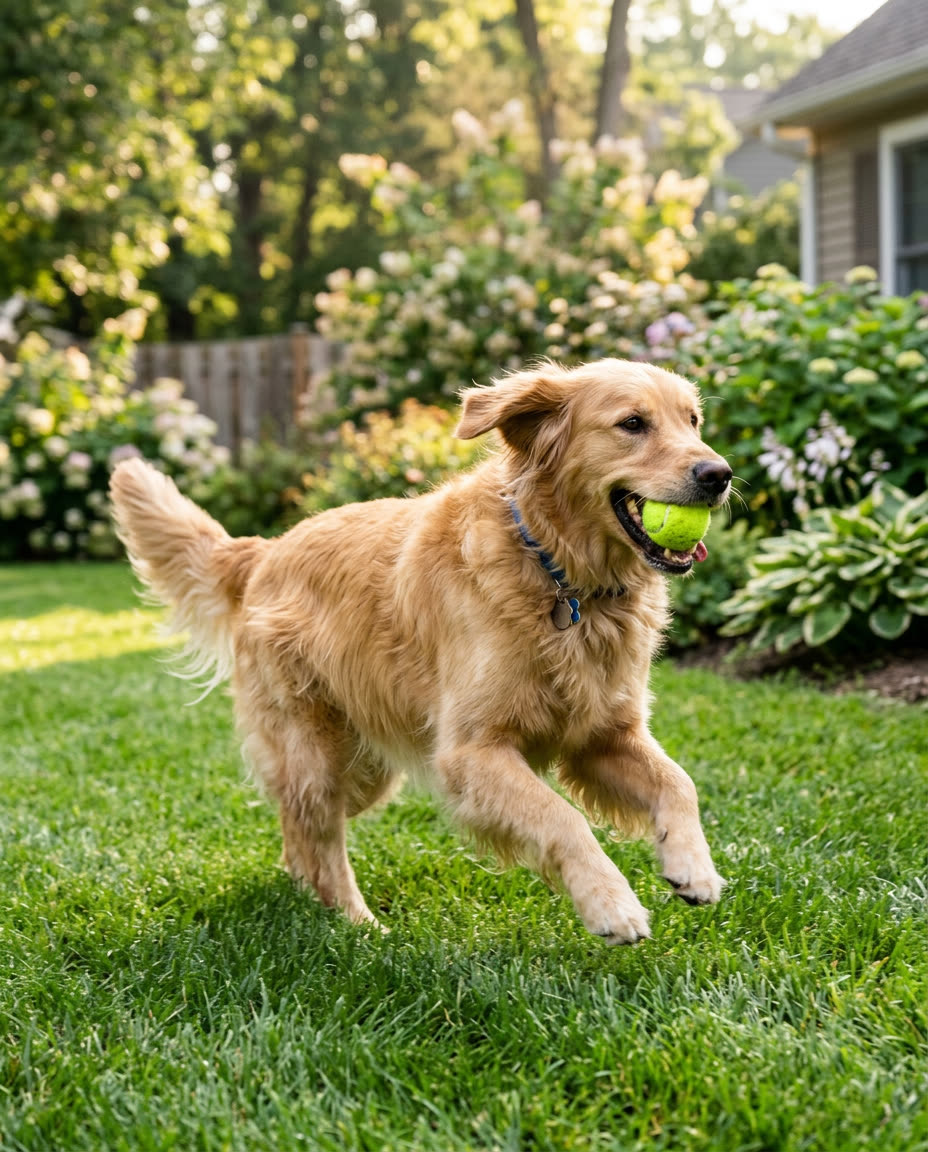
Although Golden Retrievers are comfortable cuddling on the sofa, they are energetic working dogs at heart. A healthy adult golden needs at least 60 minutes of daily physical exercise to stay physically fit and mentally balanced. Insufficient activity can lead to boredom, which frequently manifests as destructive chewing, excessive barking, or unwanted digging in the yard.
Activities that engage both their bodies and minds are ideal. Interactive games like fetch, dock diving, swimming, and agility courses satisfy their natural instincts. Mental stimulation is equally critical; puzzle toys, scent work games, and basic obedience practice help tire out a golden just as effectively as a long jog.
- Daily brisk walks combined with free play in a safe, fenced area
- Swimming, which offers low-impact exercise excellent for joint health
- Retrieving games using rubber balls or floating retrieving dummies
- Mental enrichment toys and daily training sessions to prevent boredom
Grooming Essentials: Managing the Double Coat and Ears
The striking double coat of a Golden Retriever features a dense, water-repellent outer coat and a soft undercoat that provides temperature regulation. Managing this coat requires a consistent grooming routine. Goldens shed year-round, but they experience heavier shedding cycles during spring and autumn when they blow their coats to adjust to changing seasons.
Brushing your dog three to four times a week with a slicker brush and undercoat rake keeps mats from forming and significantly reduces loose fur around your home. Additionally, because Golden Retrievers have floppy ears that trap moisture, regular ear cleaning is essential—especially after swimming or baths—to prevent uncomfortable ear infections.
Nutrition and Weight Management for Long-Term Health
Proper nutrition is a cornerstone of lifelong health for your Golden Retriever. Because this breed loves food and excels at begging with convincing eyes, weight gain is a common concern. Carrying excess body weight places unnecessary strain on their joints and increases the risk of metabolic issues, so monitoring caloric intake and keeping treats within moderation is vital.
Provide a high-quality, balanced dog food formulated for large breeds to support healthy joint development and muscle maintenance. Using slow-feeder bowls can help slow down fast eaters, reducing the risk of digestive upset. If you are ever unsure about your dog's ideal weight or daily caloric requirements, consult your veterinarian for customized guidance.

Senior Care: Supporting Your Golden Through Their Golden Years
As Golden Retrievers age—typically entering their senior years around seven or eight—their physical needs shift gracefully. You may notice your dog slowing down during walks, taking longer to stand up after a nap, or developing gray fur around their muzzle and eyes. Providing comfortable orthopedic bedding and non-slip rugs on hardwood floors can greatly improve their daily comfort.
Senior goldens benefit from tailored healthcare routines, including biannual veterinary checkups to monitor joint comfort, organ function, and dental health. Gentle daily exercise remains important to keep joints lubricated and muscles strong, but activities should be adjusted to match your senior companion's changing endurance levels.
Sharing your life with a Golden Retriever brings immeasurable warmth, laughter, and companionship. Their affectionate personality and enthusiastic perspective on life make them extraordinary family members who enrich every single day.
By providing consistent exercise, proactive grooming, balanced nutrition, and gentle training, you ensure that your golden companion stays healthy and vibrant throughout every stage of life. The loyalty and unconditional love they offer in return is truly unmatched.



0 Comments