
Few phenomena in world sport carry the mysterious allure of reverse swing in cricket. To the uninitiated, watching a fast bowler hurl an aged leather ball that suddenly veers violently inward at 90 miles per hour seems to defy the laws of classical physics. While conventional swing relies on a shiny new ball curving toward its rough side, reverse swing turns this mechanic entirely on its head, causing the ball to dart sharply toward its smooth, polished side.
Born on the dry, abrasive pitches of South Asia and perfected by elite fast bowlers over decades, reverse swing transformed Test cricket from a batter-dominated marathon into a nerve-wracking tactical duel. Understanding this dark art requires a blend of aerodynamic science, physical conditioning, meticulous ball maintenance, and supreme bowling mechanics. It remains fast bowling’s most lethal weapon—a spectacle capable of dismantling a top-order batting lineup in the span of a single session.
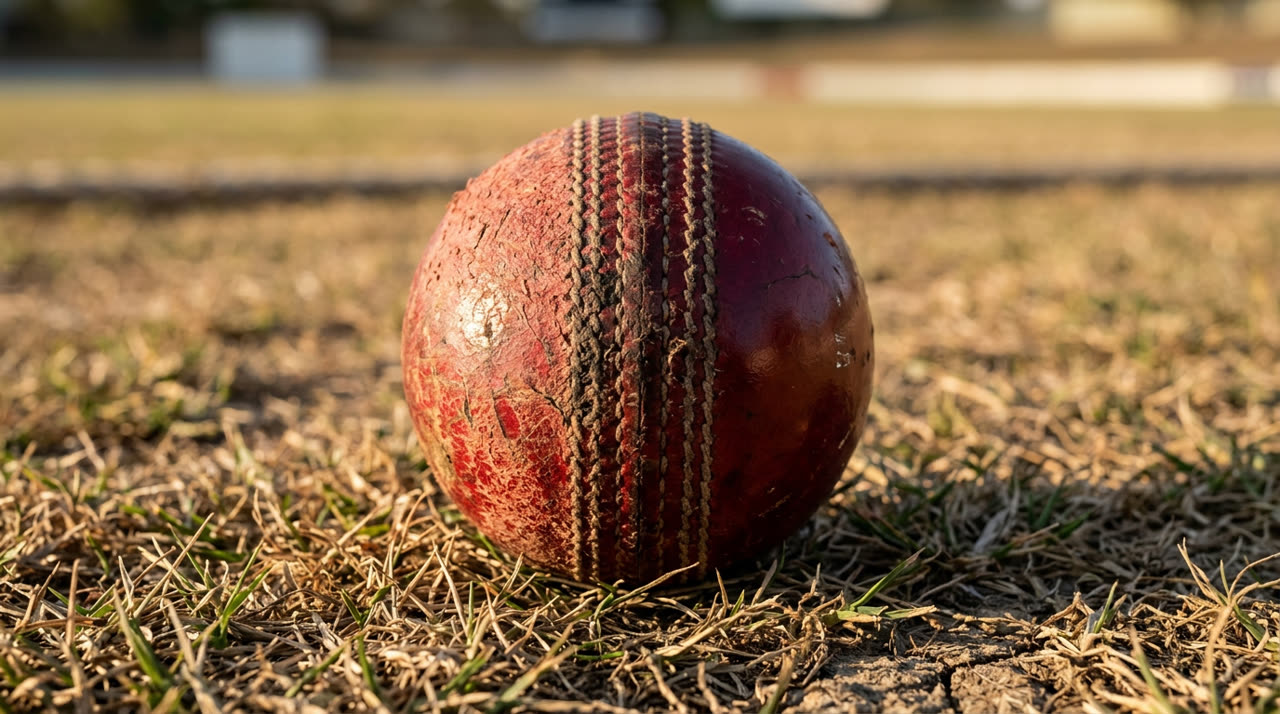
Conventional vs. Reverse Swing: Breaking Down the Physics
To appreciate reverse swing, one must first understand how conventional swing operates. When a fresh cricket ball is delivered with its seam angled slightly, airflow travels smoothly (laminar flow) along the smooth side and becomes turbulent as it trips over the seam on the other side. This pressure differential pushes the ball toward the rougher side, creating predictable movement early in the ball's trajectory.
Reverse swing disrupts this behavior through altered surface dynamics and high velocity. As the ball ages and one half becomes heavily pitted, rough, and scuffed while the other remains smooth, the boundary layer of air behaves differently. At speeds typically above 85 miles per hour (137 km/h), the air passing over the rough side becomes turbulent almost immediately upon release and stays attached to the surface longer than the air passing over the smooth side.
This late boundary-layer separation creates a high-pressure zone on the rough side and a low-pressure zone on the smooth side. Consequently, the ball curves unexpectedly toward the shiny half. Because this aerodynamic flip occurs late in the ball's flight, batters have mere milliseconds to adjust their stroke, making reverse swing extraordinarily difficult to negotiate.
The Delicate Craft of Ball Maintenance
Reverse swing does not happen by chance; it requires a collective, deliberate effort from all eleven fielders over dozens of overs. Maintaining a cricket ball to achieve reverse swing is a delicate science that balances relentless physical care with strict legal boundaries set by the laws of cricket.
Fielders designate one specific side of the ball for continuous polishing, applying sweat and rubbing it against their trousers to keep the leather as smooth as possible. Meanwhile, the opposite side is left entirely untouched, allowing natural wear, pitch friction, and impact with the turf to roughen it up over time.
- Dryness is critical: Excess moisture or water on the rough side ruins the aerodynamic contrast needed for reverse movement.
- Uniform wear: The rough side must age evenly across its surface rather than sustaining damage in just one localized spot.
- Legal compliance: Fielders must avoid using artificial substances, fingernails, or dirt, as illegal scuffing incurs severe match penalties.

Pace, Release Mechanics, and Seam Orientation
Having an appropriately worn ball is only half the equation; the bowler must possess the physical attributes and technical precision to unlock reverse swing. Pace acts as the essential catalyst. While conventional swing can be achieved at moderate speeds of 70 to 80 miles per hour, reverse swing generally demands high velocity to pass the critical Reynolds number—the aerodynamic threshold where air behavior flips.
Wrist position at release is another decisive variable. Bowlers must present a firm, upright seam, but unlike conventional swing where the seam points in the direction of the movement, reverse swing often requires the seam to point slightly away from the intended direction of swing. A bowler aiming to reverse the ball into a right-handed batter will angle the seam toward the off-side while keeping the shiny side facing the leg-side.
Furthermore, elite bowlers learn to hide the ball in their run-up and delivery stride. By concealing the polished side with their non-bowling hand until the last split-second, they deny the batter any visual cues about which way the ball is likely to tail.
Tactical Execution: Setting the Trap
Unlocking reverse swing alters the entire tactical structure of a match. When the ball begins to move late, the bowler’s ideal target zone shifts dramatically from a full length outside off-stump to the base of the stumps and the batter's toes.
The most devastating delivery in the reverse-swing arsenal is the late-dipping yorker. As the ball travels down the pitch, the asymmetrical air resistance causes it to drop suddenly in height while curving sharply inward. Batters expecting a straight delivery frequently find their feet pinned in front of the wickets or their stumps shattered before the bat can come down.
Bowlers also use reverse swing to play psychological games. A fast bowler might deliver three consecutive balls that reverse sharply into a batter’s pads, forcing them into a defensive, front-foot posture. The fourth ball might be delivered with the shiny side flipped, causing it to hold its line or swing late away from the bat, taking the outside edge.
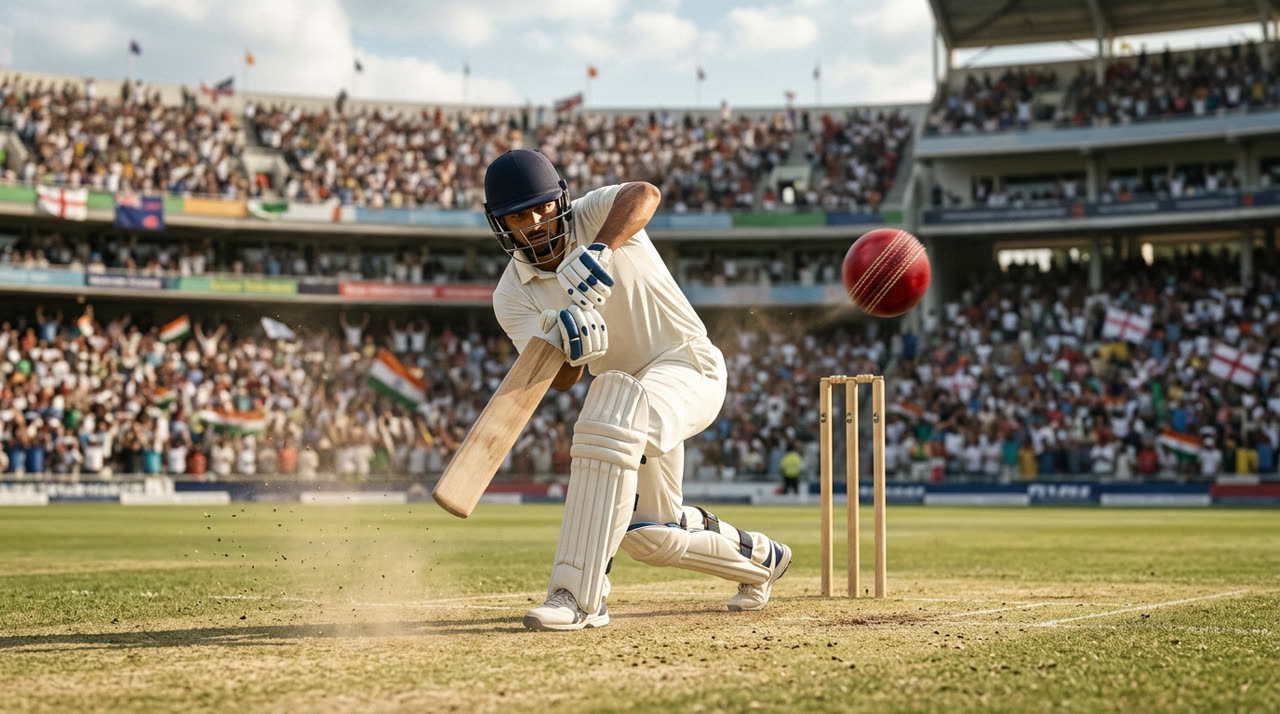
The Batter’s Survival Guide: Countering Late Movement
For a batter, facing late reverse swing at high pace is widely regarded as one of the most demanding trials in professional sports. Standard technique—watching the ball off the pitch—is often insufficient because the crucial lateral deviation occurs in the air just before the ball bounces.
To survive, top-tier batters adjust their technique both before and during the delivery. Many focus intensely on the bowler’s hands during the run-up to spot which side of the ball is polished. Identifying the shiny side early provides a vital clue about the ball's trajectory.
Batters also modify their crease positioning. Some step a foot outside the popping crease to strike the ball before the late swing takes full effect, while others stay deep in their crease to grant themselves extra micro-seconds of reaction time. Playing with soft hands—reducing grip pressure on the bat handle—ensures that if an edge is taken, the ball drops safely short of the slip cordon.
Reverse swing represents the ultimate union of atmospheric physics, collective discipline, and individual bowling mastery in cricket. It rewards teams that treat ball maintenance as a serious craft and elevates fast bowlers who combine explosive speed with mechanical precision. While modern white-ball formats with dual new balls have made the phenomenon rarer in shorter games, reverse swing remains the crown jewel of Test cricket—a thrilling, hypnotic force that can turn a predictable match upside down in the space of a single over.



0 Comments