
On Christmas Eve in 1945, a sudden house fire destroyed the home of the Sodder family in Fayetteville, West Virginia. While the parents and four children escaped into the night, five young siblings vanished without leaving behind a single trace of human remains.
For decades, the family searched for answers about what really happened to their children on that fateful night. Was it a tragic house fire, or did the children somehow survive and disappear?
What We Know: The Night of the Christmas Eve Fire
George and Jennie Sodder lived in Fayetteville, West Virginia, with nine of their ten children. Their oldest son was serving in the United States military during World War II. On the night of December 24, 1945, the family went to sleep after celebrating the holiday.
At approximately 1:00 AM on December 25, a fire broke out in the home. George and Jennie rushed outside with four of their children: Marion, Sylvia, John, and George Jr. Five children remained upstairs: Maurice (age 14), Martha (age 12), Louis (age 9), Jennie (age 8), and Betty (age 5).
George tried to re-enter the house to save the children upstairs, but the flames blocked the stairway. He then ran outside to get his ladder, but it was missing from its usual place against the house. Next, he attempted to drive his two heavy coal trucks closer to the house to climb onto their roofs, but neither truck would start, despite working perfectly the day before.
The Sodder home burned completely to the ground in less than 45 minutes. When morning arrived, the family assumed the five missing children had perished in the fire. However, no remains were found in the ashes.

What We Know: Strange Events Before the Blaze
In the weeks leading up to the fire, several strange events occurred around the Sodder property. A traveling insurance salesman visited the house and got into an argument with George Sodder. Investigators noted that the salesman made threatening comments about George's open criticism of Benito Mussolini, as George was an Italian immigrant.
Shortly before Christmas, George's older sons noticed a man parked along the highway watching the younger children as they returned home from school. The man sat in a dark sedan and observed the family for several days.
Late on the night of the fire, around 12:30 AM, the telephone rang. Jennie Sodder answered it and heard a woman's voice asking for a name she did not recognize. Jennie heard strange laughter and glasses clinking in the background before hanging up.
After the fire, a repairman discovered that the home's telephone line had been cut cleanly near the top of the pole, rather than burning in the fire.
What We Know: The Search and Missing Evidence
The local fire department took several hours to respond to the scene because many firefighters were off duty for the Christmas holiday. When firefighters finally arrived, Chief F.J. Morris conducted a brief search of the ashes. He told the family that the bodies of the children had been completely destroyed by the intense heat.
Pathologists and fire experts later questioned this claim. Bone fragments usually survive household wood fires because open flames do not burn hot enough or long enough to destroy human bone completely. A typical wood fire burns at around 1,000 to 1,500 degrees Fahrenheit, whereas cremation requires higher temperatures for several hours.
In 1949, a second search of the site was conducted by an independent pathologist. The team recovered a small portion of a human vertebra. Medical experts examined the bone and concluded it belonged to an individual older than any of the missing children, and it showed no signs of exposure to fire.
What We Know: The Billboard and the Photograph
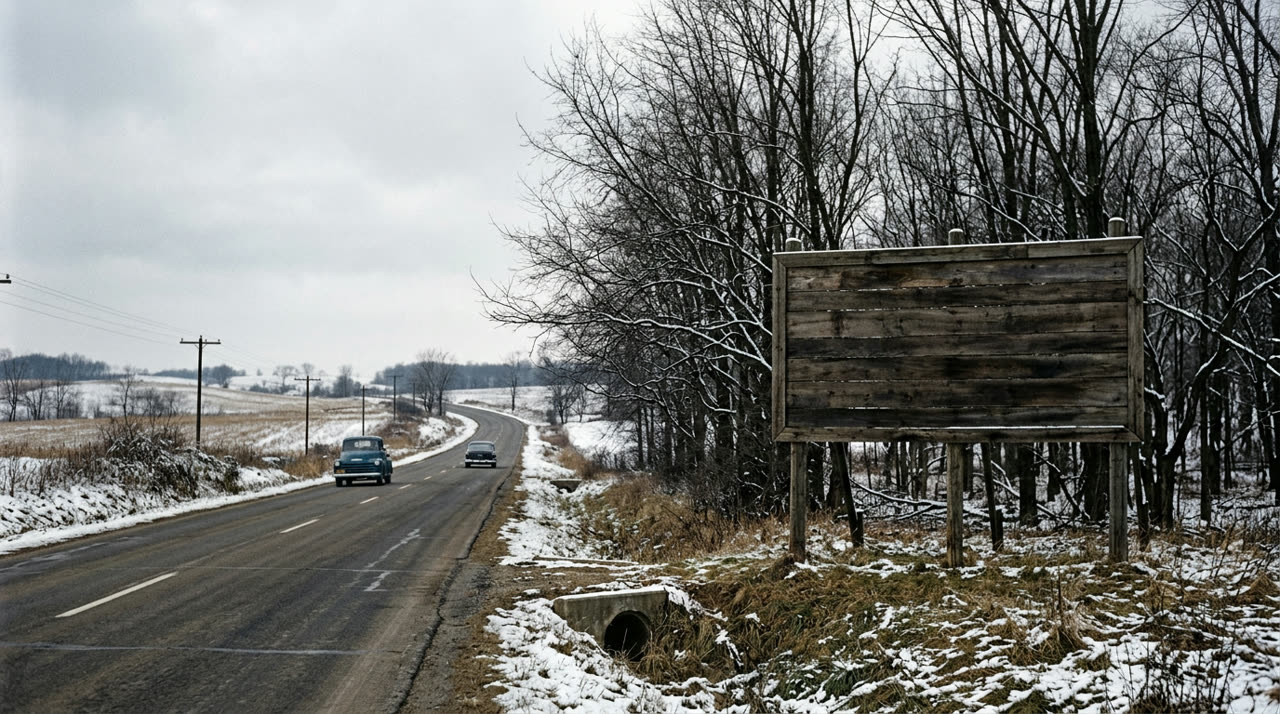
Convinced their children were still alive, George and Jennie Sodder refused to accept the official ruling of accidental death. In 1952, they erected a large billboard along Route 16 in Fayetteville. The billboard displayed photos of the five missing children and offered a $10,000 reward for information.
The family received thousands of tips over the years. Private investigators looked into sightings across the United States, but none produced verified proof.
In 1967, Jennie Sodder received an envelope in the mail postmarked from Central City, Kentucky, with no return address. Inside was a photograph of a young man in his twenties who strongly resembled Louis Sodder, who would have been in his twenties at that time.
On the back of the photo was a hand-written message that read: 'Louis Sodder. I love brother Frankie. Ilil Boys. A90132 or 35.' The family hired a private detective to travel to Kentucky and investigate the letter, but the detective vanished and was never heard from again.
The Theories: An Unthinkable Tragic Accident
The official explanation provided by local authorities in 1945 was that an electrical wiring fault caused the fire. Under this theory, the five children died in their bedrooms, and the fire destroyed their remains.
Supporters of this theory suggest that the rapid collapse of the two-story house created intense heat in the basement cellar. They believe the structural weight and prolonged embers were enough to destroy fragile bones.
However, fire experts have repeatedly questioned this idea. The house burned down within 45 minutes, which is generally not long enough to incinerate five human bodies completely without leaving any traces behind.
The Theories: Abduction and Forced Adoption
Another major theory suggests that someone kidnapped the children before setting the house on fire. Proponents of this theory point to the cut phone lines, the missing ladder, and the sudden failure of both trucks as evidence of deliberate sabotage.
During the 1940s, illegal adoption rings were active in parts of the United States. Some researchers suggested that the children might have been taken from the house while the family slept and sold to families in other states.
While this theory explains why no bones were found in the basement, investigators never uncovered financial records or physical evidence proving that the children were taken.

The Theories: Political Retaliation or Extortion
A third theory links the fire to George Sodder's anti-fascist political views. George was an outspoken critic of the Italian dictator Benito Mussolini, which created tension among some fellow immigrants in the local community.
According to this explanation, an arsonist started the fire as revenge or intimidation. Some researchers speculated that local criminals attempted to extort money from George's successful trucking business.
While the argument with the insurance salesman supports this possibility, police never found direct evidence linking any specific group or individual to the fire.
What remains unanswered is the ultimate fate of Maurice, Martha, Louis, Jennie, and Betty Sodder. George Sodder passed away in 1969, and Jennie Sodder spent the rest of her life wearing black in mourning until her death in 1989. The billboard along Route 16 stood for nearly forty years until the last surviving family members passed away. To this day, the true cause of the fire and the location of the five siblings remain unknown.


0 Comments