
Crouch, absorb, explode. Repeat hundreds of times across a single day. Among all the specialized roles in world cricket, none demands the continuous physical exertion, mental stamina, and split-second hand-eye coordination of the wicketkeeper. While fast bowlers work in short, explosive spells and batters rest between turns in the middle, the keeper is locked into every single delivery of an innings. They are the only player on the field who cannot afford a single second of mental drift, because a half-inch mistake behind the stumps can change the outcome of an entire match.
Yet, despite its foundational importance, the craft of wicketkeeping has undergone one of the most drastic evolutions of any position in modern sport. What was once considered a specialist craft reserved for elite glovemen who batted down at number eight has transformed into a high-stakes, multi-dimensional hybrid role. Today’s keeper must be an elite athletic catcher, a tactical strategist, a key communicator for Decision Review System (DRS) calls, and a dynamic top- or middle-order batter capable of taking games away from the opposition.
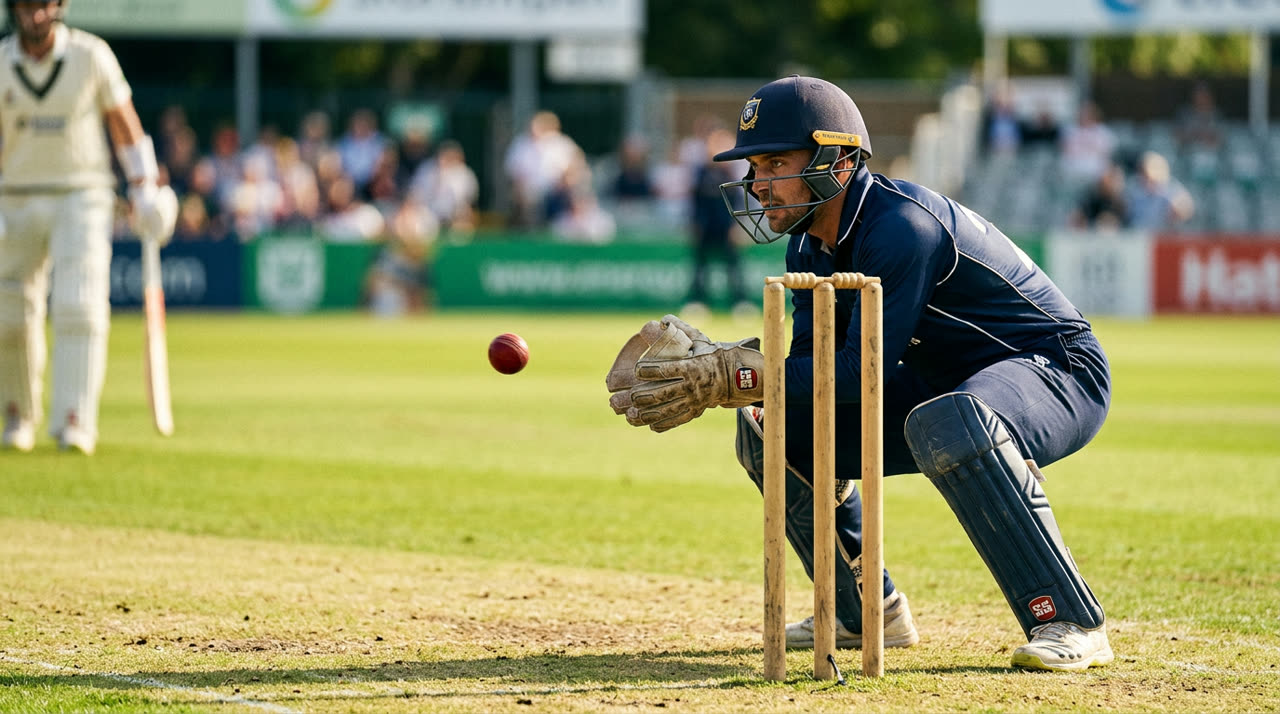
The Historical Pivot: From Pure Specialist to Batting Powerhouse
For much of cricket’s history, wicketkeeping was evaluated through a single lens: flawless glovework. Team selectors prioritized keepers who could cleanly take tricky edges, standing up to fast bowlers or navigating unpredictable turn on deteriorating pitches. A keeper who contributed twenty or thirty runs with the bat was considered a luxury, not a baseline requirement. Legends of earlier eras built their reputations almost entirely on their technical purity behind the stumps, holding down their places through clean takes, soft hands, and flawless footwork.
The turn of the millennium shattered this paradigm forever. The arrival of aggressive, game-changing keeper-batters fundamentally redefined what teams demanded from the position. Suddenly, choosing a keeper who could not score heavy runs felt like handing the opposition an unfair tactical advantage. Modern team balance now relies on the keeper acting as a genuine top-tier batter who can either anchor an innings or accelerate lower down the order.
- The Sixth Batter Advantage: Modern team selection requires keepers to average at par with top-order batters, freeing up crucial space for an extra bowler or all-rounder.
- Adaptable Batting Roles: Today's keepers must switch seamlessly between aggressive finishing in white-ball formats and long, patient endurance innings in Test cricket.
- The High-Pressure Trade-off: Squads must carefully weigh minor compromises in glove technique against high-impact, match-winning run-scoring abilities.
The Physical Toll: Squats, Micro-Bursts, and Split-Second Reflexes
Beneath the clean aesthetics of a sharp catch lies an astonishing physical workload. During a full day of Test cricket, a keeper will complete between 500 and 600 full deep squats while wearing heavy protective equipment. This unique physical demand subjects the lower back, knees, and ankles to constant stress, requiring exceptional core stability and lower-body mobility. Unlike outfielders who run in long bursts, keepers operate in explosive micro-bursts of lateral movement from a static, low position.
The mental fatigue is equally severe. A keeper must maintain peak hyper-vigilance for hours at a time, often through long stretches where the ball rarely reaches the gloves. When an edge finally occurs—flying at speeds upward of 80 miles per hour from a distance of under twenty yards—the keeper has less than half a second to react, calculate the trajectory, adjust their balance, and execute the catch cleanly.
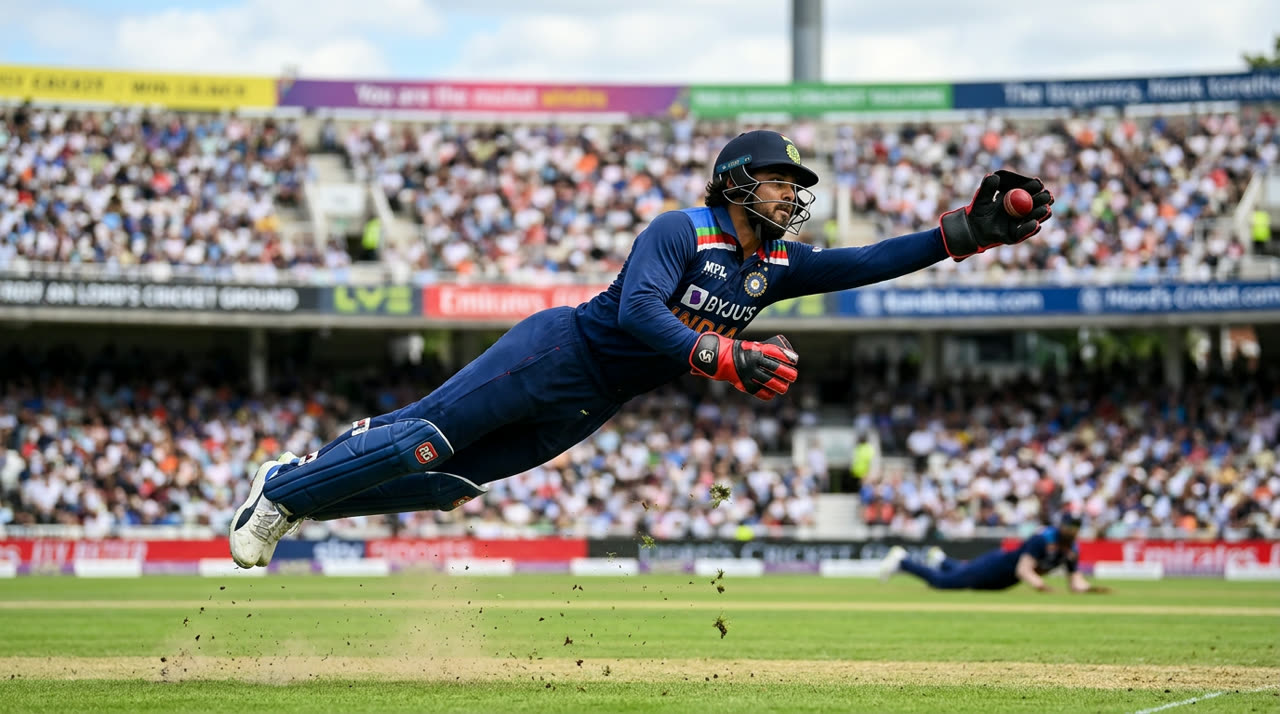
The Art of Positioning: Standing Back vs. Standing Up
Masterful wicketkeeping is as much about positioning and footwork as it is about hand speed. When standing back to fast bowlers, keepers must constantly read pitch conditions, weather variables, and bowler release points to calculate their optimal depth and lateral spacing. Standing too close reduces reaction time, while standing too far back risks catches dipping short of the fingers. The subtle deviation caused by late swing or irregular bounce requires keepers to keep their hands soft and move their feet with rhythmic agility.
Conversely, standing up to the stumps—whether to spinners or medium-pace bowlers—is cricket's ultimate tightrope walk. At this proximity, the keeper forfeits reaction time in exchange for strategic dominance. Standing close forces batters to stay grounded within their crease, eliminating their ability to step down the pitch. A microsecond glimpse of a foot lifted off the turf is all a master keeper needs to whip off the bails in a flash.
The Strategic Hub: DRS, Angles, and Field Leadership
Positioned directly behind the line of delivery, the wicketkeeper possesses the undisputed best view on the cricket field. They are uniquely situated to observe ball trajectory, seam orientation, pitch behavior, and subtle batter movements that remain invisible to the captain positioned in the field. Consequently, modern captains rely heavily on their keepers to act as on-field co-pilots and primary tactical advisors.
This vantage point has become even more critical in the era of the Decision Review System (DRS). When deciding whether to challenge an umpire's decision for leg-before-wicket (LBW) or a faint edge, the keeper is almost always the primary authority. They must instantly evaluate whether the ball pitched in line, whether it struck the pad outside off-stump, and whether the height trajectory would clear the stumps. A keeper with calm, objective judgment saves precious reviews, while an overly excitable keeper can burn through strategic reviews early in a match.
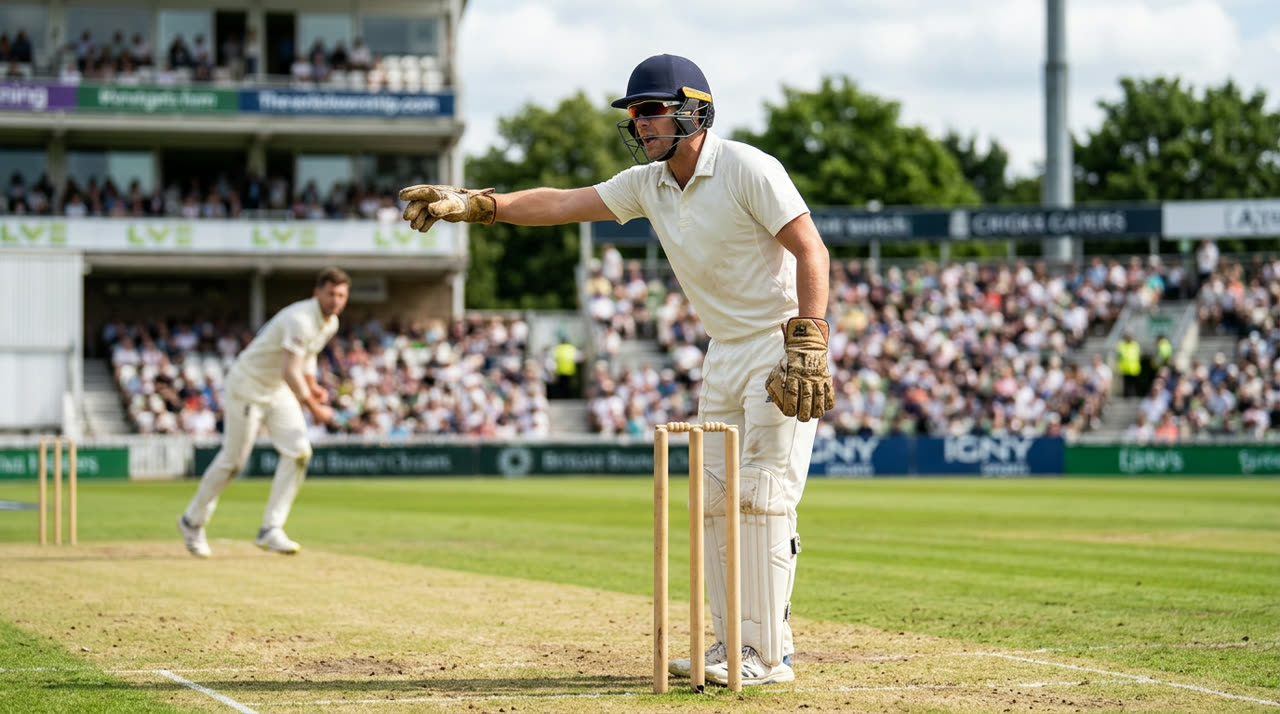
Modern Gear, Specialized Drills, and Athletic Science
As the physical and tactical demands of wicketkeeping have multiplied, so too has the science behind their training and equipment. Traditional practice routines consisting of simple warm-up catches have been replaced by customized training modules designed by biomechanics experts and strength coaches. Keepers now utilize vision-tracking drills, reaction balls with unpredictable bounces, and high-intensity agility ladders to sharpen their neuromuscular responses.
Equipment has also undergone a silent revolution. Modern wicketkeeping gloves utilize advanced synthetic palms, ergonomic catching webs, and lightweight impact-absorbing foams that protect the hands without sacrificing tactile sensitivity. Lightweight face masks and inner gloves featuring gel-padding allow keepers to stand up to faster bowling with greater safety, unlocking new tactical options for captains seeking to stifle run rates.
The modern wicketkeeper stands at the very apex of multi-disciplinary athleticism in team sports. No longer restricted to the narrow confines of a specialist gloveman, today’s keeper must blend the physical endurance of a marathon runner, the explosive reflexes of a martial artist, the tactical mind of a chess master, and the batting prowess of a top-order run-scorer.
As cricket continues to evolve across formats and intensity levels, the keeper remains the steady beating heart of the field. Every catch taken, every lightning stumping executed, and every smart DRS review called serves as a quiet reminder that while batters may win headlines, elite keepers build winning teams.


0 Comments