
Golden Retrievers are world-famous for their loving nature, human-centric loyalty, and desire to be right by your side. Often called velcro dogs, their deep devotion is one of their most endearing qualities. However, this incredible bond can sometimes lead to distress when they are left by themselves. When a dog feels overwhelmed by solitude, routine departures can become a source of intense emotional stress.
Separation anxiety is one of the most common behavioral challenges faced by Golden Retriever owners. Left unmanaged, it can result in destructive chewing, frantic door scratching, continuous vocalization, or distress panting. Fortunately, with patience, structured routines, and gradual positive conditioning, you can teach your Golden Retriever to feel safe, calm, and secure during alone time.
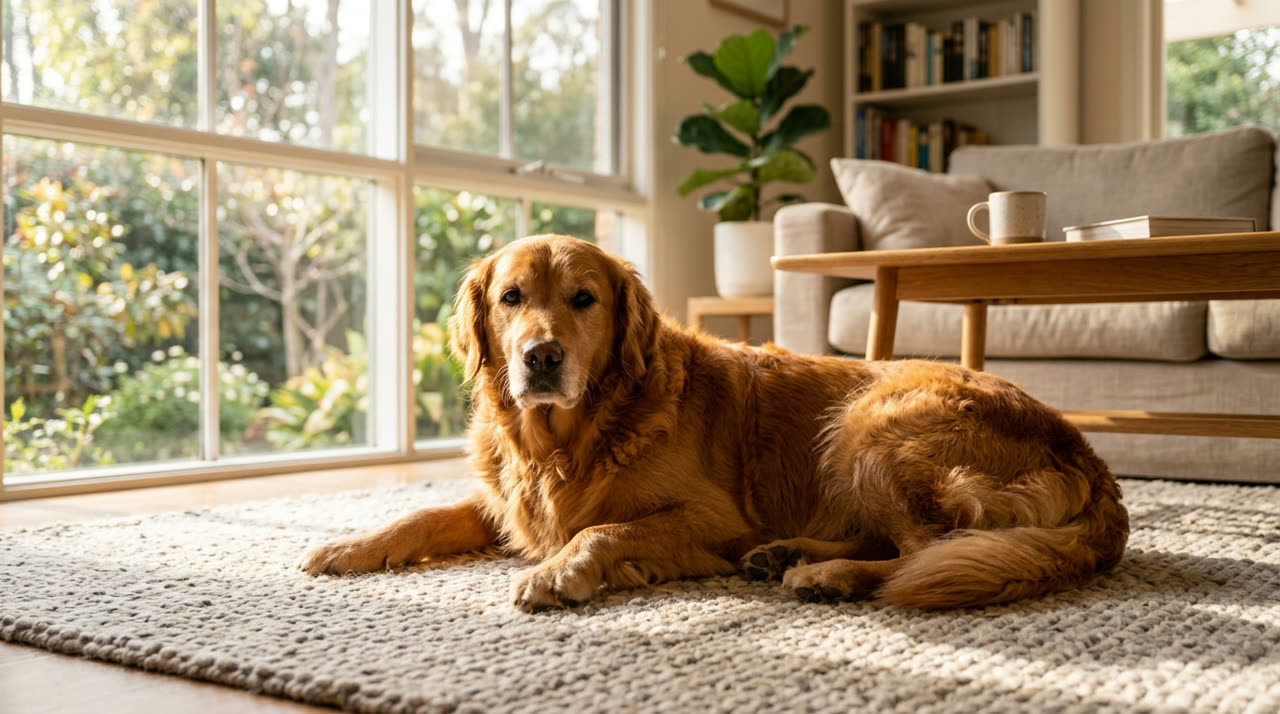
Understanding Separation Anxiety in Golden Retrievers
Golden Retrievers were historically bred to work closely alongside human hunting partners all day long. This historical background has created a breed that thrives on social interaction, collaboration, and companionship. Because they are wired to be part of a team, prolonged solitude does not always come naturally to them.
It is essential to distinguish genuine separation anxiety from simple young-dog boredom or lack of physical stimulation. Bored dogs usually look for something fun to do, such as shredding a paper towel or chewing a shoe left on the floor. In contrast, dogs suffering from separation panic experience genuine distress driven by fear and panic over being separated from their human caregiver.
Recognizing the underlying emotion behind your dog's behavior allows you to choose the right approach. Rather than punishing undesirable actions, the goal is to systematically change how your dog feels about being left alone.
- Boredom causes opportunistic mischief, whereas anxiety produces panic-driven behaviors.
- Anxious behaviors typically start within minutes after your departure.
- Golden Retrievers thrive on human companionship, making early alone-time conditioning vital.
Identifying Early Warning Signs and Departure Triggers
Separation anxiety rarely appears out of nowhere; it usually escalates through subtle warning signs. Many Golden Retrievers start displaying stress long before you actually walk out the front door. They quickly learn to associate specific morning habits with your imminent departure.
Common departure cues include picking up your car keys, putting on work shoes, putting on a heavy coat, or packing a backpack. As soon as these triggers occur, an anxious Golden Retriever may begin pacing back and forth, panting heavily, whining, or sticking to your legs like glue.
By observing your dog's body language closely, you can pinpoint the exact moment their stress level starts to climb. Identifying these specific triggers is the crucial first step toward helping them stay calm.
- Shadowing: Following you closely from room to room as you prepare to leave.
- Physical signs: Trembling, heavy panting, dilated pupils, and excessive drooling.
- Exit fixation: Staring intently at doors or blocking pathways to keep you inside.
How to Desensitize Your Dog to Departure Cues
Once you know which actions trigger your Golden's anxiety, you can begin a process called cue desensitization. The goal is to break the mental association between your departure routine and the feeling of impending isolation.
To do this, perform your typical departure actions without actually leaving the house. Pick up your car keys and set them on the kitchen counter, then sit down on the couch. Put on your winter coat, walk into the kitchen to make a cup of tea, and take the coat off. Open the front door, step outside for three seconds, and walk right back inside without making a fuss.
When you repeat these actions multiple times a day without actually leaving, the triggers lose their emotional meaning. Your Golden Retriever will stop viewing your keys or shoes as signals for panic.
- Perform departure triggers randomly throughout the day without leaving.
- Keep your body language relaxed and casual during these exercises.
- Repeat each trigger until your dog no longer reacts with alertness or worry.
Step-by-Step Alone Time Conditioning
Building independence requires gradual, step-by-step progress. Start by teaching your Golden Retriever to remain comfortable behind a closed interior door while you are still inside the house. This removes the pressure of true outdoor departures while building basic tolerance for separation.
Begin with micro-absences lasting only five to ten seconds. Step into a bedroom, close the door, wait a few moments, and reopen it calmly. Gradually build up the duration in tiny, unpredictable increments—such as thirty seconds, one minute, fifteen seconds, and two minutes. Variable times prevent your dog from anticipating a set threshold.
It is vital to keep all departures and arrivals completely low-key. Excessive enthusiasm, long dramatic goodbyes, or energetic homecomings reinforce the idea that your departure is a major, stressful event. Act calm, neutral, and relaxed every time you return.
- Start with micro-absences of 5 to 10 seconds behind interior doors.
- Increase duration slowly, always staying below your dog's panic threshold.
- Keep greetings neutral and calm to lower emotional arousal.
Creating an Enriching and Safe Environment
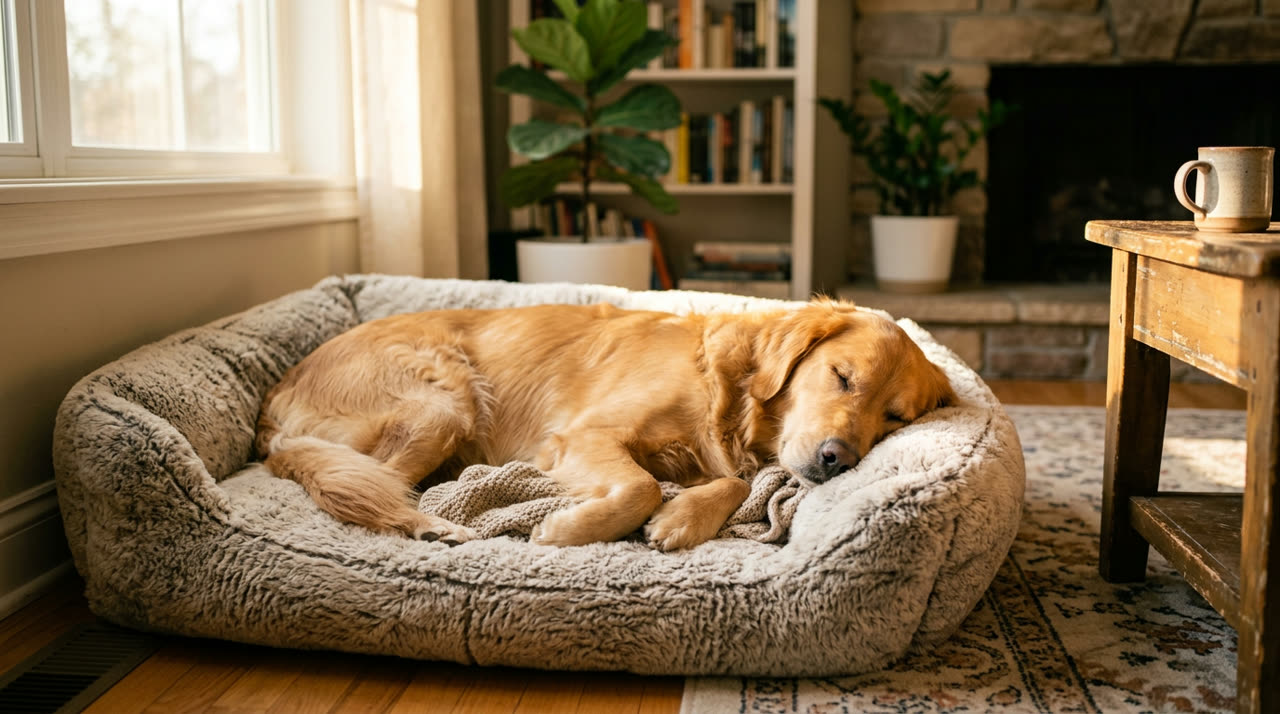
A peaceful, predictable environment plays a huge role in helping your Golden Retriever feel secure. Designate a specific cozy zone where your dog feels safe, comfortable, and relaxed. This could be a warm corner of the living room, an open crate with soft bedding, or a dedicated puppy-proof room.
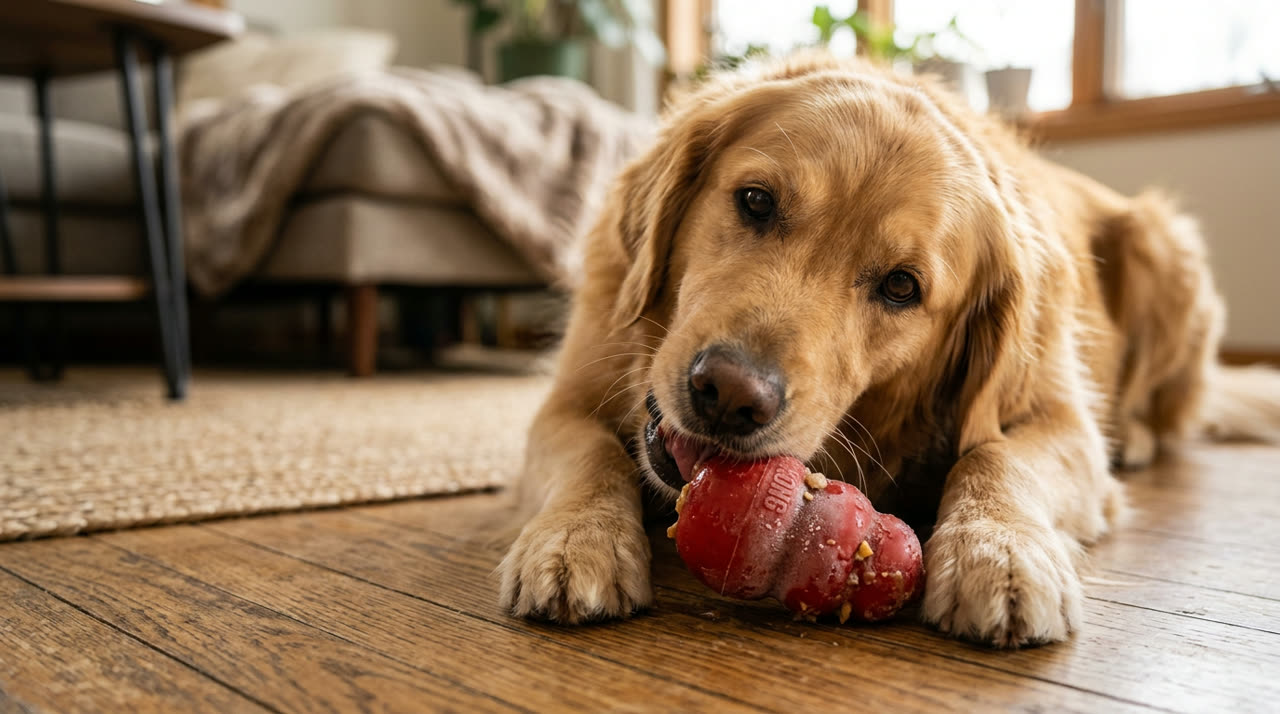
Providing mental occupation right before you leave helps shift your dog's focus from worry to reward. Stuffed frozen chew toys, puzzle feeders, and snuffle mats work exceptionally well for Golden Retrievers, who naturally love using their mouths and noses.
Ambient background noise can also mask unsettling external sounds like passing traffic or distant footsteps. Playing soft classical music, calm audiobooks, or white noise creates a soothing atmosphere that encourages deep rest.
- Offer long-lasting frozen chew toys or puzzle treats right before leaving.
- Use white noise or calming background music to filter outside sounds.
- Leave an unwashed t-shirt with your scent in your dog's resting area.
The Power of Physical and Mental Exercise
A tired Golden Retriever is significantly more likely to rest quietly while you are away. Golden Retrievers are high-energy athletic dogs that require regular physical outlets and mental engagement every day.
Before any planned departure, engage your dog in a solid workout session. A brisk thirty-minute walk, a game of fetch in the yard, or a structured jogging session helps expend excess physical energy, lowering baseline stress hormones.
Mental exercise is equally powerful for calming an active mind. Ten minutes of scent games, trick training, or basic obedience practice before leaving tires out your dog's brain, making a restful nap much more appealing than worrying about the door.
- Provide a substantial workout session at least 30 minutes before departures.
- Incorporate scent work and mental games to drain nervous energy.
- Allow your dog time to cool down and drink water before you step out.
When to Consult Professional Support
While mild cases of separation stress respond quickly to environmental changes and gentle desensitization, severe anxiety requires expert guidance. If your Golden Retriever exhibits extreme distress, self-injury, relentless howling, or severe property damage, professional help is necessary.
Work with a certified professional canine behaviorist or a qualified positive-reinforcement trainer who specializes in separation distress. They can create a customized, scientifically sound plan tailored specifically to your dog's emotional state.
Additionally, schedule a checkup with your veterinarian to rule out pain or underlying medical issues that could increase anxiety. For extreme cases, your vet may recommend short-term calming aids or medical support to help your dog reach a learning state.
- Seek a certified behavior professional (CPDT-KA or CSAT) for severe panic.
- Ask your vet about health checks or soothing supplements if distress is intense.
- Never use physical punishment or harsh corrections, as fear will increase.
Helping your Golden Retriever feel comfortable and confident alone is a journey built on consistency, patience, and small daily victories. By removing the emotional drama from departures and building safe, structured independence, you empower your beloved dog to relax peacefully until you return.
Remember that every dog progresses at their own individual pace. Celebrate small wins, stick to your routine, and always prioritize your dog's emotional well-being. With time, warm encouragement, and proper management, your Golden Retriever will master the art of calm, stress-free alone time.





0 Comments