
A Golden Retriever's paws carry them through a lifetime of adventures, from bounding across grassy parks to splashing through mountain streams. Because this breed is built for active outdoor pursuits, their foot pads, webbed toes, and thick fur require regular care and attention to remain healthy, comfortable, and pain-free.
Neglecting basic foot maintenance can lead to overgrown quicks, split nails, painful matting between the toes, and torn pads. In this comprehensive guide, we will break down everything you need to know about caring for your Golden Retriever's paws, including proper nail trimming techniques, pad maintenance, seasonal protection, and how to spot early signs of trouble.
Understanding Your Golden Retriever's Paw Anatomy
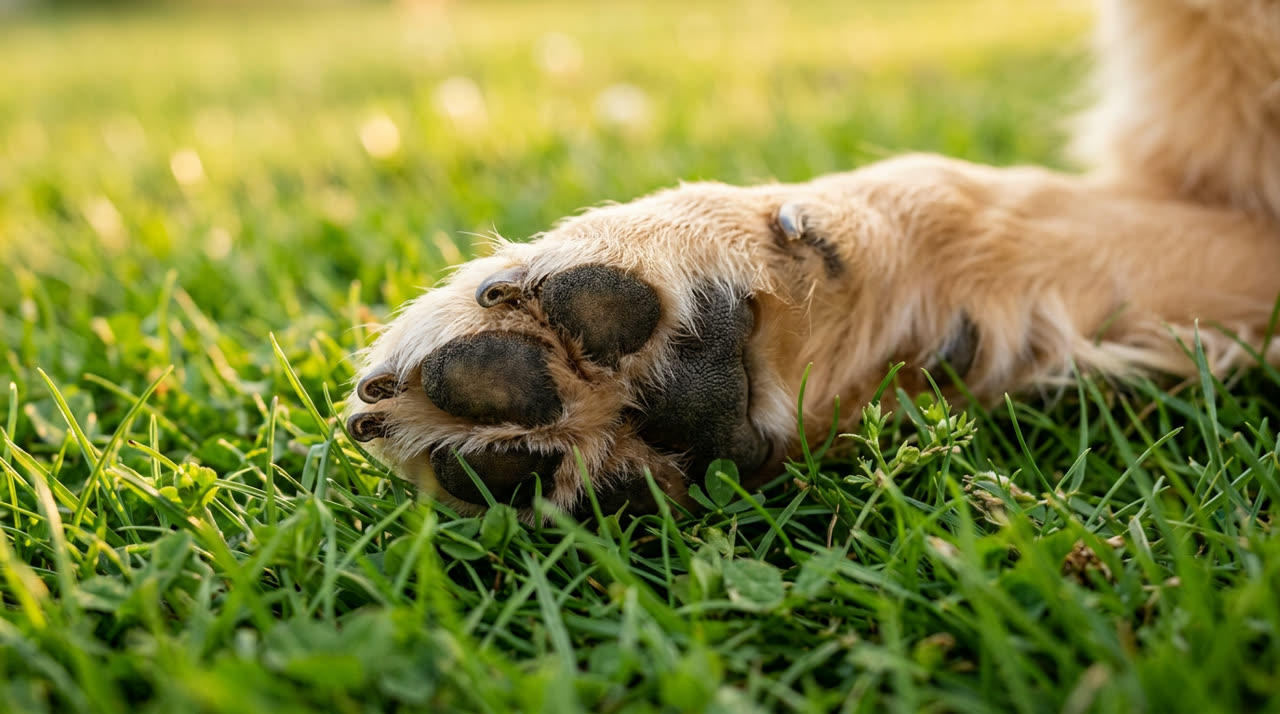
To properly care for your dog's feet, it helps to understand how their paws are constructed. Golden Retrievers possess large, sturdy paws equipped with strong leather-like pads, prominent claw structures, and distinctive webbing between their toes designed originally to aid in swimming and traversing wet marshlands.
Underneath each paw sits a main digital pad surrounded by smaller toe pads. These pads cushion the impact of running and jumping while providing traction on slippery surfaces. The thick coat of a Golden Retriever also extends to their feet, growing hair between the pads and around the toes. While this fur offers natural protection, it can trap moisture, dirt, debris, and ice if left unmanaged.
- Digital and Metacarpal Pads: Provide shock absorption and insulate against temperature extremes.
- Interdigital Webbing: Helps with swimming power and balance on soft surfaces.
- Quick: The internal blood vessel and nerve supply running through each toe nail.
- Paw Fur: Protects skin between toes but requires periodic trimming to maintain traction.
How to Trim Your Golden Retriever's Nails Safely
Regular nail trims are essential for your Golden Retriever's posture and joint health. When nails grow too long, they push the dog's toes upward, shifting their weight distribution backward onto their ankles and hips. Over time, long nails can cause chronic discomfort, arthritis, and structural strain throughout the legs.
Trimming nails can feel intimidating for owners concerned about cutting into the blood vessel known as the quick. However, with the right tools and a slow, cautious approach, you can maintain your dog's nails comfortably at home every two to three weeks.
- Choose high-quality heavy-duty dog nail clippers or a rotary grinder designed for large breeds.
- Have styptic powder or cornstarch nearby to instantly stop bleeding if you accidentally nip the quick.
- Trim only tiny slivers at a time, looking for a dark dot in the center of the nail cut surface, which signals the quick is near.
- Desensitize your Golden Retriever by touching their paws daily and rewarding them with high-value treats.
Maintaining Healthy Paw Pads and Preventing Cracks
Healthy paw pads should feel firm and tough, yet supple enough to flex smoothly as your dog moves. Exposure to rough terrain, hot pavement, harsh chemicals, and dry winter air can cause pads to become dry, cracked, and hyperkeratotic.
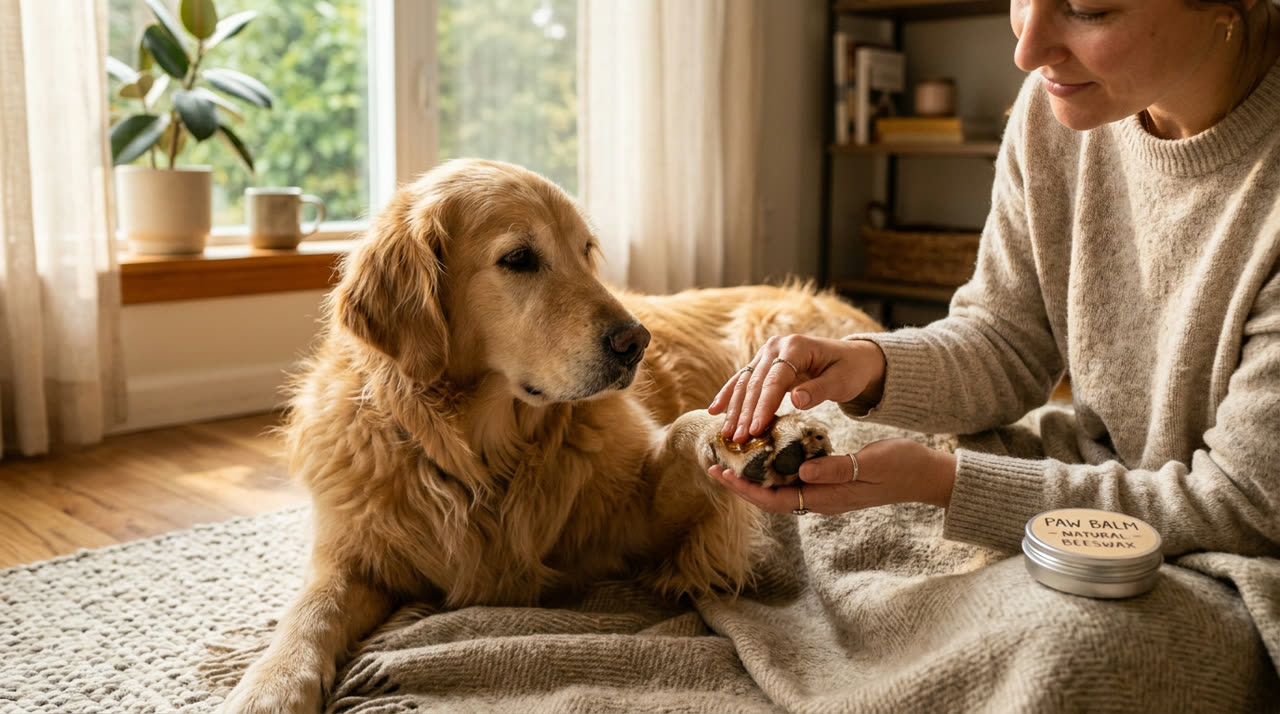
Cracked pads are not only painful for your dog when walking, but they can also allow bacteria and fungi to enter deep skin fissures. Applying a dedicated dog-safe paw balm once or twice a week keeps the skin hydrated without making pads excessively soft or prone to tearing.
Trimming Paw Fur and Managing Interdigital Health
Golden Retrievers are famous for producing fluffy fur around their feet, often referred to as slippers or grinch feet. While cute, long fur underneath the paw pads acts like smooth socks on polished floors, causing your dog to slip, slide, and strain their joints when walking indoors.
Excessive hair between the toes can also trap mud, small stones, stickers, and burrs, creating painful mats and skin irritation. Trimming the fur flush with the bottom of the pads improves traction and keeps the area dry and clean.
- Use small, round-tipped safety scissors or specialized dog clippers to trim bottom paw hair.
- Carefully comb out mats between the toes before attempting to trim excess fur.
- Inspect the interdigital space regularly for reddened skin, moisture buildup, or yeast odors.
Seasonal Paw Care: Summer Heat and Winter Hazards
Weather extremes bring distinct challenges for your Golden Retriever's feet. In hot weather, asphalt and concrete can easily reach temperature levels capable of burning delicate pad tissue within seconds. As a general rule, if the pavement is too hot for your bare hand for seven seconds, it is too hot for your dog's paws.
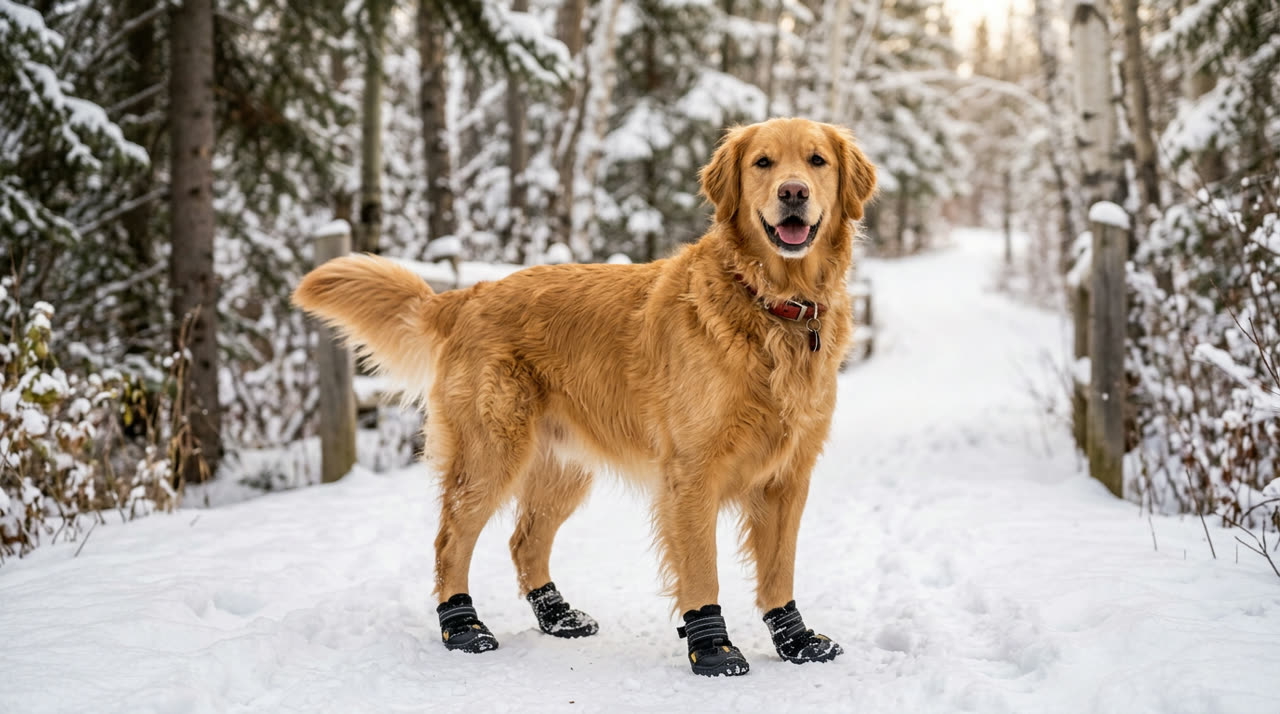
Winter introduces harsh road salts, chemical de-icers, and freezing temperatures. Ice clumps can collect in the hair between toes, causing pain and frostbite, while de-icing chemicals are toxic if licked off the paws after walks. Washing paws in warm water or using protective boots after winter outings protects your pet.
Identifying Paw Problems and Knowing When to Call the Vet
Because Golden Retrievers are active dogs that love exploring the outdoors, they frequently encounter foreign objects or foot injuries. Paying close attention to your dog's gait and routinely examining their feet helps you catch emerging issues early.
Licking or chewing at the paws repeatedly is a common sign of allergies, fungal infections, or trapped foreign bodies such as foxtails or thorns. If you notice swelling, bleeding, strong odor, deep cuts, or persistent limping, consult your veterinarian for proper diagnostic care.
Consistent paw care is a vital component of keeping your Golden Retriever happy, healthy, and mobile throughout their life. By pairing routine nail trims with pad inspection, fur grooming, and seasonal protection, you help protect your companion's foundation for years to come.
Start building a peaceful paw maintenance routine today by offering gentle handling and plenty of positive rewards, turning every grooming session into a bonding experience.





0 Comments