
Golden Retrievers are world-famous for their glowing personalities, expressive eyes, and heartwarming smiles. However, behind that iconic Golden grin lies an aspect of daily pet care that is far too often neglected: comprehensive oral hygiene. Just like humans, dogs rely on strong, clean teeth and healthy gums to navigate their daily lives comfortably and safely.
Medical studies indicate that over eighty percent of dogs exhibit noticeable signs of canine periodontal disease by the age of three. Because Golden Retrievers love to carry sticks, retrieve tennis balls, and interact with the world mouth-first, maintaining their dental wellness is vital. In this guide, we will explore practical home care techniques, red flag symptoms, safe chew options, and professional care strategies to keep your dog's mouth healthy for life.

Why Dental Health Is Vital for Golden Retrievers
Canine dental care is far more than an aesthetic issue or a cure for smelly breath. Every time your Golden Retriever eats or chews, microscopic food particles and bacteria mix with saliva to create a soft film called plaque. If plaque is not brushed away within twenty-four to forty-eight hours, it combines with minerals in the saliva and hardens into tartar, also known as calculus.
Tartar provides a rough, porous surface where harmful bacteria thrive, creeping beneath the gumline and triggering localized inflammation known as gingivitis. Left untreated, gingivitis advances to full-blown periodontal disease, causing gum recession, bone loss, and severe pain. Even worse, bacteria from infected gums can enter the bloodstream and spread to vital internal organs, putting your dog's heart, liver, and kidneys at serious long-term risk.
- Prevents chronic oral pain, tissue infection, and premature tooth loss.
- Reduces systemic risks to major internal organs like the heart and kidneys.
- Eliminates severe bad breath caused by unchecked bacterial overgrowth.
- Saves owners thousands of dollars in emergency dental surgeries and extractions.
Step-by-Step Guide to Brushing Your Dog's Teeth at Home
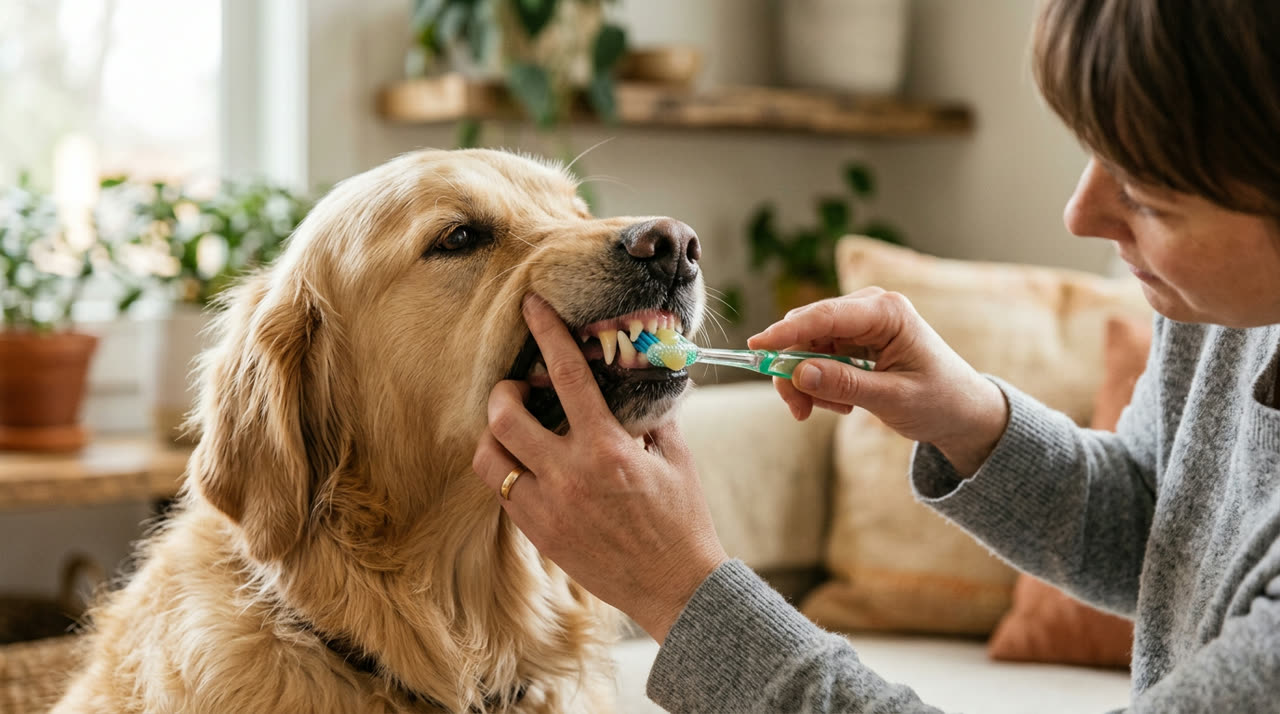
Brushing your Golden Retriever's teeth is the single most effective way to stop plaque from turning into hard tartar. While introducing a toothbrush to an adult dog might feel daunting initially, most Goldens learn to enjoy the process when it is paired with positive reinforcement, patience, and tasty dog-formulated toothpaste.
Never use human toothpaste on your dog. Human formulas frequently contain xylitol, an artificial sweetener that is toxic to dogs, as well as high levels of fluoride and foaming agents that can upset your pet's stomach. Instead, choose a canine enzymatic toothpaste in appealing flavors like poultry, peanut butter, or beef. Enzymatic pastes work actively to break down plaque even after you finish brushing.
- Phase 1 - Taste Test: Let your dog lick a small dab of dog toothpaste off your finger for three consecutive days to build a positive association.
- Phase 2 - Lip & Tooth Touch: Gently lift your dog's upper lip and rub their teeth and gums with your finger wrapped in soft gauze.
- Phase 3 - Introduce the Brush: Apply toothpaste to an angled canine toothbrush or silicone finger brush, brushing gently in small circular motions along the outer tooth surface.
- Phase 4 - Daily Routine: Focus primarily on the exterior surfaces where plaque accumulates fastest, aiming for 30 to 60 seconds of gentle brushing daily.
Recognizing Signs of Dental Distress and Gum Disease
Dogs are naturally adept at hiding physical discomfort, a survival trait inherited from their wild ancestors. As a result, many Golden Retrievers continue eating, playing, and retrieving even when suffering from cracked teeth or painful gum infections. Owners must remain vigilant for subtle physical and behavioral changes.
Persistent foul breath is often the first visible warning sign. While a dog's breath rarely smells like fresh mint, it should never smell foul, metallic, or rotten. Regular weekly checks inside your dog's mouth can help you catch localized issues long before they turn into systemic medical emergencies.
- Bright red, swollen, or bleeding gums along the tooth margins.
- Visible yellow-brown or greenish tartar buildup near the gumline.
- Drooling excessively, dropping kibble, or chewing exclusively on one side of the jaw.
- Reluctance to play with favorite soft toys or retrieve hard balls.
- Frowning, pawing at the face, or showing head shyness when touched near the muzzle.
Choosing Safe Dental Chews, Toys, and Diet Options
Mechanical scraping from natural chewing plays a helpful secondary role in controlling surface plaque. However, not all chew items sold in pet stores are safe for your Golden Retriever's strong jaws. Hard materials like real bones, cooked marrow bones, deer antlers, cow hooves, and hard synthetic nylon bones can easily fracture dog teeth, resulting in painful root exposures.
A practical guidelines is the thumbnail test: if a chew item is so hard that you cannot leave a slight indentation with your thumbnail, it is too hard for your dog's teeth. Additionally, look for products carrying the official seal of the Veterinary Oral Health Council (VOHC), which verifies that a product has been scientifically proven to reduce plaque and tartar.
- Safe Options: VOHC-accepted dental chews, durable rubber toys (like classic Kongs), and pliable dental chew sticks.
- Unsafe Options: Natural cooked bones, raw marrow bones, thick deer/elk antlers, hard plastic nylons, and ice cubes.
- Specialized Diets: Talk with your vet about dental prescription diets featuring oversized kibble engineered to scrape teeth clean as your dog chews.

Understanding Professional Veterinary Cleanings
Even with consistent home brushing, most Golden Retrievers will eventually require a professional dental cleaning during their lifetime. Much like human dental visits, a veterinary cleaning allows for a thorough assessment that goes far beyond what is visible to the naked eye.
Professional cleanings must be performed under general anesthesia. Anesthesia allows the veterinary team to take intraoral X-rays (revealing root decay under the gums), clean deeply inside periodontal pockets, scrape away stubborn subgingival tartar, and polish the tooth enamel smooth to prevent rapid bacterial re-attachment.
Be cautious of services offering 'anesthesia-free' dental cleanings. While they may remove surface tartar for aesthetic purposes, non-anesthetic procedures are purely cosmetic. They cannot clean beneath the gumline where destructive periodontal disease occurs, and they cause unnecessary stress for your dog.
Dental Care Adjustments Across Your Golden's Life Stages
Your Golden Retriever's oral care needs will evolve as they transition from an energetic puppy to a distinguished senior. Tailoring your routine to their age ensures optimal comfort and protection throughout their life.
Puppies begin losing their twenty-eight baby teeth around twelve to sixteen weeks of age as forty-two permanent adult teeth push through. During this teething phase, provide soft, chilled rubber chew toys to soothe tender gums while continuing basic lip-handling exercises.
Senior Golden Retrievers often face increased risks of gum recession, tooth wear, and cracked enamel. Inspect their mouth frequently, switch to softer foods or moistened kibble if chewing becomes uncomfortable, and schedule bi-annual veterinary examinations to monitor aging teeth.
Maintaining your Golden Retriever's dental health requires patience, consistency, and the right combination of home care and professional veterinary oversight. By building a daily toothbrushing habit, providing safe chew toys, and monitoring for early signs of disease, you protect far more than just your dog's smile—you safeguard their total systemic health.
Start today by letting your Golden sample a tiny dab of dog-friendly toothpaste. Small, positive steps taken today will ensure your beloved companion enjoys a lifetime of painless chewing, vibrant energy, and joyful Golden smiles.



0 Comments