
Cricket is uniquely tied to the natural atmosphere. Unlike indoor court sports or field games like football that proceed through heavy rain and harsh conditions, cricket is meticulously governed by sunlight, soil moisture, wind speed, and atmospheric humidity. Every over bowled, every pitch curated, and every match scheduled relies on predictable seasonal weather patterns. For over two centuries, the ebb and flow of summer months across the globe dictated when and where the game was played.
However, as global climate patterns shift, cricket finds itself on the direct frontline of environmental disruption. Unprecedented heatwaves, volatile rain cycles, unseasonal monsoons, and deteriorating air quality are actively altering match conditions and threatening player health. From elite international Test series to grassroots weekend leagues, the sport is reaching a critical junction: adapt its infrastructure, scheduling, and operations, or face severe disruption in a rapidly warming world.
Extreme Heat and Player Health Boundaries
Summer is cricket's natural home, but extreme heat waves in core cricket regions—such as South Asia, Australia, the Caribbean, and parts of Southern Europe—are pushing human physiological boundaries. Fast bowlers running several kilometers per match in 40°C (104°F) heat face severe risks of heatstroke, rapid dehydration, and severe muscle cramping. High temperatures also impair cognitive function, affecting quick decision-making under high-pressure scenarios.
To mitigate these physical stresses, administrators and medical teams are updating player safety protocols. Matches held in peak summer months increasingly feature mandatory cooling breaks, ice vests during intervals, and continuous core-temperature monitoring. In some regions, cricket boards are reconsidering traditional day matches altogether, favoring day-night fixtures or twilight starts to shield players and fans from extreme afternoon radiation.
- Accelerated fluid loss impairing fast bowler stamina and execution late in spells
- Higher incidence of severe muscle cramps and heat-related exhaustion during extended Test match innings
- Implementation of formal heat-policy guidelines allowing additional hydration breaks or delayed match starts
Shifts in Rainfall Patterns and Ground Drainage Innovations
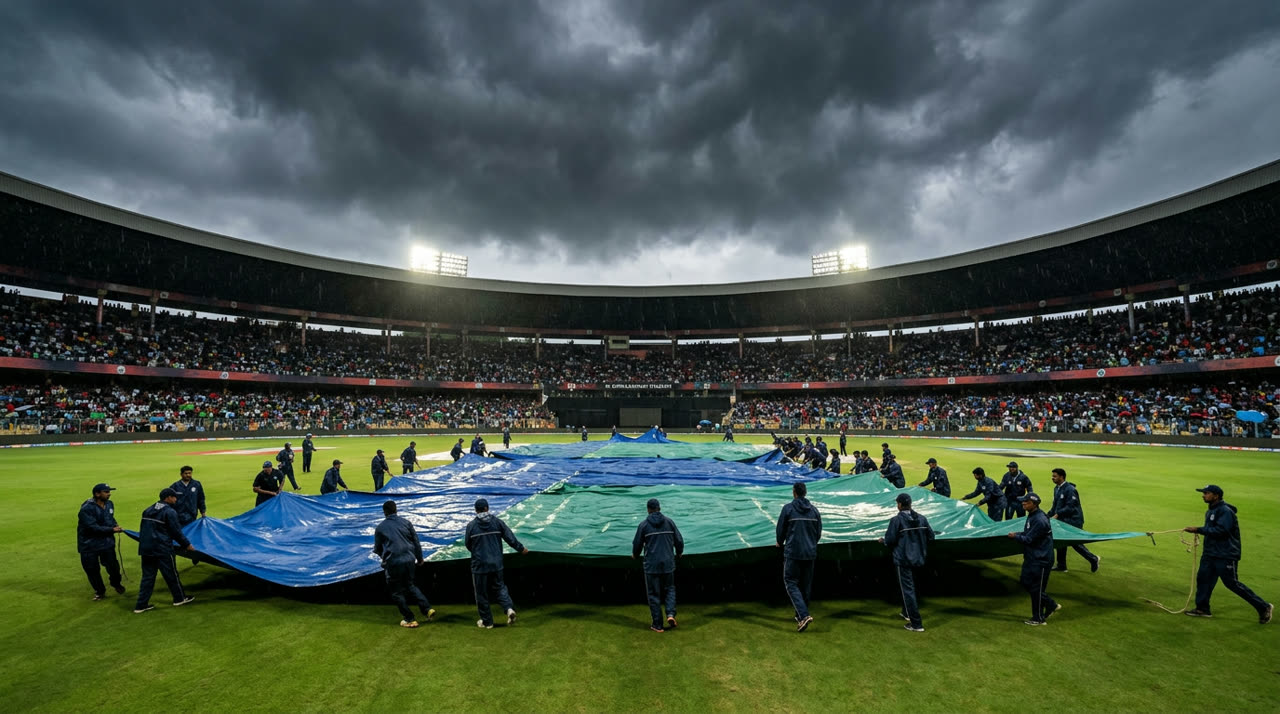
While extreme heat presents one set of physical challenges, unpredictable rain causes immediate structural and financial disruption. Unseasonal downpours and sudden flash storms lead to abandoned matches, shortened games, and intricate mathematical adjustments like the Duckworth-Lewis-Stern (DLS) method. For stadium operators and regional boards, washed-out fixtures result in massive revenue losses across ticketing, broadcasting, and stadium operations.
In response, stadium architecture and pitch engineering are undergoing a rapid technological revolution. Modern venues are investing heavily in advanced sub-surface aeration and vacuum drainage systems. Facilities equipped with automated underground suction can extract thousands of liters of surface water per minute, allowing play to resume within twenty minutes of a heavy downpour. Groundwater management has evolved from simple tarpaulin covers to high-tech turf engineering.
- Sub-surface vacuum drainage systems drying playing surfaces in minutes rather than hours
- Full-ground covering systems replacing traditional pitch-only canvas tarps
- Financial pressure pushing organizers toward hyper-accurate localized weather forecasting

Air Quality and Pitch Agronomy under Environmental Stress
Beyond temperature and rain, air pollution presents a growing operational hazard for cricket in major urban hubs. Hazardous Air Quality Index (AQI) levels during late-autumn and winter months in metropolitan centers across South Asia have caused play suspensions due to dangerous smog levels and reduced visibility. Breathing fine particulate matter during elite physical exertion poses severe respiratory risks to fielders and batsmen operating over multi-day periods.
Simultaneously, pitch curators face unprecedented hurdles maintaining standard pitch behavior. Soil agronomy is delicate; erratic swings between prolonged droughts and sudden moisture spikes disrupt clay cohesion, causing pitches to deteriorate unpredictably. Pitch curators must constantly adjust organic soil compositions, grass species selection, and watering schedules to preserve traditional pitch characteristics—such as consistent bounce and natural turn—under erratic climate cycles.
- Frequent monitoring of air quality indices with mandatory match delay protocols
- Altered soil behavior causing unpredictable uneven bounce or premature pitch cracking
- Shift toward drought-tolerant, resilient turf grass species in warm-weather venues
Greening the Game: Sustainable Stadium Operations
As cricket deals with the consequences of environmental shifts, the sport is also recognizing its own ecological footprint. International tours involve extensive air travel, while giant stadiums consume vast quantities of grid energy and generate tons of plastic waste during major tournament matches. In response, key cricket venues worldwide are championing carbon-neutral stadium operations.
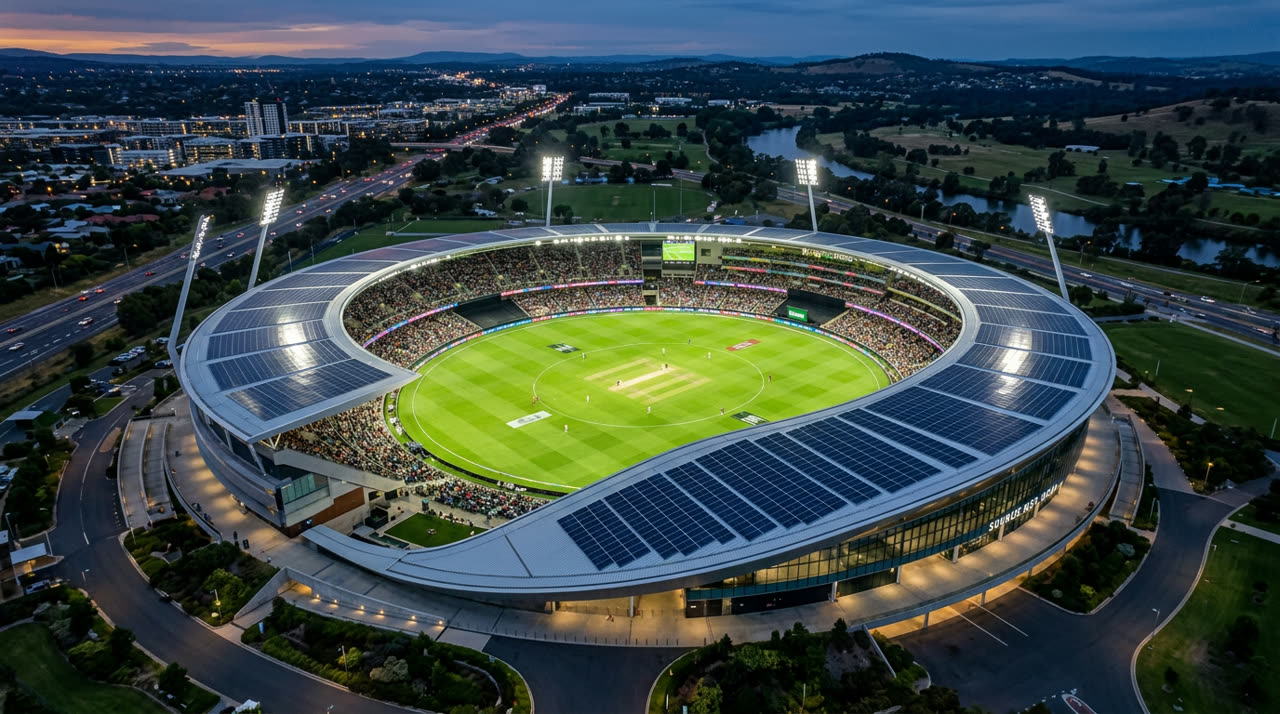
Leading venues have installed massive solar panel arrays across stand roofs, generating enough renewable energy to power high-powered LED floodlights and run daily stadium operations. Rainwater harvesting systems integrated into stadium architecture store millions of liters of runoff water to maintain outfield grass without straining local municipal water supplies. Furthermore, zero-waste initiatives are phasing out single-use plastics in favor of compostable food packaging.
- Solar canopy installations providing clean energy for stadium floodlighting systems
- Large-scale rainwater harvesting reservoirs dedicated to pitch and outfield irrigation
- Transition toward paperless ticketing, digital operations, and zero-single-use-plastic stadiums
Strategic Calendar Adjustments and Venue Flexibility
The traditional international cricket calendar was built around established seasonal norms. However, volatile weather patterns are forcing administrative bodies to reconsider long-held scheduling assumptions. Tournaments once anchored to specific months now risk frequent disruptions if scheduled during expanding monsoon windows or extreme heat spells. Long-term calendar planning must now prioritize climate modeling alongside traditional commercial considerations.
Future scheduling strategies may see matches distributed across alternative regional hubs with temperate micro-climates. Additionally, tournament organizers are factoring mandatory reserve days into high-stakes playoff fixtures to ensure matches reach natural conclusions. The conversation around multi-use enclosed venues with retractable roofs—traditionally dismissed due to scale and cost—is gaining traction as cricket looks for guaranteed play windows.
- Integrating localized climate data into multi-year international fixture scheduling
- Wider inclusion of reserve days for knockout matches in ICC international tournaments
- Feasibility studies evaluating retractable-roof stadiums for high-value cricket events
Cricket’s deep connection to the elements makes it one of the most weather-vulnerable sports on Earth. The challenges posed by extreme temperatures, unexpected rainfall, and changing air quality are no longer distant theoretical threats—they are active operational realities impacting players, stadium managers, and fans worldwide.
Through technological innovation in ground drainage, sustainable stadium architecture, proactive player safety protocols, and flexible scheduling, cricket is demonstrating impressive resilience. By taking decisive action to protect players and reduce the sport's environmental footprint, cricket can secure its legacy and ensure the game thrives for future generations.





0 Comments