
The crisp sound of leather meeting willow is one of the most iconic acoustic signatures in global sport. In an era where modern athletics is increasingly dominated by carbon fiber composites, high-tensile polymers, and synthetic alloys, cricket remains stubbornly and beautifully tied to a natural timber. While tennis rackets evolved through wood, aluminum, and graphite over the past century, the cricket bat has maintained its basic organic recipe for over two hundred years.
At the heart of this craft sits Salix alba—specifically the white willow tree. Every stroke executed on the pitch, from a defensive block to a high-speed lofted drive, depends entirely on how this unique wood responds under high-impact stress. Understanding the cellular science of cricket willow, the contrast between English and Kashmiri timber, and the ecological challenges facing bat makers offers a compelling look into how nature and sport remain deeply intertwined.
The Botanical Marvel: Why Salix Alba Rules Cricket
Not all timber can survive the kinetic force of a hard, five-and-a-half-ounce leather ball traveling at speeds exceeding 90 miles per hour. Dense hardwoods like oak or maple are far too heavy, turning a bat into an unwieldy club that transmits painful vibrations into the batter's hands. Softwoods like pine offer low weight but splinter almost instantly under dynamic tension. Willow occupies a rare botanical sweet spot: it is lightweight enough to swing rapidly, yet structurally resilient enough to absorb immense impacts.
The specific variety cultivated for elite cricket equipment is Salix alba var. Caerulea, commonly known as White Willow or Cricket Bat Willow. The magic of this tree lies in its microscopic cellular arrangement. Willow timber features a network of air-filled cellular voids held within flexible cell walls. When a ball strikes the face of the bat, these cells compress momentarily, acting as a natural shock-absorption system before rebounding to return energy to the ball.
- High strength-to-weight ratio allows large bat profiles without excessive total mass.
- Natural damping properties protect the batter's hands from impact vibration.
- High fibrous elasticity allows the timber to be mechanically compressed without breaking.
English vs. Kashmir Willow: Geography, Density, and Performance
The global cricket bat market relies primarily on two geographic origins: English Willow grown in the United Kingdom, and Kashmir Willow harvested across northern India. Although both belong to the Salix alba species, regional climate conditions, soil hydrology, and growing speeds produce vastly different mechanical profiles.
English Willow grows in damp, temperate river valleys across East Anglia and surrounding regions. The cool, consistent climate fosters rapid, steady growth, producing timber that is pale in color, low in physical density, and soft enough to yield high ball exit velocity upon impact. Professional international players almost exclusively prefer high-grade English Willow because its light weight allows craftspeople to shape thick edges and deep spines while maintaining a light pickup.
In contrast, Kashmir Willow grows under harsher mountain conditions with wide seasonal temperature swings. This environment slows tree growth, yielding timber that is denser, darker, drier, and heavier. A Kashmir willow bat is exceptionally durable and less prone to surface denting, making it an excellent choice for entry-level players and recreational cricket. However, its higher density makes achieving modern ultra-thick bat profiles more difficult without adding unwieldy weight.
From Forest to Field: The Craft of Cleft Processing
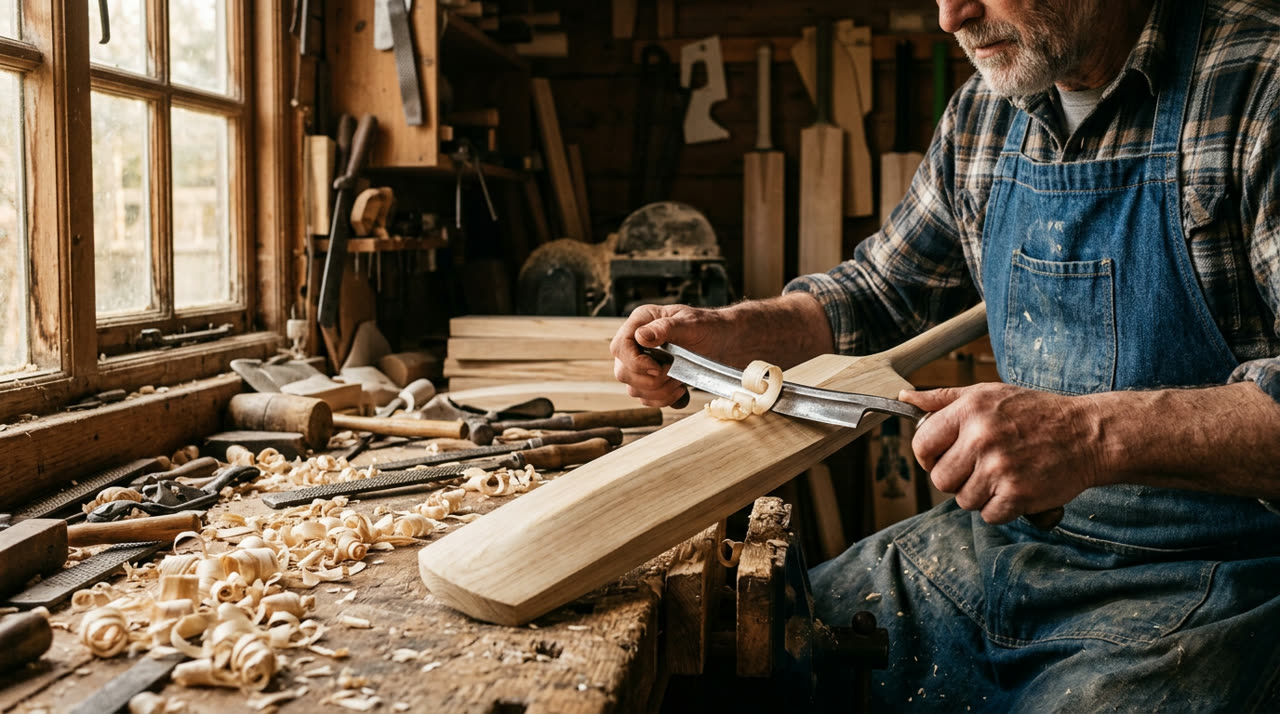
Transforming a standing tree into a finished cricket bat requires a delicate balance of traditional woodworking and materials engineering. The process begins by felling mature trees—typically aged between 15 and 20 years—and splitting the trunk along its natural grain into triangular blocks called clefts. Splitting, rather than sawing, keeps the longitudinal wood fibers intact, ensuring maximum structural integrity.
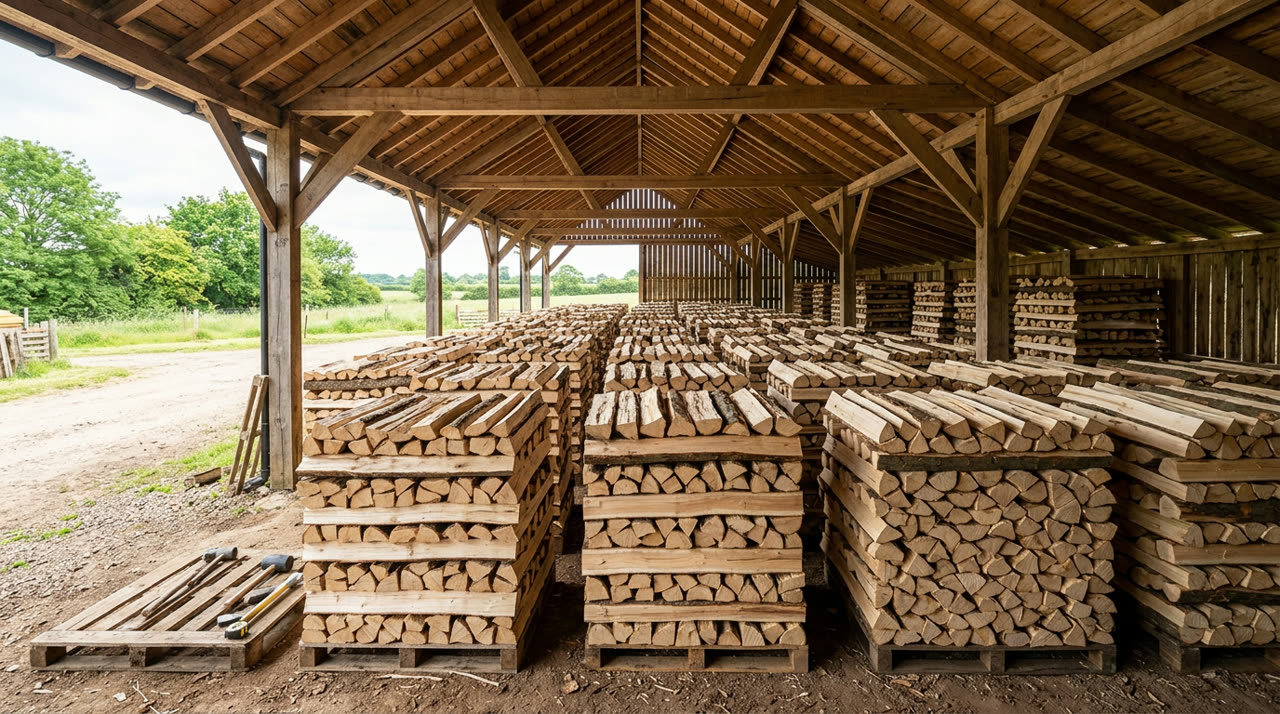
Once split, raw clefts undergo a controlled drying process to reduce moisture content from over 60 percent down to a stable 10 to 12 percent. While industrial kilns can accelerate drying, traditional air seasoning under shaded open sheds over several months remains the gold standard. Air drying preserves the natural oils within the wood, keeping the timber supple.
The most critical step in shaping performance is mechanical pressing. Raw willow is naturally too soft to withstand direct ball impact without deep denting. Bat makers pass the cleft beneath a heavy steel roller under precise hydraulic pressure. Pressing compresses the surface fibers and compacts the micro-cellular air pockets, hardening the face. A skilled craftsman must feel the density of each individual piece of wood; pressing too hard deadens the trampoline effect, while pressing too little risks early structural cracking.
Climate Pressures and Supply Chain Realities
The traditional cricket bat industry faces mounting ecological pressures driven by unpredictable weather patterns, land competition, and forestry management challenges. Willow trees require reliable access to groundwater and stable seasonal conditions to produce the straight, unblemished grain patterns prized by bat makers.
In traditional UK growing regions, shifting rainfall patterns and summer droughts create stress for growing trees, leading to erratic grain spacing and increased occurrences of natural blemishes like knots or color staining. Meanwhile, in Kashmir, demand for timber has put immense pressure on mature plantations, leading to local initiatives aimed at replanting and modernizing forestry management.
Because a cricket willow tree takes up to two decades to reach harvestable maturity, decisions made by forest managers today directly impact bat availability and pricing decades into the future. Sustainable commercial forestry, specialized tree breeding, and responsible timber management are becoming essential components of the sport's supply chain.
Regulatory Boundaries and Material Innovation
As natural willow faces supply and environmental constraints, sports engineers have repeatedly explored synthetic alternatives. Past experiments have introduced carbon-fiber face covers, graphite handles, and composite cores. More recently, university researchers demonstrated that engineered laminated bamboo could offer impressive strength, high energy return, and faster harvesting cycles compared to traditional timber.
However, cricket's governing bodies maintain strict regulations regarding equipment. Law 5 of the Laws of Cricket, maintained by the Marylebone Cricket Club (MCC), explicitly mandates that the blade of a cricket bat must consist entirely of natural wood. Small composite materials are permitted in handle construction for shock absorption, but the hitting surface must remain pure timber. This rule preserves the traditional balance between bat and ball, ensuring that technology does not override athletic skill.
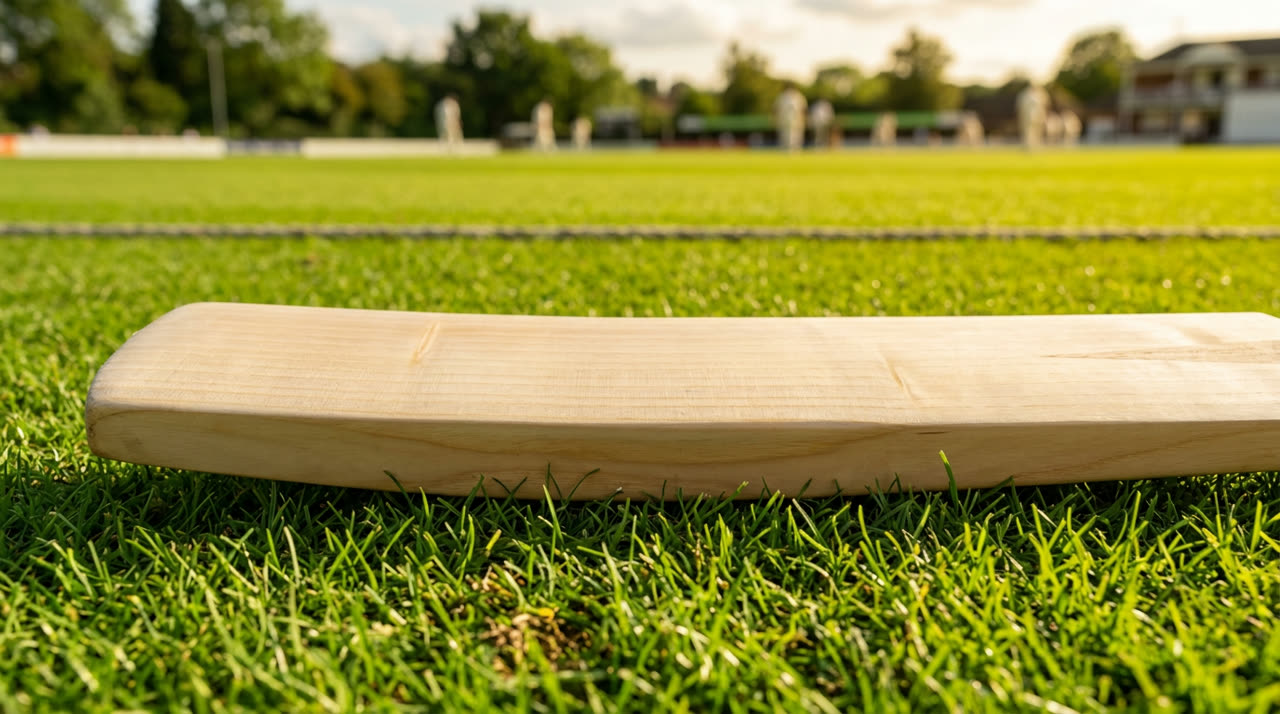
The cricket bat remains an enduring triumph of natural material science. In a sporting world increasingly reliant on synthetic polymers and digital manufacturing, cricket continues to derive its central implement from the unique cellular properties of Salix alba. The synergy between natural biology, climate, pressing mechanics, and human craft ensures that every wooden blade carries a distinct character.
Safeguarding this heritage requires thoughtful stewardship of global forestry resources. As long as players walk out to the crease searching for that perfect, sweet-spot strike, the quiet art of cricket bat craftsmanship will remain one of the most vital traditions in global sport.





0 Comments