
For over a century, cricket batting was governed by the uncompromising rules of the classical coaching manual. Straight bats, rigid footwork, and high elbows were considered the only respectable defenses against world-class bowling. Players who dared to cross their boots or swing across the line were often criticized for lack of discipline, with traditionalists viewing non-standard strokes as reckless gambles rather than legitimate skill.
Today, that foundational paradigm has fundamentally collapsed. The explosive growth of shorter formats has forced a complete re-imagining of how runs can be scored. Shots once dismissed as circus tricks—such as the paddle scoop, the reverse ramp, and the switch-hit—have transformed into calculated, highly engineered offensive weapons. Modern batters no longer simply react to where fielders are placed; they use unorthodox geometry to force captains into unwinnable strategic dilemmas.

The Death of the Manual: Unlocking New Scoring Angles
In traditional cricket, a bowler's primary objective was to maintain a tight line on off-stump, backed by a cluster of slips and catching fielders. Batters were expected to respect good deliveries, defending dead down the pitch or leaving balls outside off-stump. This created a structured chess match where runs were predominantly scored through conventional arcs: the cover drive, the mid-wicket pull, and the straight drive.
The innovation of unorthodox strokeplay dismantled this geometric order. Batters realized that while a field captain could protect seven or eight traditional scoring zones, the area directly behind the wicketkeeper remained perpetually vulnerable due to safety boundaries and fielding restrictions. By manufacturing shots that send speed-of-light deliveries sailing over the keeper’s head or past short fine leg, modern batters opened up 360 degrees of scoring potential, rendering conventional defensive field placements obsolete.
Deconstructing the Arsenal: Anatomy of Unconventional Shots
What makes modern unorthodox batting so fascinating is not merely the audacity required to attempt these shots, but the intricate mechanical adjustments needed to execute them consistently against 90-mph bowling. These strokes are not wild swings; they are meticulously rehearsed tactical interventions.
The evolution of these innovative shots can be broken down into three distinct categories of strokeplay, each serving a specific tactical purpose on the field:
- The Lap Scoop and Dilscoop: Pioneered in the early short-form eras, this shot involves kneeling early or lowering the body posture to catch a full-length delivery underneath the eyeline, using the bowler's own pace to ramp the ball directly backward over the wicketkeeper.
- The Reverse Ramp: Executed by flipping the face of the bat horizontally or diagonally late in the bowler's stride, directing yorkers or back-of-a-length deliveries over short third man with subtle wrist manipulation.
- The Switch-Hit: A biomechanical marvel where a batter completely flips their stance and hand grip mid-delivery—turning from a right-handed batter to a left-handed batter—to exploit field voids on what was previously the leg side.
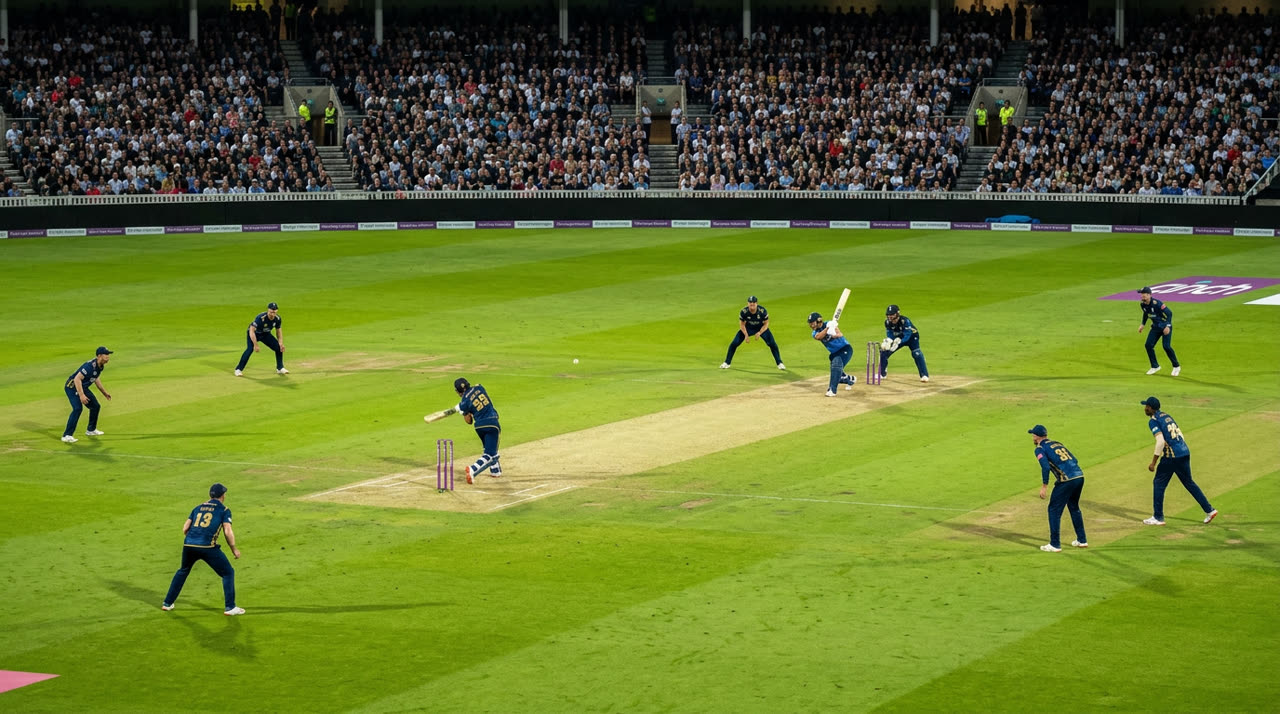
The Biomechanics of High-Risk Strokeplay
To the untrained eye, playing a reverse ramp against a fast bowler looks like a near-suicidal gamble. However, high-speed camera analysis reveals extraordinary movement efficiency and physical discipline behind every execution.
Elite batters maintain a stable, still head right up to the moment of contact. Rather than moving away from the ball, they create a steady base by dropping their center of gravity. This stability allows them to track the ball's seam and bounce while their hands remain soft, absorbing impact rather than swinging violently.
Furthermore, spatial awareness plays a crucial role. Modern players utilize subtle pre-meditation: they slide across their stumps to cover off-stump, deliberately altering the bowler's visual sightlines. By forcing the bowler to adjust their target late in their run-up, the batter dictates where the ball will pitch, making the execution of the unorthodox shot far safer than it appears.
Tactical Disruption: Breaking a Bowler’s Rhythm
The primary value of unorthodox batting extends far beyond the immediate four or six runs added to the scoreboard. Its true power lies in its psychological and tactical disruption. When a fast bowler delivers a perfect, toe-crushing yorker at top speed—only to watch it delicately scooped over fine leg for six—the conventional hierarchy of the contest breaks down.
Bowlers lose faith in their most trusted deliveries. A line and length that once yielded dot balls suddenly becomes a risk vector. Once a bowler abandons their plan to protect against an unorthodox stroke, they often start bowling shorter or wider, drifting right into the batter's conventional hitting zones.
In this sense, the reverse sweep or scoop acts as a psychological key that unlocks the rest of the ground. By threatening to hit the ball where fielders aren't, batters force bowlers to throw away their primary strategies.

The Strategic Counter-Attack: How Field Captains Respond
The rise of creative strokeplay has forced modern field captains and analysts to completely redesign defensive blueprints. The traditional practice of setting fields based solely on pitch conditions and bowler style is no longer sufficient when facing 360-degree batters.
Captains now employ fluid field changes, dropping fine leg or deep third man back to the boundary while keeping mid-off inside the ring. Some fast bowlers have adapted by using wide-cutters and high-bouncing slower balls, intentionally making it physically impossible for batters to get underneath the ball for a ramp shot.
This dynamic has created a thrilling dynamic on the field. Batters shuffle across the crease to signal intent; bowlers hold their release until the absolute last fraction of a second; captains adjust fielders micro-meters at a time. It is a high-speed game of mental chicken where one misstep leads to a boundary or a fallen wicket.
Grassroots Integration: The New Training Paradigm
Perhaps the clearest proof of this strategic evolution is found in youth academies around the world. Two decades ago, a young player attempting a reverse sweep in a practice net would have received a stern reprimand from their coach.
Today, elite cricket academies actively teach these shots as core competencies alongside the forward defensive and the classical straight drive. Young players are trained in wrist flexibility, reverse grip switches, and body positioning from an early age. The unorthodox has officially become orthodox; creative shot-making is no longer viewed as an act of defiance, but as an essential element of modern athletic literacy.
The transformation of cricket batting over the past two decades demonstrates how athletic sports continuously self-innovate when forced to adapt. What began as desperate attempts to find quick runs in limited-overs matches has evolved into a sophisticated discipline grounded in biomechanics, spatial intelligence, and tactical pressure.
By challenging the century-old dictates of the coaching manual, modern batters have expanded the boundaries of what is possible on a cricket pitch. Unorthodox strokeplay has not degraded the traditional sport; it has enriched it, proving that even cricket's most established rules can be rewritten through daring creativity and mechanical mastery.



0 Comments