
In cricket, symmetry is a myth. While right-handed players make up the vast majority of the global playing population, left-handed athletes consistently exert a disproportionate influence on tactical planning, team construction, and match outcomes. From opening batters who dismantle bowling plans to lethal left-arm seamers who wreck top orders in high-pressure opening overs, the southpaw presence creates challenges that right-handers simply cannot match.
The power of the left-hander does not stem from superior athleticism alone; it is fundamentally a game of geometry, spatial optics, and deep-seated human habit. Because right-handedness is the baseline for standard cricket coaching, left-handed players introduce a subtle inversion of lines and angles. Understanding this geometric dynamic offers a fascinating look into how elite matches are won and lost behind the scenes.
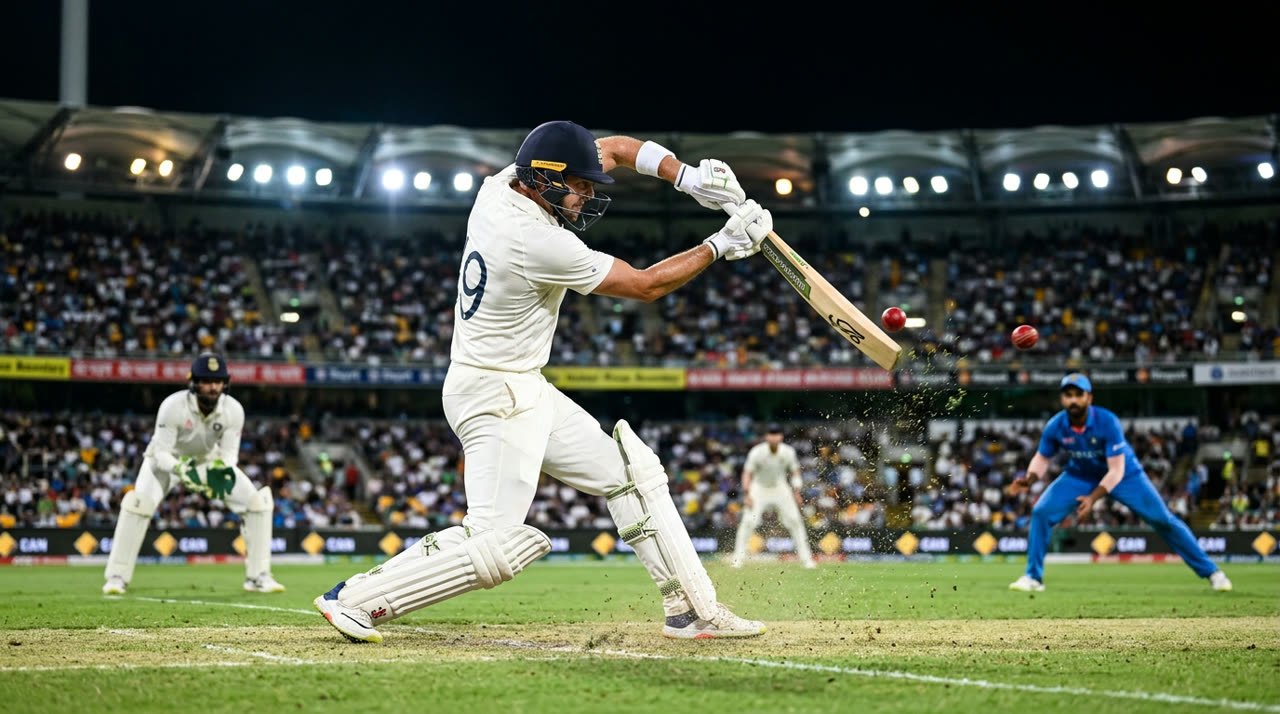
The Geometric Anomaly: Why Angles Favor the Southpaw
To understand why left-handers cause such tactical headaches, one must look at the geometry of the pitch. When a right-arm bowler delivers to a right-handed batter, the ball follows a familiar trajectory. The sightlines, release points, and bounce angles align with what the batter has faced thousands of times in training.
When a left-hander enters the crease, those familiar spatial reference points disappear. A left-arm fast bowler over the wicket delivers the ball from a wide angle, slanting it naturally across a right-handed batter toward the slips or angling sharp into the pads. This natural deviation creates split-second hesitation in a batter's decision-making, as the ball appears to originate from a completely different point in the background.
Dismantling Line and Length: The Batter's Perspective
Bowlers spend decades muscle-memory training to hit the target 'corridor of uncertainty' off a fourth-stump line to right-handers. When a left-handed batter stands at the guard, that exact line becomes a harmless stump-line or leg-side delivery that can be comfortably whipped away for runs.
Adjusting a bowler's target line by even three inches requires conscious mental recalibration. Under pressure, bowlers frequently fall short of this adjustment, straying either too wide into the driving arc or too straight onto the pads.
- Forced Recalibration: Seam bowlers struggle to maintain seam position when shifting release points for left-handers.
- Fielding Friction: Captains are forced to constantly alter field placements, draining clock time and disrupting team focus.
- LBW Angle Inversion: Deliveries pitching outside leg stump negate leg-before-wicket decisions, giving left-handers a natural margin for error.

The Left-Arm Fast Bowler: Cricket's Premier Asset
There is a reason every international franchise and national board actively searches for high-pace left-arm seamers. A quality left-arm fast bowler possesses the ultimate attacking weapon: the delivery that starts on a middle-and-leg line and swings late into the right-handed batter's front pad.
Because right-handers are trained to guard their off-stump, a rapid left-arm inswinger threatens both the pad and the stumps simultaneously. Combined with the variation delivery that holds its line or nips away toward the slip cordon, the left-arm seamer turns the batter's front foot into a major tactical liability.
Spin Dynamics: Slow Left-Armers and Matchup Analytics
The impact of left-handedness is equally pronounced in the slow bowling department. Slow left-arm orthodox spinners impart natural side-spin that turns the ball away from right-handed batters. In white-ball cricket, forcing a right-hander to hit against the natural spin toward the longer side of the boundary is a primary run-saving tactic.
Conversely, left-arm wrist spinners—historically rare and highly valued—bring extreme wrist-turn and unpredictable bounce. Modern sports analytics teams frequently construct entire bowling strategies around these spin matchups, holding left-arm spinners back specifically to bowl against target right-handed lineups.

Tactical Chaos: The Left-Right Batting Synergy
Few tactical scenarios frustrate a fielding captain more than a established left-right batting partnership. Every time a single is taken and the strike rotates, the entire fielding unit must shift. Boundary fielders slide across the grass, inner-ring catching positions swap sides, and the bowler must reset their sightline.
This constant rotation prevents fielders from settling into an easy rhythm. Furthermore, boundary dimensions on asymmetrical grounds often favor one batter while penalizing the bowler facing the other, giving the batting side a persistent strategic upper hand.
Neutralizing the Edge: How Modern Teams Adapt
To counter the southpaw advantage, contemporary cricket coaching relies heavily on video analysis and specialized equipment. Teams use bowling machines programmed with wide release angles to train right-handed batters against left-arm trajectories.
From a bowling perspective, off-spinners are deployed as direct counters to left-handed batters, turning the ball into their body to restrict free arms. Fast bowlers are also increasingly trained to bowl over and around the wicket with equal skill, minimizing the geometric advantage southpaws traditionally held.
The left-handed advantage in cricket is a masterclass in how minor spatial variations can yield dramatic competitive edges. While modern analytical tools and specialized training grounds have made teams better prepared for southpaws, the organic geometric challenges they pose remain embedded in the nature of the sport.
As cricket continues to favor fast-paced scoring and high-pressure tactical matchups, the strategic dance between right and left will remain one of the game's most compelling chess matches.


0 Comments