
In the early morning hours of March 18, 1990, two men dressed as police officers walked into Boston's Isabella Stewart Gardner Museum and pulled off the largest art theft in recorded history. Over eighty-one minutes, they walked out with thirteen priceless masterpieces, leaving empty frames hanging on the walls that remain untouched to this day. How could half a billion dollars in famous art vanish into thin air without leaving a single trace?
For more than thirty-four years, federal agents, private investigators, and art historians have searched the globe for answers. Despite a ten-million-dollar reward and thousands of leads, not a single painting from that night has ever been recovered.
The Midnight Robbery
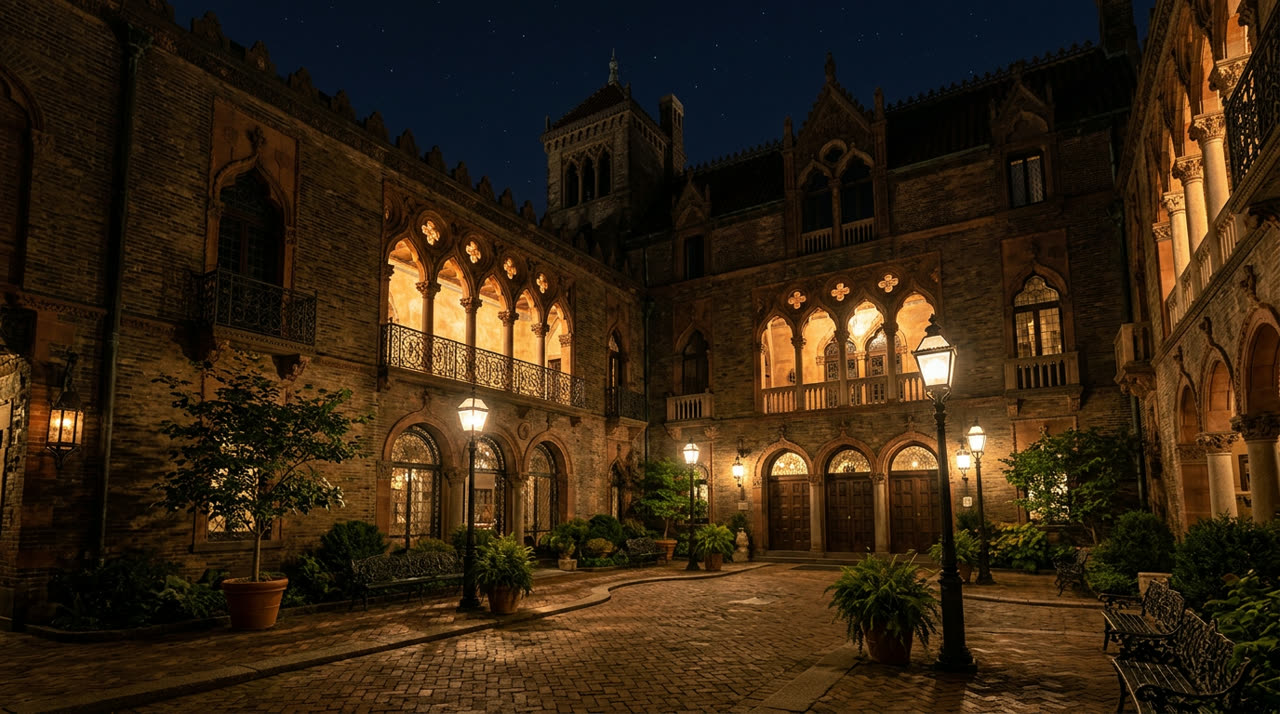
The robbery began shortly after 1:00 AM on Sunday, March 18, 1990. St. Patrick's Day celebrations across Boston were winding down, and the streets outside the museum were quiet. Two night guards were on duty inside the grand, Venetian-style building, which housed the personal art collection of the late patron Isabella Stewart Gardner.
At 1:24 AM, a car pulled up near the museum's side entrance on Palace Road. Two men stepped out wearing police uniforms, complete with badges and official-looking caps. The men pressed the intercom button and told the guard at the security desk that they were responding to a noise disturbance in the courtyard.
Breaking standard security protocols, the guard allowed the men inside through the security door. Once inside, the pretend officers asked the guard to step away from the security desk, claiming there was an outstanding arrest warrant in his name. When the guard stepped out, the men placed him in handcuffs. Shortly after, the second guard walked into the lobby and was also restrained.
The thieves wrapped duct tape around the guards' eyes, mouths, and hands. They brought both men down to the museum's basement and tied them to water pipes. Neither guard was physically harmed, but the thieves now had complete, uninterrupted access to the entire building.
What We Know: The Stolen Treasures
Over the next eighty-one minutes, the thieves roamed freely through the museum's upper galleries. This was an unusually long amount of time for a break-in, as most art thefts take only a few minutes. However, because the museum's security system did not automatically alert the local police department, the thieves faced no immediate threat of disruption.
The thieves targeted thirteen specific objects across two main display areas: the Dutch Room and the Short Gallery. Among the stolen treasures was The Storm on the Sea of Galilee, painted by Rembrandt van Rijn in 1633. It is the famous Dutch master's only known seascape painting. They also took Rembrandt's A Lady and Gentleman in Black, as well as The Concert by Johannes Vermeer, one of only thirty-four known surviving works by the artist.
In addition to these famous oil paintings, the thieves took five drawings by French impressionist Edgar Degas, a landscape painting by Édouard Manet, a small Rembrandt self-portrait etching, an ancient Chinese bronze vessel called a Gu from the Shang dynasty, and a decorative eagle finial from an ancient French military flag.
The physical destruction left behind surprised investigators. Instead of carefully removing the heavy wooden frames from the walls, the thieves used sharp blades to cut the canvases directly out of their mountings. They smashed protective glass panels, leaving heavy frames and shards scattered across the floor before loading their vehicle at 2:45 AM.
- Date of the theft: March 18, 1990, between 1:24 AM and 2:45 AM.
- Total estimated value: Over 500 million dollars.
- Items taken: 13 distinct works, including paintings, drawings, and historic artifacts.
- Current status: Zero items recovered, and no formal criminal charges ever filed.
Key Evidence from Official Records
Federal investigators from the FBI immediately took charge of the investigation. One of the most important pieces of physical evidence came from the museum's internal motion detectors. These electronic sensors recorded the movements of the thieves throughout the galleries during their time inside.
The sensor logs revealed several puzzling details. The motion detectors tracked the thieves moving through the Dutch Room and the Short Gallery, but they showed no activity in the room where Édouard Manet's painting was located during the exact time it was taken. This led investigators to speculate that either the security system glitched or someone had moved the painting prior to the entry of the thieves.
Investigators also collected physical evidence from the scene, including duct tape and plastic handcuffs used to bind the security guards. Over the years, advanced forensic testing and modern DNA analysis have been applied to these items. However, no matching DNA profiles were ever identified in federal law enforcement databases.
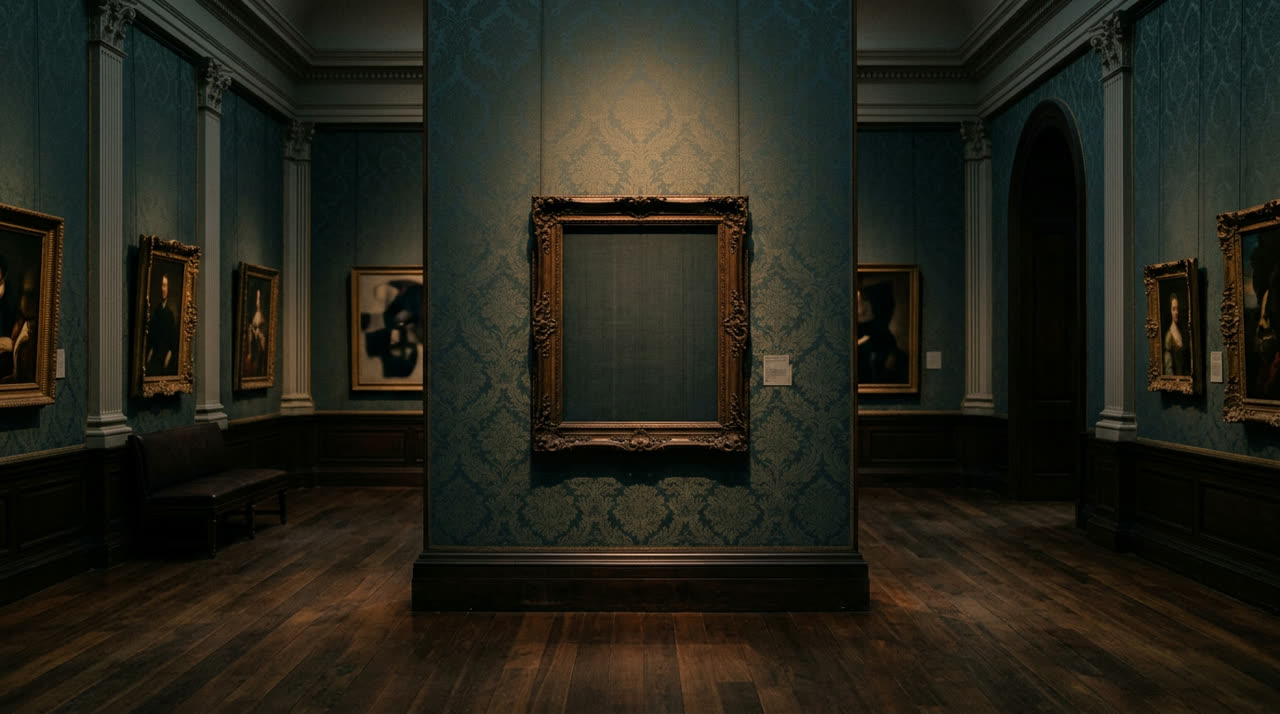
Another unique aspect of this case involves the museum itself. The founder, Isabella Stewart Gardner, stated in her original will that the layout of the museum's collection must remain exactly as she arranged it. Because of this legal requirement, the museum board decided to leave the empty, dark frames hanging on the walls in the Dutch Room as quiet placeholders for the lost masterpieces.
The Theories
Theory 1: Organized Crime Involvement — The leading explanation held by federal law enforcement for many years focuses on regional organized crime networks in the Northeastern United States. Investigators suspected that mid-level Boston mobsters carried out the heist on behalf of higher-ranking syndicate figures. Under this theory, the stolen art was intended to be used as a bargaining chip to secure lighter prison sentences or bail arrangements for incarcerated crime bosses. While several key figures in the Boston underworld were interviewed, no artwork was ever discovered in their possession.
Theory 2: High-End Underground Buyers — Another widespread theory suggests that the theft was commissioned by an extremely wealthy private collector operating in the illegal art market. Proponents of this idea argue that the specific selection of items—particularly Vermeer's The Concert—points to a targeted shopping list from an international buyer. However, art recovery experts note that high-profile masterpieces are virtually impossible to display or sell secretly because every major art dealer and auction house in the world knows their identity.
Theory 3: Accidental Destruction or Stashed Cache — A darker possibility is that the thieves quickly realized how difficult it was to sell or ransom such famous works. Faced with overwhelming law enforcement pressure and media attention, the perpetrators may have panicked and destroyed the art to eliminate physical evidence connecting them to the crime. Alternatively, the paintings might remain hidden in an unmarked storage facility, basement, or wall cavity, forgotten after the deaths of the original thieves.
What Remains Unanswered
Decades after the midnight heist, the central questions of the case remain completely unanswered. Who were the two men in fake police uniforms who walked through the front doors? Are the thirteen works of art still tucked away safely in a hidden room, or have they been ruined by age and poor environmental conditions? The museum continues to offer a ten-million-dollar reward for information leading to the safe return of the collection. Until someone comes forward with verifiable proof, the empty frames at the Gardner Museum will keep hanging on the walls, waiting for the masterpieces to return home.
The Isabella Stewart Gardner Museum heist remains the most famous unsolved property crime in modern history. It serves as a stark reminder of how quickly centuries of artistic history can disappear in a single night. As long as the investigation remains open, art lovers around the world hold on to the hope that these lost masterpieces will one day emerge from the shadows.





0 Comments