
In December 1900, three experienced lighthouse keepers vanished from a remote Scottish island without leaving a single trace behind. How could three men completely disappear from a fully stocked lighthouse, leaving behind an extinguished lamp and clues that still baffle historians today?
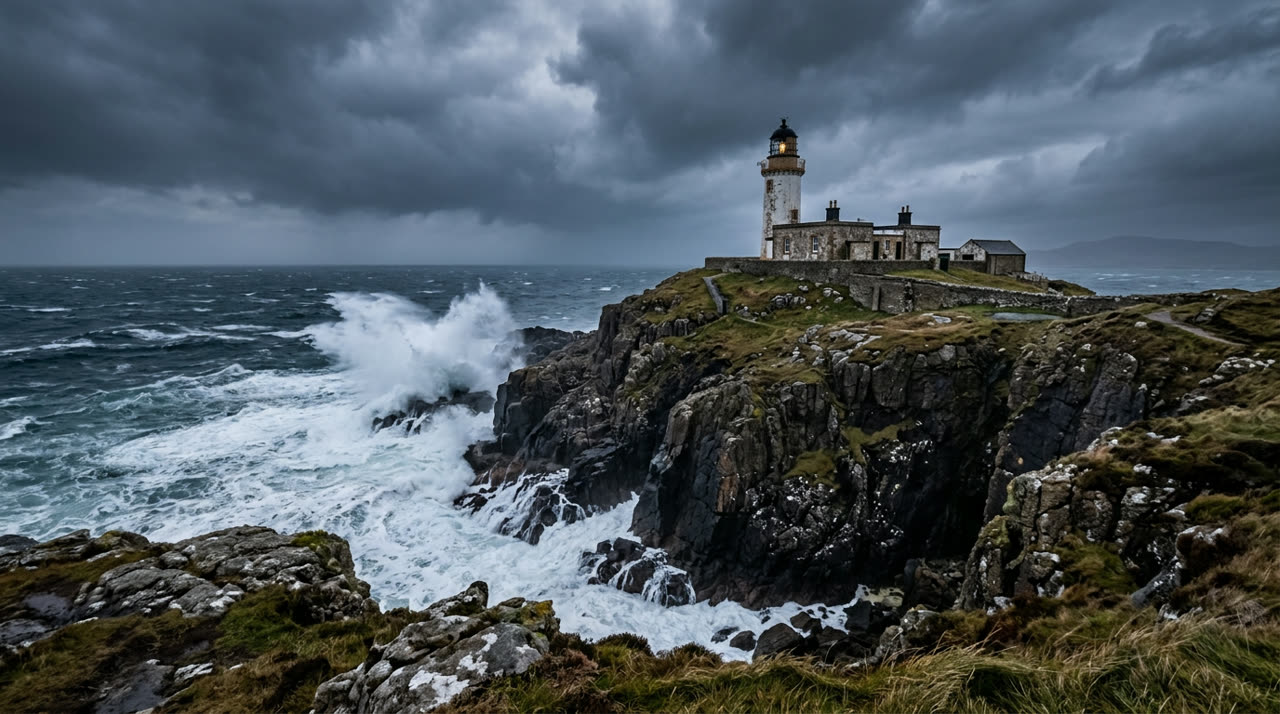
What We Know: The Disappearance
In December 1900, three men were stationed at the newly built lighthouse on Eilean Mòr, part of the remote Flannan Isles off the western coast of Scotland. The team consisted of principal keeper James Ducat, second assistant Thomas Marshall, and assistant Donald MacArthur. They were responsible for maintaining the powerful light that warned passing ships of dangerous reefs.
On December 15, 1900, the crew of a passing steamer named the Fair Alm noticed that the lighthouse beacon was not lit. Due to poor weather conditions, this observation was not immediately investigated by mainland authorities.
On December 26, 1900, the supply ship Hesperus finally reached the island after severe weather delayed its arrival. Relief keeper Joseph Moore was sent ashore to inspect the facility after no one answered the ship's signal horn or flare.
When Moore entered the lighthouse, he found it completely empty. The entrance gate and main door were closed, the beds were unmade, and the kitchen clock had stopped running. The men were gone, and no trace of them was ever found on the island.
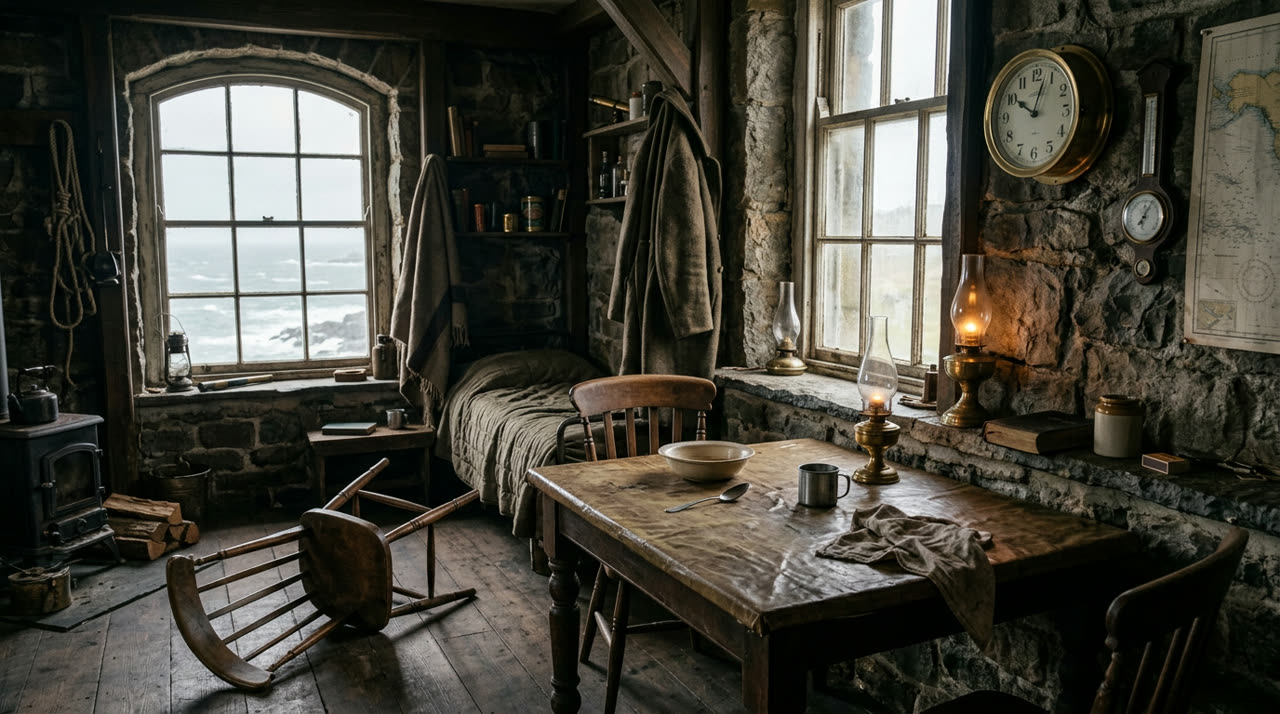
What We Know: The Physical Clues Left Behind
Investigators carefully documented the state of the lighthouse and the surrounding island. Inside the kitchen, a meal appeared to have been prepared, and an overturned chair rested near the table. The oil lamps were cleaned and refilled, showing that the keepers had carried out their routine indoor duties before disappearing.
Investigators also noticed that two sets of heavy waterproof oilskins were missing from the coat pegs. One set of oilskins remained inside, suggesting that one keeper had left the lighthouse without putting on his protective weather gear.
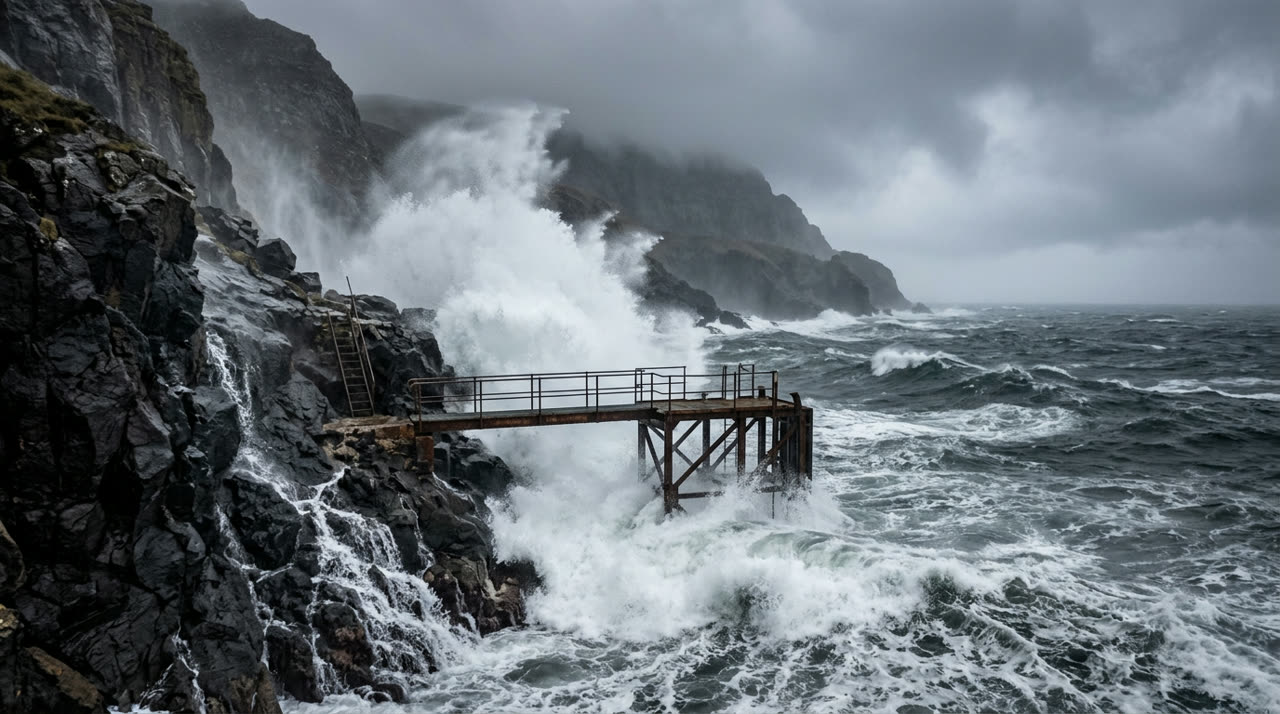
The most significant clues were found at the island's west landing stage. Heavy iron railings were bent out of shape, a concrete mooring block was moved out of place, and a supply box stored 110 feet above sea level was broken open.
Superintendent Robert Muirhead conducted the official inquiry for the Northern Lighthouse Board on December 29, 1900. He concluded that the damage at the landing stage was caused by ocean waves of extraordinary force and size.
The Theories: Swept Away by a Rogue Wave
The primary official theory is that the three men were swept into the Atlantic Ocean by an unexpected giant wave. According to this explanation, two of the keepers were working near the west landing platform to secure damaged equipment during high winds.
When a sudden storm surge or rogue wave threatened the men, the third keeper likely rushed out to warn or assist them, leaving the lighthouse without putting on his oilskins. A massive wave may have then struck the landing, pulling all three keepers into the freezing ocean simultaneously.
This theory aligns with the physical damage observed at the west landing platform, where heavy equipment and iron structures had been dislodged by water pressure.
The Theories: A Tragic Fall or Conflict
Another theory suggests that one keeper fell into the rough ocean from the steep cliffs while attempting to secure gear. In this scenario, the other two keepers tried to rescue their colleague and were carried away by the swell during the attempt.
A few early writers suggested that a sudden violent conflict occurred between the men due to isolation. However, official records showed that all three men were reliable, experienced professionals with good working relationships, making foul play or personal conflicts unlikely.
What remains unanswered is why three seasoned sea professionals broke safety protocols by leaving the lighthouse unattended during severe weather. Did an unprecedented wave wash them away in a single second, or did an emergency on the cliffs force them into danger? Without survivors or physical remains, the fate of the Flannan Isles keepers remains one of maritime history's enduring mysteries.



0 Comments