
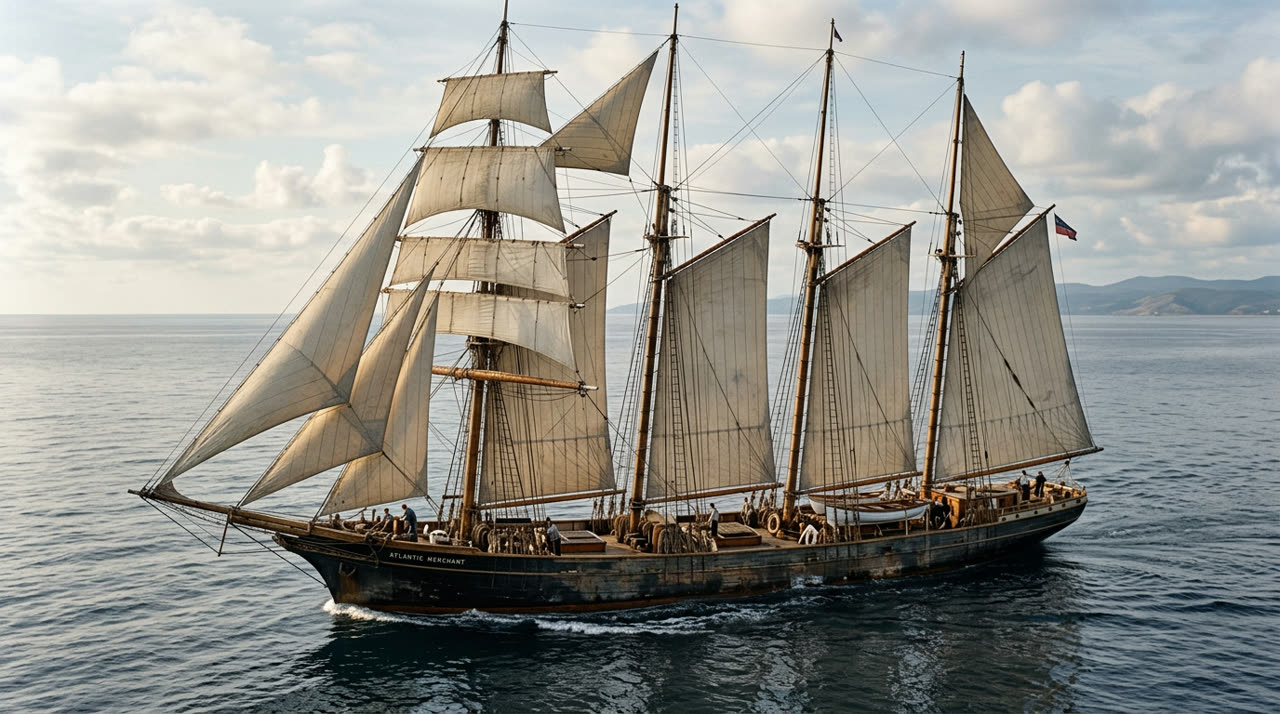
On January 31, 1921, lookout workers off the coast of North Carolina spotted a massive commercial sailing vessel stranded on the treacherous sandbars of Diamond Shoals. The ship was the Carroll A. Deering, a huge five-masted wooden schooner returning home after delivering cargo to South America.
When rescue crews finally managed to board the stranded vessel days later, they discovered a eerie scene that has baffled maritime historians for over a century. The dinner tables were set and food was left out on the stove, yet all eleven crew members had vanished without leaving a single trace.
A Troubled Journey Across the Atlantic
The Carroll A. Deering was built in Bath, Maine, in 1919. Designed to carry heavy commercial cargo across long ocean routes, it was one of the grandest wooden sailing ships of its era.
In August 1920, the ship set sail from Virginia bound for Rio de Janeiro, Brazil, carrying a heavy load of coal. The original captain, William H. Merritt, became severely ill shortly after departing and had to step down in Delaware. To replace him, the vessel's owners hired Willis B. Wormell, a retired sixty-six-year-old veteran captain.
Captain Wormell took command of a mixed crew of eleven sailors. However, tension quickly developed on board. During a planned stopover in Rio de Janeiro, Captain Wormell privately confided to a friend that he did not trust his chief mate, Charles B. McLennan. Wormell reported that McLennan was hostile, disrespectful, and repeatedly broke rules while on duty.
What We Know: The Discovery at Diamond Shoals
On January 28, 1921, a lightship operator near Cape Lookout, North Carolina, reported speaking briefly with a man on board the Carroll A. Deering. The spokesman spoke with a foreign accent and stated that the ship had lost its anchors, but he did not appear to be Captain Wormell.
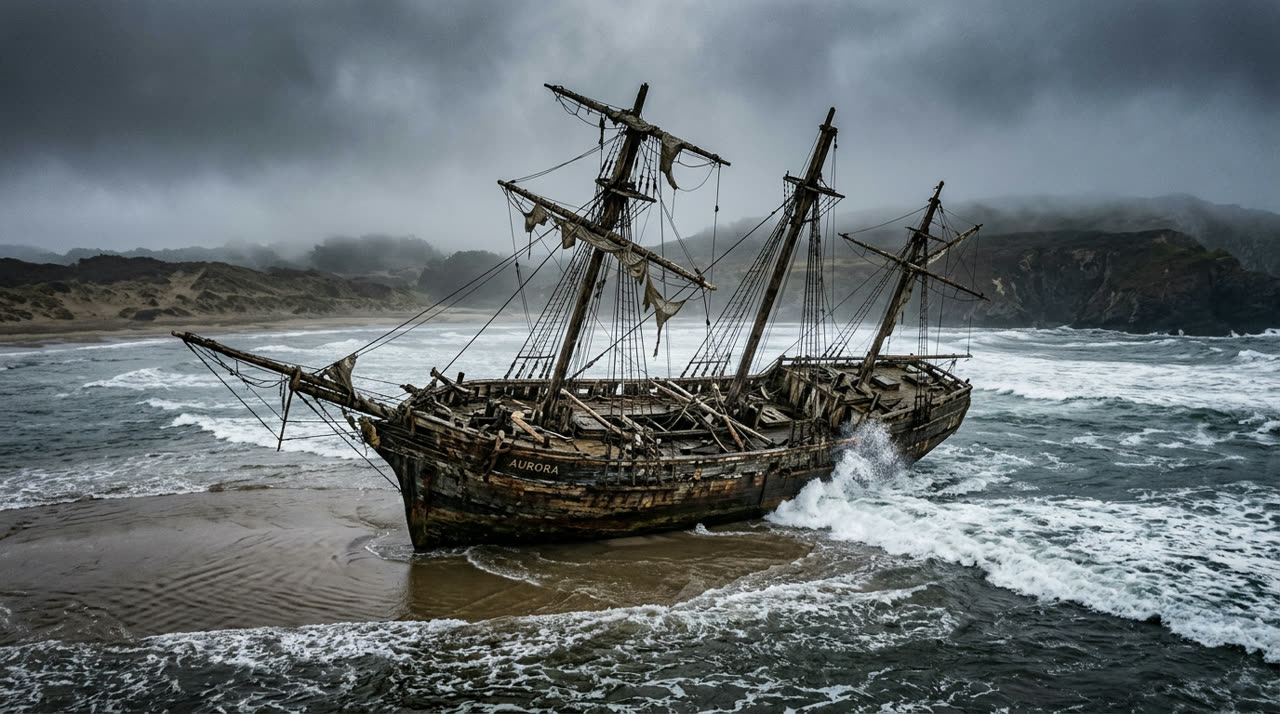
Three days later, on January 31, the schooner ran hard aground on Diamond Shoals, a dangerous area often called the "Graveyard of the Atlantic." Heavy ocean surf prevented rescue teams from approaching the ship for four full days.
When Coast Guard inspectors finally boarded the vessel on February 4, 1921, they found the ship completely abandoned. Investigators documented several confirmed facts:
- All eleven crew members were completely missing.
- The ship's steering gear was severely damaged and the wheel was disabled.
- The ship's official logbook, navigation equipment, and personal documents were gone.
- Two of the vessel's primary lifeboats were missing from their davits.
- Prepared food was found in pots on the galley stove, suggesting a meal was about to be served.
- The personal belongings and clothing of the crew were left behind in their cabins.
The Massive Federal Investigation
Because the ghost ship was found in American territorial waters, the event sparked one of the largest multi-agency investigations in United States history.
Herbert Hoover, who was serving as the U.S. Secretary of Commerce at the time, personally ordered a comprehensive inquiry into the vessel's fate. Five separate federal departments worked together on the case, including the Department of Commerce, the Department of Justice, the Navy, the Treasury Department, and the State Department.
Federal agents spent months searching Atlantic seaports, interviewing family members, and tracking ocean currents. Despite an exhaustive nationwide search, investigators found no wreckage from the missing lifeboats and no reliable physical evidence explaining what had happened to the sailors.
Theory 1: A Violent Crew Mutiny
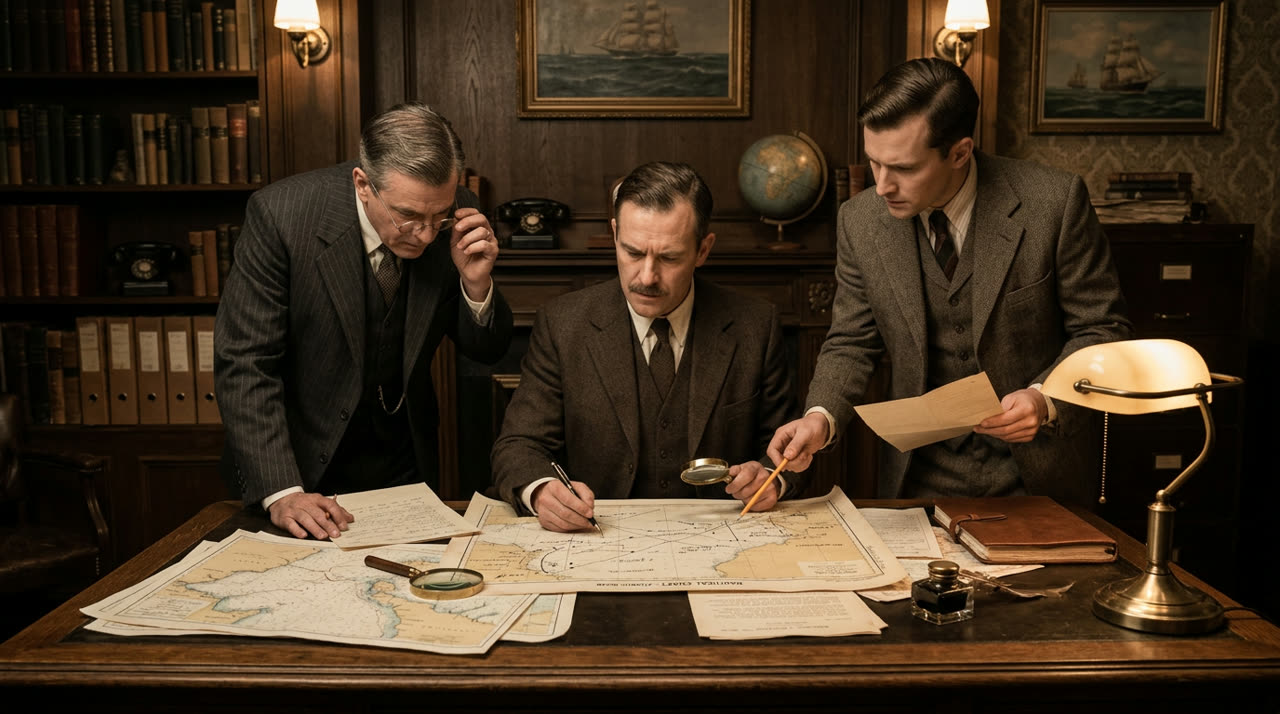
The primary theory pursued by federal investigators was that a violent mutiny had taken place on board.
Captain Wormell's documented arguments with his chief mate in South America provided strong evidence of internal conflict. Investigators suspected that as the vessel neared the North Carolina coast, tensions turned into open violent conflict. The rebellious crew members may have overthrown or killed Captain Wormell and the officers loyal to him.
Supporters of this theory suggest that the mutineers intentionally ran the vessel onto Diamond Shoals to destroy the evidence before escaping in the two lifeboats. However, no member of the crew was ever identified arriving at any port, and no bodies were ever recovered.
Theory 2: Piracy and Prohibition Hijacking
Another popular explanation during the 1920s involved sea piracy or illegal rum-running operations.
In 1921, alcohol prohibition was active in the United States, and smuggler vessels operated heavily along the Atlantic seaboard. Some historians theorized that armed liquor smugglers boarded the Carroll A. Deering to steal the vessel or use it as a cover for illegal cargo.
A related theory speculated that foreign political radicals hijacked American merchant vessels, as several other ships had disappeared in the Atlantic during the same timeframe. However, inspectors noted that nothing of major financial value had been removed from the ship's hold, making a standard robbery unlikely.
Theory 3: Natural Disaster and Panic Evacuation
A simpler, non-violent explanation points to severe weather and maritime panic.
Diamond Shoals is famous for sudden ocean shoaling, heavy fog, and treacherous weather. If the ship unexpectedly struck a hidden sandbar during a heavy swell, the sudden impact would have felt like the vessel was breaking apart.
Fearing that the large wooden schooner would disintegrate under the pounding waves, Captain Wormell or his crew may have panicked and ordered an immediate evacuation into the lifeboats. Once launched into the stormy Atlantic ocean, the small wooden lifeboats could have easily capsized, carrying all eleven men into the deep ocean waters.
What remains unanswered is the true final fate of the eleven men who sailed on the Carroll A. Deering. Did they fall victim to an violent mutiny, encounter ruthless ocean raiders, or perish in a desperate evacuation into stormy seas? More than a century later, no physical trace of the crew or their lifeboats has ever been found, leaving the mystery of North Carolina's famous ghost schooner forever unsolved.





0 Comments