
In the vast landscape of team sports, few roles carry the visceral, unadulterated tension of an opening batsman walking out to start a red-ball innings. As the stadium hushes and the morning sun glints over a pristine pitch, two openers step past the boundary rope toward twenty-two yards of absolute uncertainty. They face a hard, perfectly lacquered leather ball delivered at speeds exceeding 90 miles per hour, propelled by fresh, eager fast bowlers operating with boundless energy and a crisp, raised seam. There are no warm-up deliveries, no opportunity to assess the pitch's behavior from the safety of the dugout, and zero margin for error.
While modern short-format cricket has celebrated power-hitting and explosive scoring, the classic craft of opening the batting in Test cricket remains the ultimate trial of physical bravery and mental discipline. It is a unique endeavor where survival is the first victory, and scoring runs is a hard-earned reward gained through sheer endurance. Understanding what makes opening the innings so uniquely difficult reveals the quiet, intricate beauty of cricket at its most unforgiving.

The Trial by Fire: Facing the Unblemished Red Ball
Unlike middle-order batters who typically arrive when the pitch has lost its initial moisture and the ball has softened, openers must confront the ball at its most dangerous state. A new red leather ball features a pronounced hand-stitched seam and a glossy lacquer layer. In the hands of world-class fast bowlers, this combination produces unpredictable lateral movement—both through the air as conventional swing and off the pitch as seam movement.
During the first dozen overs, the ball behaves like an erratic projectile. A delivery that appears to be drifting toward middle stump can suddenly dart away to catch the outside edge, while a ball pitched outside off-stump can seam back sharply between bat and pad. The opener must process these micro-movements within a fraction of a second, relying on honed muscle memory, precise footwork, and decisive spatial awareness.
The Art of Discretion: Mastering the Leave
In an era dominated by aggressive strokeplay, the leave outside off-stump remains the opening batter’s most lethal defensive weapon. Knowing which balls to ignore is just as crucial as knowing which balls to strike. A great opener uses the leave not out of fear, but as a deliberate tactical ploy to tire out opposition fast bowlers and force them to bowl closer to the stumps.
Discerning the line and length early enough to shoulder arms and lift the bat out of harm's way requires immaculate judgment of off-stump awareness. For an opener, every ball left cleanly into the wicketkeeper’s gloves is a subtle victory. It deprives the bowling side of quick wickets, reduces the shine on the ball, and gradually wears down the bowler’s physical reserves.
- Off-stump awareness: Knowing precisely where the wickets are without looking back.
- Soft hands: Playing with a relaxed grip so edges fall short of the slip cordon.
- Judicious patience: Forcing fast bowlers to abandon their preferred channel outside off.
Physical Courage and Mental Fortitude
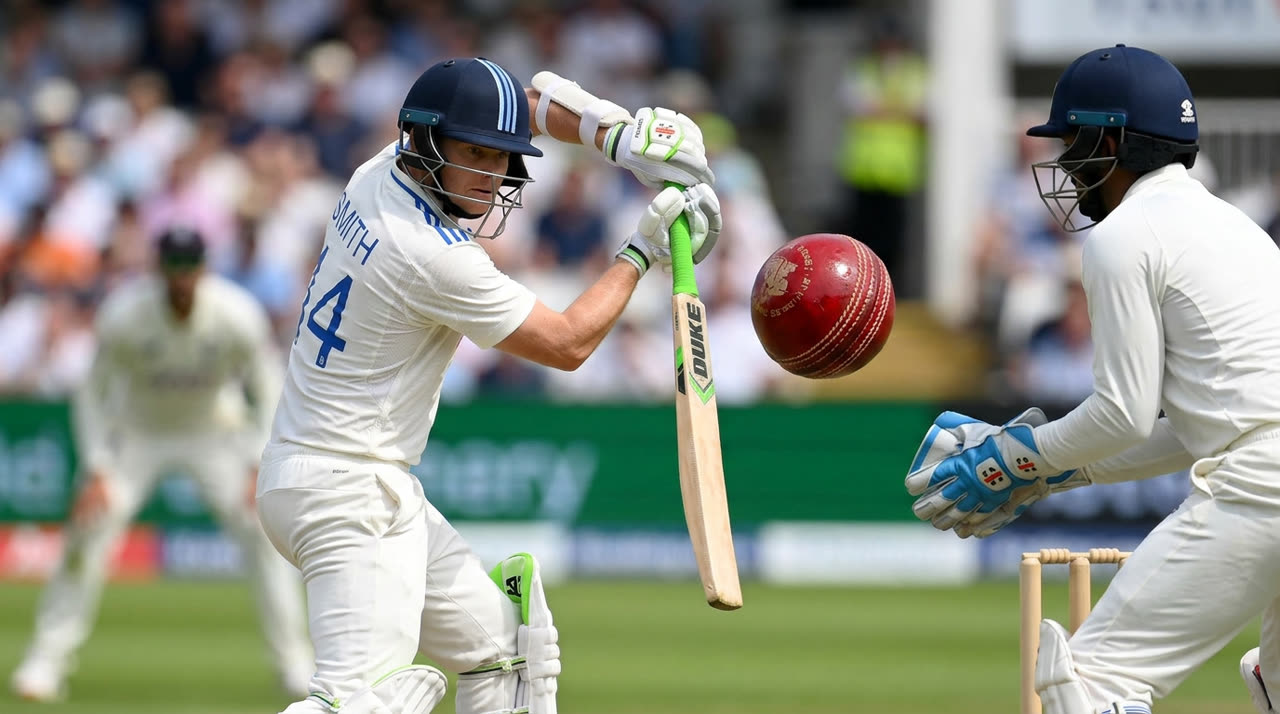
Opening the batting often feels like a combat sport embedded inside a game of strategy. Fast bowlers view the new ball as their premier window of opportunity and will relentlessly test a batter’s resolve with short-pitched deliveries targeted at the body and head. Standing tall in front of a hard sphere traveling at terrifying velocity requires exceptional physical courage and an unflinching eye.
The psychological strain is equally relentless. Openers are frequently forced to bat through periods where runs are nearly impossible to accumulate due to disciplined bowling and protective field placements. They must endure long stretches of scoreless overs, resisting the natural impulse to play high-risk shots out of frustration. This mental resilience demands an instant reset after every ball, erasing past errors and suppressing anxiety about dismissal.
Navigating Foreign Soil: Adapting Across Global Pitches
The challenge of opening the innings changes dramatically depending on geographical location, making it one of the most context-dependent roles in international athletics. In England, openers confront humid conditions and heavy skies that encourage persistent swing, demanding tight technique close to the body. In Australia, steep bounce and rapid surfaces test reaction times and back-foot mastery against relentless short-pitched bowling.
Conversely, on subcontinental pitches in India or Sri Lanka, openers must adapt to low bounce, early variable pace, and the immediate threat of spin with the new ball on dry surfaces. An elite opener must possess a dynamic technical repertoire, capable of altering stance, guard, and backlift to suit the environmental realities of each historic venue.

The Chemistry of the Opening Partnership
Batting at the top of the order is rarely a solitary crusade; it relies heavily on the synergy between the two opening partners. A successful opening duo functions as a tight-knit tactical unit, constantly communicating about pitch behavior, wind direction, and subtle cues about the bowler’s plan between overs.
Left-right hand combinations at the top of the order are especially prized because they disrupt a bowler's rhythm and force constant field adjustments. Beyond strategic benefits, an opening partner serves as an emotional anchor during tough sessions, offering quiet reassurance when the opposition is building immense pressure.
- Constant communication: Assessing pitch pace and seam movement after every single over.
- Complementary styles: Pairing a defensive anchor with an assertive stroke-player.
- Intuitive running: Trust built over long partnerships to capitalize on quick singles.
The Modern Evolution: Blending Survival with Intent
The explosion of Twenty20 leagues has fundamentally altered how opening batters approach their trade across all formats. While white-ball openers are encouraged to launch immediate counter-attacks over the infield during early field restrictions, modern red-ball openers are finding innovative ways to blend survival with scoring intent.
Today’s top openers are increasingly adept at punishing minor errors in length, using assertive strokeplay to force bowlers off their preferred line. Rather than merely surviving the new ball, the contemporary opener seeks to counter-attack when opportunities arise, creating an exciting renaissance for cricket's most demanding role.
Opening the batting in Test cricket remains one of the purest and most demanding challenges in global sport. It is a discipline defined by self-sacrifice, mental resilience, and unyielding concentration. While broadcast highlights tend to focus on explosive centuries and towering sixes, true cricket aficionados understand that match victories are constructed by the openers who battle through the treacherous early hours.
As cricket continues to modernize, the opening batter stands as an enduring emblem of grit against adversity. By taking the shine off the fresh ball, absorbing the enemy's fiercest assault, and laying the foundation for their team, openers perform a role that is as noble as it is exhausting—a true test of human athletic spirit.



0 Comments