
In the complex world of cricket tactics, few challenges reveal a team's true character quite like chasing a target in the second innings. Whether pursuing a towering total under floodlights in a fast-paced limited-overs match or surviving on a crumbling fifth-day pitch in Test cricket, batting second presents a distinct set of psychological and physical demands.
Unlike the first innings, where batting sides aim to set an unconstrained maximum score, chasing introduces a scoreboard that dictates every decision. Every ball bowled shifts the equation, creating a dynamic balance between risk management, tactical pacing, and raw nerve. Understanding the mechanics behind a successful run chase reveals why target-oriented batting has become one of the most refined crafts in modern sport.

The Mental Shift: Scoreboard Pressure vs target Clarity
Batting second fundamentally changes how a batsman approaches their innings. Setting a target allows players to build an innings organically based on pitch behavior and bowling strength. In contrast, chasing imposes a defined parameter: the target score. This clarity can be both a tactical advantage and an overwhelming psychological burden.
On one hand, target clarity eliminates guesswork. Batter know precisely what run rate is required from the very first delivery, allowing them to construct an innings with mathematical precision. On the other hand, scoreboard pressure acts as a silent fielder. As the required rate creeps upward or wickets fall early, anxiety can force batsmen into ill-advised shots or desperate quick singles.
Successful chasing sides cultivate a culture of calm adaptability. They view the target not as an intimidating mountain, but as a series of manageable, bite-sized objectives that can be systematically dismantled over time.
- Target Clarity: Eliminates ambiguity by providing a fixed goal to structure the innings around.
- Scoreboard Pressure: Increases emotional tension as required run rates fluctuate with every ball.
- Psychological Resilience: Allows elite batsmen to ignore rising rates and maintain clarity under immense stress.
Deconstructing the Run Rate: Pacing and Phase Management
A masterclass in chasing relies heavily on intelligent pacing across different phases of the match. Accelerating too early can lead to a collapse in middle overs, while deferring aggression too late leaves an insurmountable required rate in the closing stages.
In modern white-ball cricket, teams break the chase into distinct operational windows. The initial overs are designed to exploit field restrictions and capitalize on the new ball, building an early cushion above the required rate. During the middle overs, the strategy pivots to low-risk rotation of strike, keeping the scoreboard moving through hard running between the wickets while preserving wickets for the final assault.
By keeping the required run rate within striking distance, chasing teams retain tactical flexibility. This prevents opposition captains from attacking with field placements, keeping pressure squarely on the defensive bowling side.
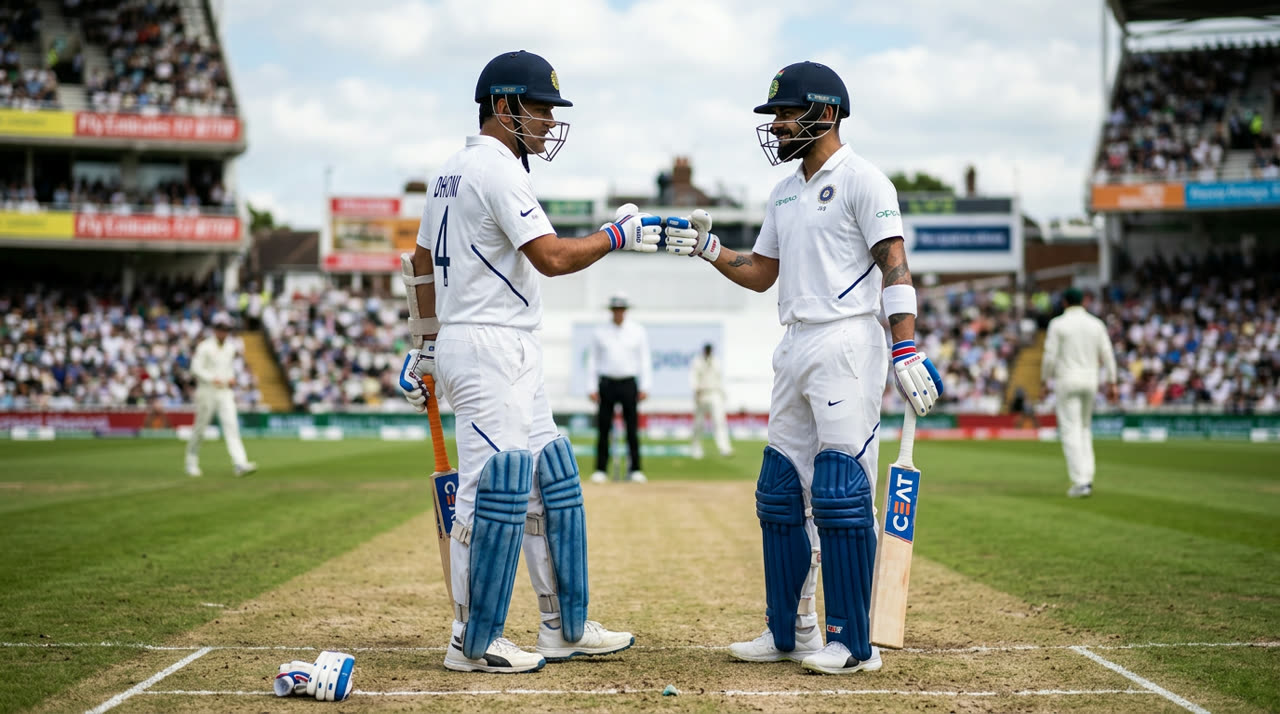
The Role Complementarity: Anchors, Accelerators, and Finishers
Constructing a successful chase requires clear division of labor within the batting lineup. Modern cricket has moved past the concept of every batsman playing the same aggressive style; instead, successful run chases rely on complementary tactical roles at the crease.
The anchor acts as the tactical glue, controlling the tempo, reducing dots, and ensuring one end remains secure throughout the innings. This stability frees the accelerators to attack specific match-ups or take calculated risks against target bowlers.
In the final act, specialized finishers step in. These players possess the rare mental composure and raw power needed to clear boundaries when the required rate demands ten or twelve runs per over. The synergy between these roles ensures that the chase remains balanced even when unexpected wickets fall.
- The Anchor: Maintains innings structure and minimizes dot balls, providing a stable foundation.
- The Accelerator: Attacks specific match-ups and field settings during key middle-over windows.
- The Finisher: Executes high-powered boundary hitting under extreme pressure in the final overs.
Adapting to Environmental Dynamics and Deteriorating Surfaces
One of cricket’s greatest complexities is that the playing surface and environmental conditions are constantly evolving. A pitch that offered true bounce and comfortable strokeplay during the afternoon can transform into a slow, gripping surface under evening humidity or multi-day wear.
In day-night matches, the arrival of dew often plays a massive role in run chases. Dew slicks the outfield, making the ball wet and slippery, which severely impairs a spinner's ability to grip the ball and reduces seam movement. Wise chasing teams anticipate this variable, choosing to bowl first to gain the batting advantage later.
Conversely, in long-form Test cricket, chasing on a fifth-day pitch presents the opposite challenge. Wear and tear create uneven bounce and sharp spin from rough patches created by bowler footmarks. Successful long-form chases demand defensive discipline, precise footwork, and the willingness to grind out runs over hours of relentless pressure.

Calculated Risk-Taking: Exploiting Bowling Match-Ups
Modern target chasing is no longer a matter of instinct alone; it is an exercise in strategic probability. Chasing teams enter the second innings with detailed plans targeting specific opposition bowlers and boundary dimensions.
Rather than attempting to attack every bowler equally, clever chasing sides identify weak links or favorable matchups—such as a left-handed batsman targeting a leg-spinner spinning the ball into his hitting arc. By targeting short boundaries or taking high-percentage risks against specific overs, batsmen can accumulate boundaries without taking unnecessary gambles against the opposition's elite strike bowlers.
This calculated approach ensures that even when a team is forced to elevate its scoring rate, the risk profile remains controlled and structured.
The art of the chase represents cricket at its most compelling—a blend of mathematical calculation, situational awareness, and raw psychological endurance. As white-ball formats push scoring limits higher and teams become more fearless, the second innings has evolved from a defensive struggle into an offensive masterclass.
Mastering the target chase requires far more than brute force. It demands an acute understanding of pacing, clear role execution, and an unshakeable composure in the face of mounting pressure. Those who excel at chasing don't just win matches; they turn the daunting weight of a target into a roadmap for tactical victory.





0 Comments