
Golden Retrievers are famed for their remarkable intelligence and eager-to-please nature, which generally makes them wonderful candidates for housebreaking. However, bringing a new Golden Retriever puppy into your home comes with the inevitable challenge of potty training. Without a structured routine and a clear understanding of canine physical development, even the brightest puppy can easily become confused about where and when they are expected to eliminate.
Housebreaking is fundamentally an exercise in clear communication, unwavering consistency, and patient routine building. Because Golden Retrievers grow rapidly and possess high energy levels, establishing healthy outdoor habits early prevents frustrating behavioral issues later in life. This comprehensive guide walks you through effective potty training strategies tailored specifically to Golden Retrievers, ensuring a smooth, positive transition for both you and your furry companion.
Understanding Your Puppy's Bladder Capacity and Development
Before setting expectations, it is vital to understand the physical limitations of a growing puppy. Young Golden Retrievers have small bladders and underdeveloped muscular control over their digestive and urinary systems. A standard rule of thumb for canine development is that a puppy can reliably hold their bladder for approximately one hour for every month of their age, plus one additional hour during rest periods.
Because Golden Retriever puppies rapidly reach large physical dimensions, owners often mistakenly assume their five-month-old dog possesses adult-level control. However, complete physiological sphincter control usually does not fully develop until around six months of age. Keeping these biological realities in mind keeps your expectations realistic and helps avoid unnecessary frustration during the training journey.
- 8 to 12 Weeks Old: Expect to provide potty breaks every 1 to 2 hours during awake time.
- 12 to 16 Weeks Old: Bladder control increases, allowing intervals of 3 to 4 hours.
- 6 Months and Older: Most Golden Retrievers can manage 6 to 8 hours once fully housebroken.
Establishing a Consistent Daily Potty Schedule
Consistency is the single most crucial factor in successful potty training. Golden Retrievers thrive on predictability, and when they learn exactly when and where to expect outdoor opportunities, indoor accidents decrease dramatically. Building a set daily schedule aligned with your puppy's natural biological rhythm makes housebreaking fast and effective.
You should plan to take your Golden Retriever puppy outside at specific key transition moments throughout the day. These key moments act as natural triggers for elimination, making it easier to predict when your dog needs to go.
- Immediately upon waking up in the morning and right after nap times.
- Within 10 to 20 minutes after eating a meal or drinking fresh water.
- Directly following vigorous play sessions or exciting interactions.
- Right before putting your puppy in their crate for bedtime or quiet time.
Choosing a Designated Spot and Using Cue Words
Dogs rely heavily on spatial memory and scent cues to navigate their daily environments. When taking your Golden Retriever outside for a potty break, always head directly to the exact same area in your yard. The residual scent markers from previous visits signal to the puppy that this location is designated for bathroom business rather than energetic playing.
To make your training even more efficient, introduce a specific verbal cue phrase as soon as your puppy begins to eliminate. Use simple, distinct words like 'go potty' or 'do your business' in a quiet, encouraging tone. Over time, your Golden Retriever will connect this phrase directly with the physical action of eliminating, allowing you to prompt them on command during rainy days or travel.

The Power of Positive Reinforcement and Precise Timing
Golden Retrievers are exceptionally soft-tempered and highly motivated by human approval and rewards. Using positive reinforcement is the fastest way to solidify good potty habits. The secret to successful reinforcement lies in immediate timing: praise and reward your dog the very second they finish eliminating outdoors.
Waiting until you walk back inside the house to give your dog a treat creates confusion; the puppy will associate the treat with entering the home rather than going potty on the lawn. Keep a small bag of high-value treats near your door or in your pocket. As soon as your puppy finishes, offer warm verbal praise and hand them a tasty treat within two seconds of completion.
Handling Indoor Accidents Without Punishing Your Dog
Accidents are a completely normal part of the learning curve, especially during the first few months. How you respond to these mishaps determines how quickly your puppy will master housebreaking. Never yell, scold, swat, or rub your Golden Retriever's nose in an accident. Harsh physical or verbal punishment does not teach the dog where to go; it simply teaches them to fear eliminating when you are nearby.
If you catch your puppy in the middle of an indoor accident, interrupt them calmly with a light tone, such as 'Oops!', and gently guide them straight outside to their designated potty area. If they finish going outside, reward them warmly. If you discover a cold accident after the fact, do not discipline the dog at all. Simply clean the area thoroughly with an enzymatic cleaner designed specifically for pet stains. Enzymatic formulas break down organic proteins entirely, removing residual odors that could attract your Golden Retriever back to that spot.
Managing Nighttime Routines and Overcoming Regressions
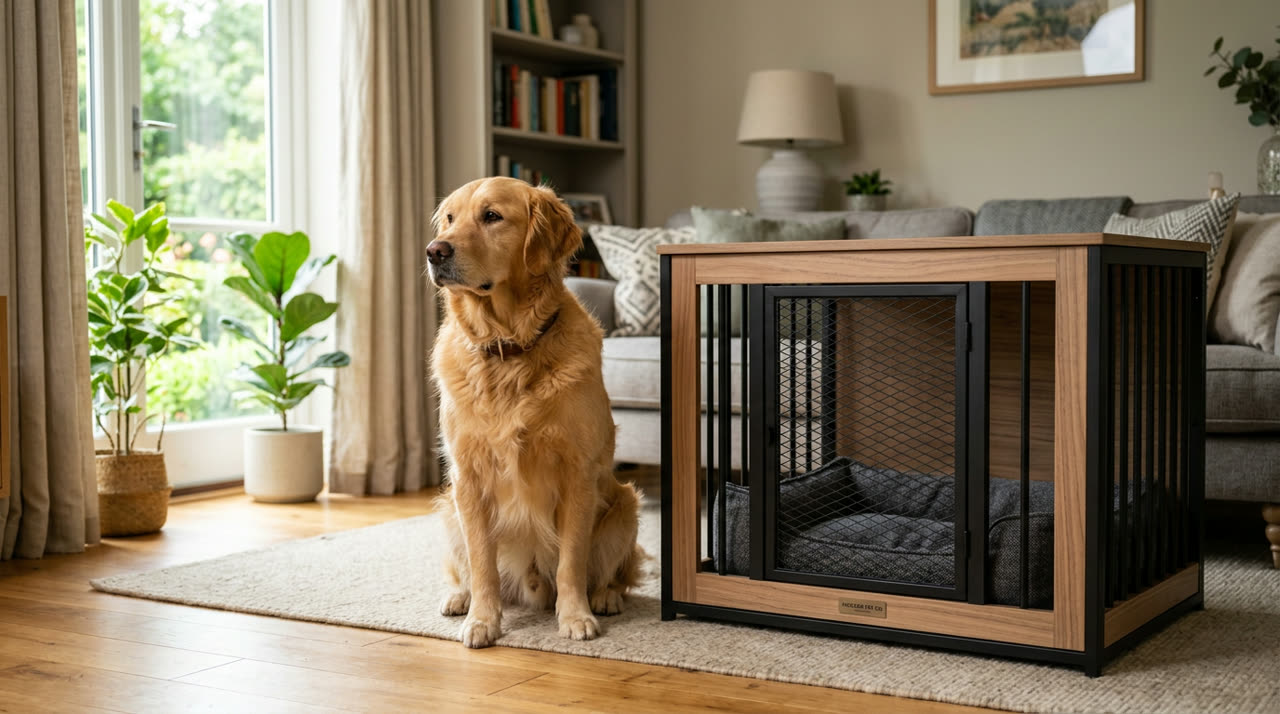
Overnight housebreaking requires a balance between adequate hydration and restful sleeping. To minimize nighttime bathroom needs, limit your Golden Retriever puppy's access to water about two hours before bedtime. Keep your puppy's crate in your bedroom during the early stages of training; this allows you to hear subtle whining or stirring when they need an urgent middle-of-the-night break.
Nighttime trips should be strictly routine and businesslike. Keep the lights low, speak in hushed tones, avoid initiating playtime, and return your puppy straight to their sleeping area as soon as they finish. If an established older puppy suddenly experiences frequent indoor accidents after months of progress, consult your veterinarian to check for underlying medical issues, such as a urinary tract infection, before assuming it is purely behavioral.
Successfully potty training your Golden Retriever comes down to patience, structure, and positive reinforcement. By keeping realistic expectations for your puppy's age and providing frequent outdoor opportunities, you set your dog up for immediate success and build a strong bond based on trust.
Remember that every puppy develops at their own distinct pace. Celebrate every small victory, remain patient during occasional setbacks, and maintain a calm, consistent approach. With these proven strategies, your Golden Retriever will develop reliable lifelong indoor habits, making home life enjoyable for everyone involved.




0 Comments