
Golden Retrievers are famously enthusiastic about life. Whether they are diving headfirst into a lake, romping through dusty forest trails, or snuggling on the couch after an active day, their cheerful personality makes them beloved family companions. However, behind those iconic, velvety floppy ears lies one of the breed's most common physical vulnerabilities: a high susceptibility to ear infections and moisture buildup.
Proper ear maintenance is an essential component of keeping your Golden Retriever healthy and comfortable. Because their heavy ear flaps flap down over the ear canal, natural airflow is restricted, allowing moisture, dirt, and yeast to accumulate quickly. In this comprehensive guide, we will explore why Golden Retrievers experience ear issues so frequently, how to safely clean their ears at home, and the best preventative routines to keep painful infections away.
Why Golden Retrievers Are Prone to Ear Infections
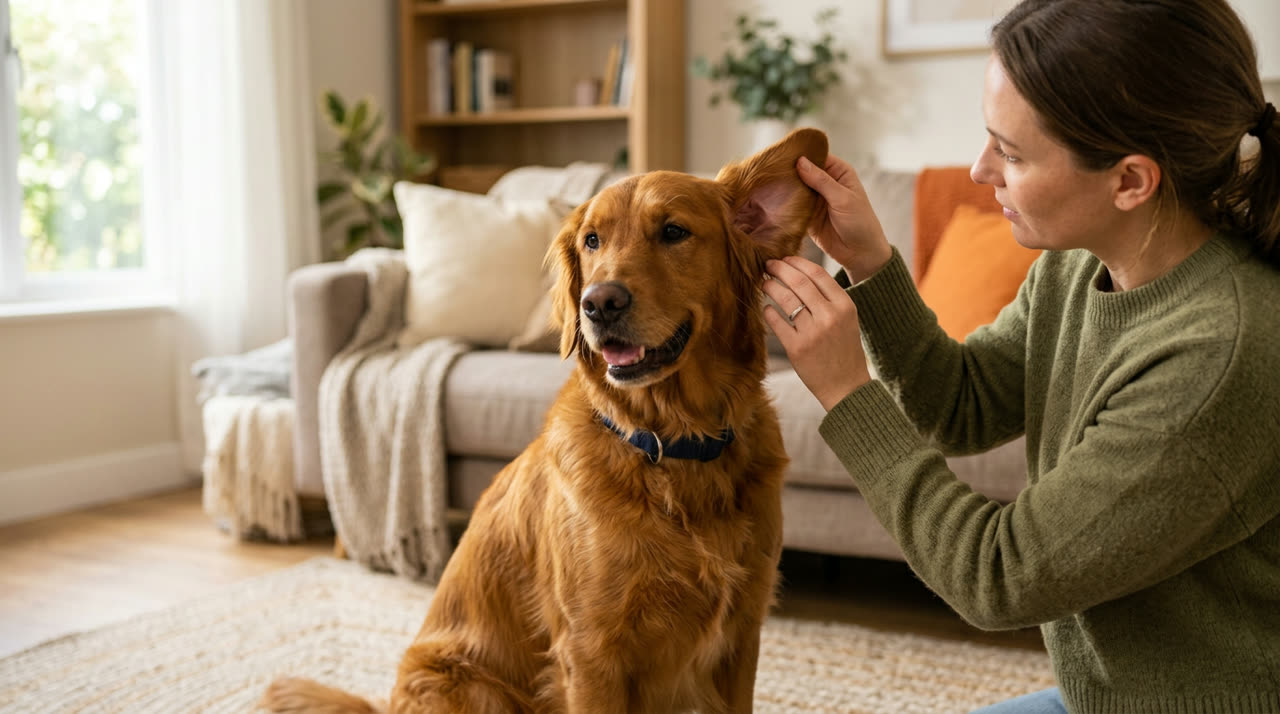
Understanding your dog's anatomical design is the first step toward effective health care. Unlike dog breeds with upright, pricked ears like German Shepherds or Huskies, Golden Retrievers possess floppy ear flaps, botanically termed heavy pinnae. While these drooping ears give Goldens their signature gentle expression, they act as natural lids that trap heat and dampness inside the outer ear canal.
Additionally, Golden Retrievers are water dogs by nature. Built with a dense double coat and webbed paws, most Goldens leap at any opportunity to swim in lakes, rivers, or back garden pools. During swimming, water easily enters the vertical ear canal. Without adequate ventilation, trapped moisture creates a humid, dark environment where yeast and bacteria quickly multiply. The fine hairs lining the inside of a Golden's ear canal can also trap pollen, dust, and excess earwax, further increasing the risk of inflammation.
Recognizing Signs of Ear Infections and Discomfort
Catching ear problems early can save your Golden Retriever from severe pain and prevent minor irritation from progressing into a chronic medical condition. Dogs are often very expressive when dealing with ear discomfort, so paying close attention to subtle changes in their behavior after outdoor play or baths is crucial.
The most obvious indicator of an ear issue is persistent head shaking or vigorous scratching at one or both ears. You may also notice your dog tilting their head to one side, rubbing their face along carpets or furniture, or flinching when you pet their head. When inspecting the interior of the ear flap, a healthy canal should look light pink, clean, and odorless. If you observe swelling, intense redness, dark debris, or a foul, yeast-like smell, your dog likely has an active infection that requires attention.
- Frequent head shaking or holding the head tilted to one side
- Repeated scratching or pawing at the ears, head, or neck
- Redness, heat, or visible swelling inside the ear flap
- Dark brown, yellow, or black discharge resembling coffee grounds
- A strong, musty, or sweet yeast-like odor coming from the ear canal
- Vocalizing, whining, or pulling away when the ears or head are touched
Step-by-Step Guide: How to Clean Your Golden's Ears
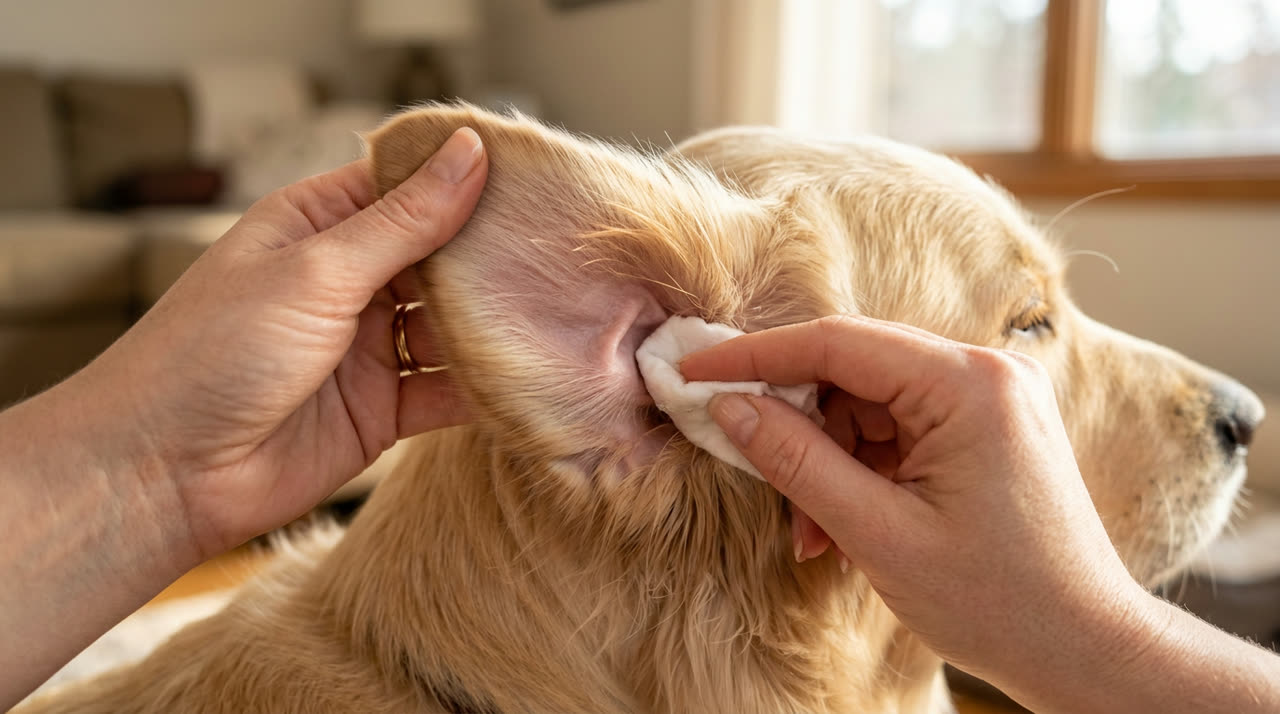
Regular ear cleaning helps remove accumulated wax, environmental allergens, and surface debris before microbes can multiply. However, cleaning too aggressively or using improper tools can damage the sensitive ear structures. Establishing a quiet, rewarding routine ensures that your Golden Retriever remains calm and cooperative during ear cleaning sessions.
Before starting, gather all necessary supplies: a high-quality, veterinarian-approved canine ear cleaning solution, soft cotton balls or gauze pads, and plenty of high-value treats. Never use hydrogen peroxide, rubbing alcohol, vinegar, or cotton swabs (Q-tips). Cotton swabs risk pushing debris deeper down into the horizontal canal or puncturing the delicate eardrum if your dog flinches unexpectedly.
- Gently lift the ear flap vertically to expose and straighten the ear canal entry.
- Squeeze a generous amount of vet-approved liquid cleaner into the ear canal without touching the bottle tip to the ear.
- Gently massage the base of the ear for 20 to 30 seconds until you hear a soft squishing sound as liquid breaks up wax.
- Step back and let your Golden Retriever shake their head naturally, which helps dislodge deep debris.
- Wipe away loosened wax and excess liquid from the upper canal and outer ear flap using a clean cotton ball or gauze pad.
- Reward your dog with praise and a favorite treat to reinforce a positive experience.
Choosing Safe Cleaning Products and Avoiding Common Pitfalls
Selecting the correct product for routine maintenance is vital for maintaining your dog's delicate skin barrier. The best ear cleaners for Golden Retrievers contain mild cleansing agents combined with drying ingredients such as salicylic acid or lactic acid. These drying agents evaporate remaining water particles left behind after cleaning or swimming, significantly lowering the risk of bacterial overgrowth.
Avoid homemade remedies made from household items like vinegar, rubbing alcohol, or witch hazel. Alcohol severely dries out the delicate lining of the ear canal, causing burning and tissue irritation. Vinegar, if improperly diluted, can be extremely acidic and painful on inflamed tissue. Stick exclusively to formula specifically designed for canine ear pH levels and recommended by your veterinarian.
Post-Swim and Post-Bath Ear Maintenance
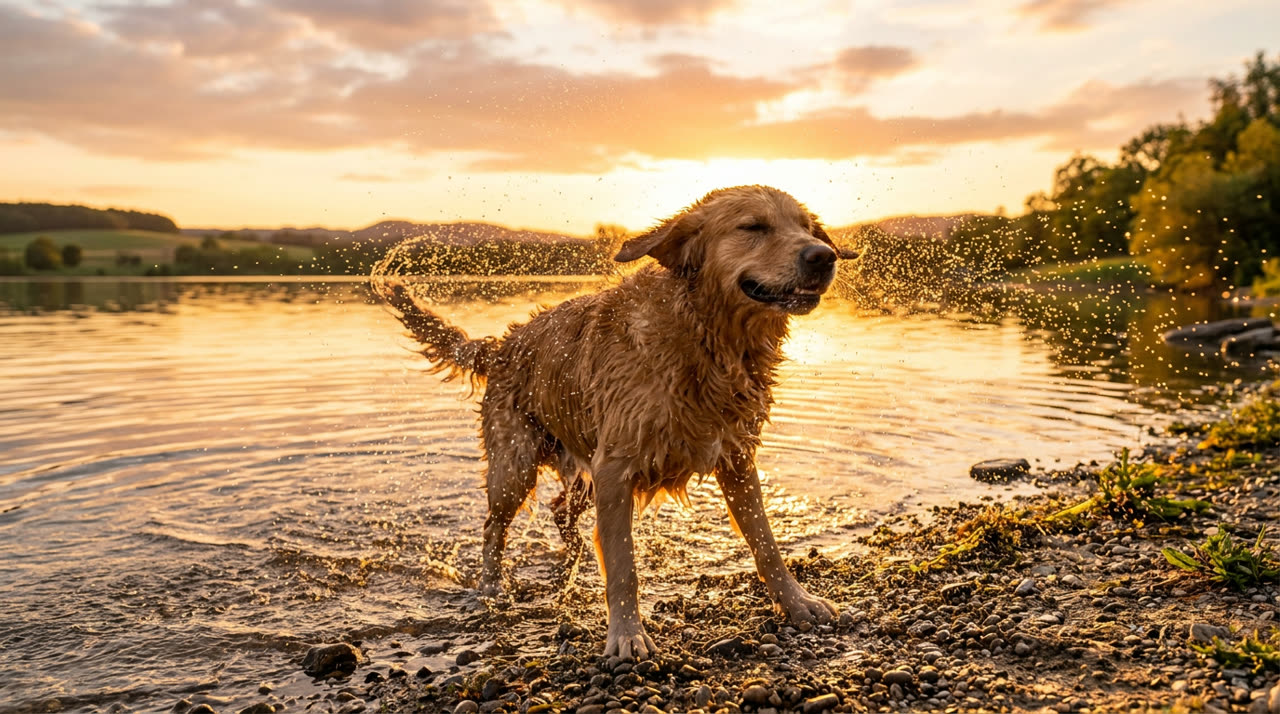
Because excess moisture is the single biggest catalyst for ear infections in water-loving dogs, post-water care should become a non-negotiable habit for every Golden Retriever owner. Whether your dog has spent the afternoon swimming in a lake or simply received a bath at home, thorough drying must immediately follow.
After water exposure, use a soft, dry microfiber towel to gently dry your dog's head, neck, and inner ear flaps. Pay close attention to the dense fur at the base of the ears, which retains dampness against the skin. For dogs that swim frequently during warmer months, applying a few drops of an ear-drying solution after water activities helps flush out lake water and dry the internal canal efficiently.
When to Consult Your Veterinarian
While routine maintenance and light cleaning are easily managed at home, active ear infections require professional veterinary evaluation and targeted medication. Flushing or cleaning a severely inflamed or infected ear without a professional diagnosis can cause intense pain and may worsen the underlying issue.
If your Golden Retriever shows signs of severe pain, heavy discharge, bleeding, balance loss, or involuntary eye movements, contact your veterinarian promptly. Your vet will use an otoscope to examine the inner ear canal, confirm that the eardrum is intact, and take a swab sample to identify whether the infection is bacterial, fungal, or caused by ear mites. Using over-the-counter cleaning solutions on an ear with a damaged or ruptured eardrum can lead to severe inner ear complications or permanent hearing loss.
Keeping your Golden Retriever's ears clean and dry takes consistent monitoring, but the investment in their comfort is well worth the effort. By incorporating routine ear checks into your weekly grooming habit, drying their ears thoroughly after every swim, and using gentle, approved cleaning products, you can effectively shield your companion from painful infections.
Your Golden Retriever depends on you to keep them feeling their best. Stay proactive with ear health, reward cooperation with plenty of affection and treats, and always partner with your veterinarian whenever signs of infection appear. With healthy ears, your energetic Golden can fully enjoy every outdoor splash, game of fetch, and family adventure.



0 Comments