
Golden Retrievers are famous for their joyous personalities, luscious golden coats, and eager-to-please nature. Yet, even the sweetest Golden can occasionally turn your lovely backyard into what looks like a cratered moonscape. If you have ever stepped outside only to discover freshly excavated dirt scattered across your manicured lawn, you are certainly not alone. Yard digging is a very common canine behavior, but when focused on your favorite garden beds, it quickly becomes a frustrating challenge for home owners.
Understanding why your Golden Retriever digs is the essential first step toward solving the problem. Rather than viewing digging as deliberate misbehavior or spite, it helps to recognize it as a symptom of an underlying need or physical drive. Golden Retrievers were originally bred as active hunting companions, meaning they possess high energy, keen senses, and a hardwired desire to explore their natural environment.
In this comprehensive guide, we will break down the root causes of digging behavior in Golden Retrievers, help you diagnose what drives your dog's yard excavation, and share practical, positive reinforcement techniques to protect your lawn while keeping your furry friend mentally and physically satisfied.
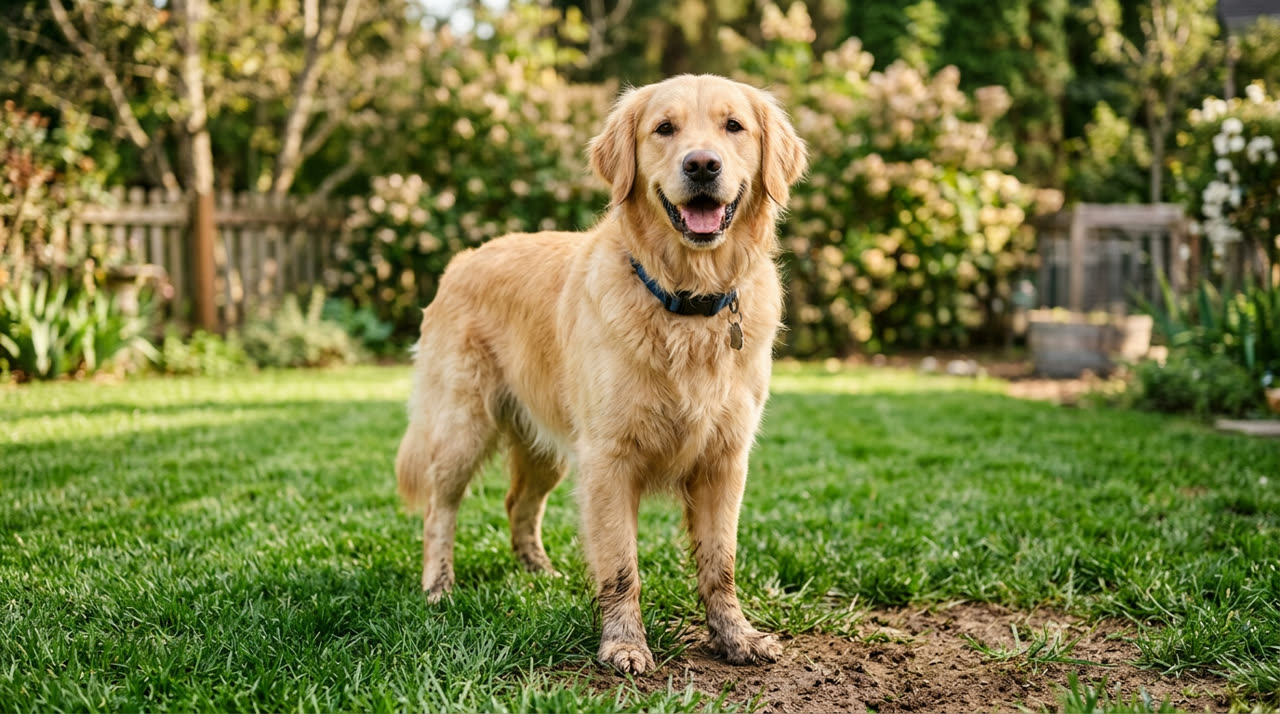
Understanding the Instinct: Why Golden Retrievers Dig
To effectively manage unwanted digging, it helps to appreciate that scratching and pawing at the earth is deeply rooted in canine biology. Long before dogs lived in comfortable suburban homes with orthopedic beds, wild canids relied on digging for basic survival. Excavating soil served several practical purposes, from creating underground dens for warmth and safety to storing extra food and searching for small prey.
For Golden Retrievers specifically, working instincts play a significant role. Bred to retrieve waterfowl and upland game across varied terrain, these dogs excel at moving through dense brush, marshland, and soft soil. Their powerful forelegs and sturdy paws make digging physically easy and naturally satisfying. When a Golden catches interesting scents trapped beneath topsoil, their natural curiosity compels them to investigate by scratching away the earth.
Furthermore, temperature regulation is a powerful driver. On warm summer afternoons, the top layer of grass absorbs solar heat, while cooler, moist soil lies just a few inches beneath. Golden Retrievers often scoop out shallow trenches to lie in the cool dirt to lower their body temperature. Recognizing these natural motivations helps reframe digging from a bad habit into a natural impulse that simply needs healthy redirection.
Common Triggers Behind Yard Destruction
While ancestral instinct creates the baseline urge, daily triggers determine when and where your Golden chooses to dig. Boredom is undoubtedly the single biggest catalyst for yard destruction. Golden Retrievers are intelligent, working-class dogs. When left alone in a yard for long periods without engaging activities, they invent their own jobs—and digging happens to be extremely self-rewarding.
Unspent physical energy closely ties into boredom. If a young or energetic Golden Retriever does not receive adequate daily physical outlets, that pent-up stamina must find an escape. High-energy pawing and dirt flinging provide immediate physical exertion and sensory input that relieves restlessness.
Stress, separation distress, and environmental anxiety can also manifest as frantic digging, particularly around fence perimeters, gates, or back doors. In these scenarios, digging is an attempt to escape or alleviate internal tension. Additionally, scent trail hunting—such as detecting moles, gophers, or grubs under the turf—can trigger laser-focused digging in garden soil.
- Boredom resulting from a lack of daily mental challenges and enrichment
- Excess physical energy that needs a vigorous physical outlet
- Thermal discomfort, such as seeking cool earth on hot afternoons
- Prey drive triggered by underground pests or intriguing scents
- Separation anxiety leading to escape attempts near boundary fences
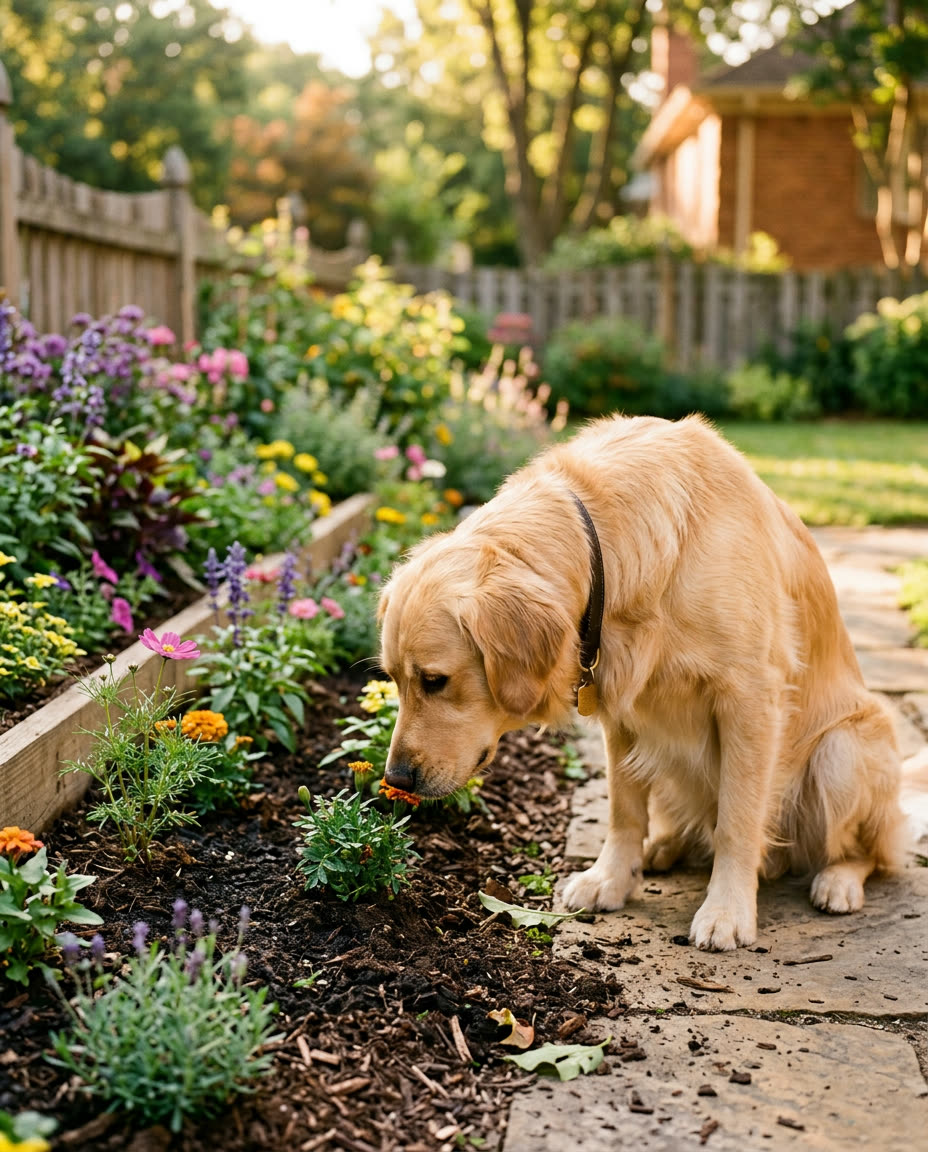
Diagnosing Your Dog's Specific Digging Style
Effective intervention requires observing where and when your Golden Retriever digs. Different locations and patterns point to different underlying causes, allowing you to tailor your solution precisely.
Digging concentrated along fence lines or near exit gates usually indicates escape motivation, territorial boundary patrolling, or frustration at being separated from you. If the holes are shallow, bowl-shaped, and located in shaded areas under trees or porch overhangs, your dog is almost certainly seeking thermal relief from the heat.
On the other hand, targeted, narrow holes near flower beds, tree roots, or rock borders suggest your Golden smells subterranean critters or organic matter. If you catch your dog digging frantically right after you step inside the house, it may be an attention-seeking behavior. Even negative attention, such as shouting, can inadvertently reinforce the habit if your dog is craving interaction.
Practical Strategies to Prevent Yard Digging
Stopping unwanted digging requires a combination of fulfilling your dog's daily needs and modifying the outdoor environment. Start by increasing both physical exercise and mental stimulation. A tired Golden Retriever with a satisfied mind is far less likely to remodel your landscape. Incorporate daily structured walks, interactive fetch games, and brain games like lick mats or puzzle feeders into their routine.
Environmental management is equally important. If your dog digs to stay cool, ensure they have continuous access to shaded areas, fresh water, and elevated cooling beds outdoors. During hot summer months, a shallow plastic kiddie pool filled with clean water offers a safe, splashy alternative for heat relief.
To protect high-value garden beds or newly planted areas, consider installing temporary decorative wire fencing or laying down chicken wire just below a layer of mulch. Supervise your Golden during outdoor free time so you can interrupt early digging attempts with a cheerful call and redirect them toward an acceptable activity, like retrieving a favorite toy.
- Increase daily physical exercise through active fetching, running, or swimming
- Provide mental stimulation using puzzle toys, snuffle mats, and trick training
- Offer shaded cooling areas and fresh drinking water during warm weather
- Use gentle physical barriers, like decorative garden fencing, around flower beds
- Supervise yard time to catch digging early and redirect attention to toys
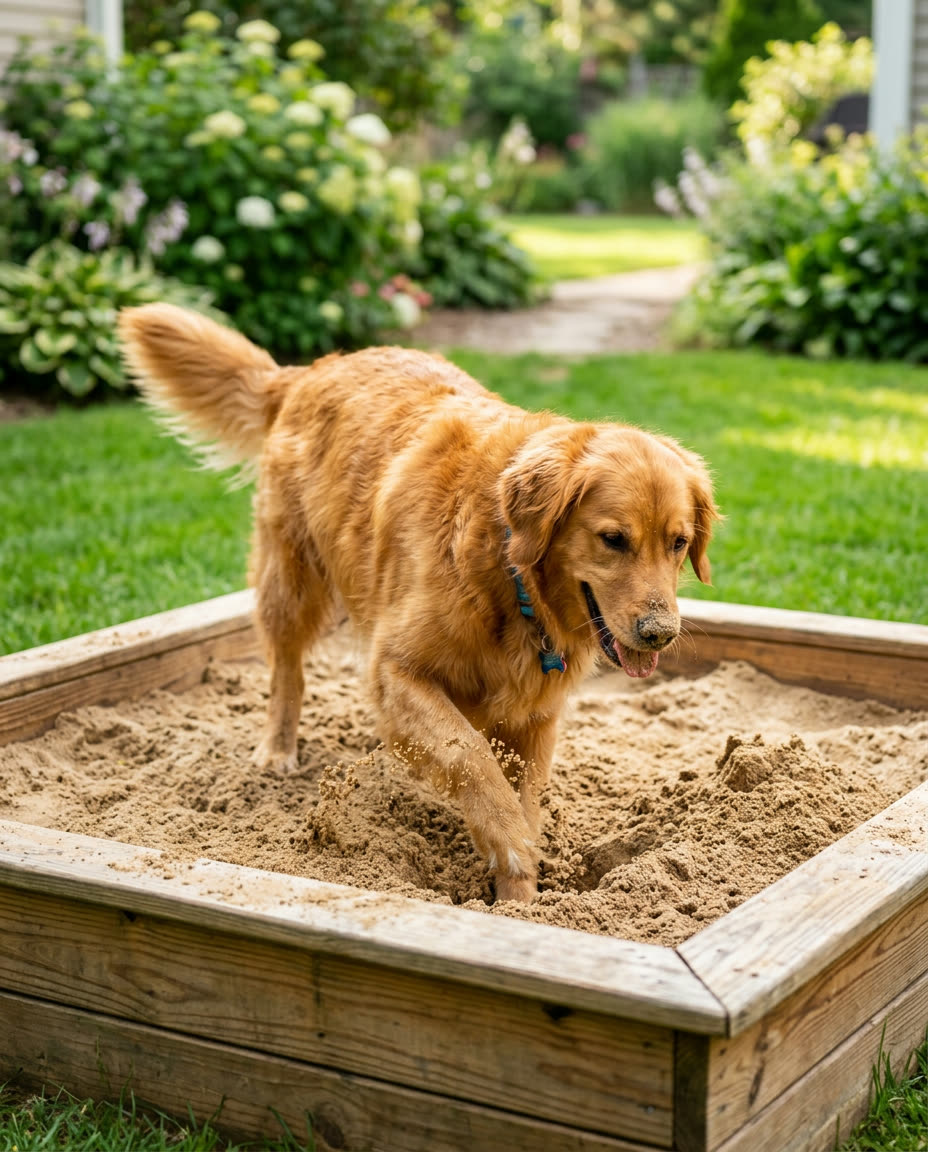
The Sandbox Solution: Creating a Designated Dig Zone
Because digging is a deeply satisfying natural behavior, attempting to eliminate it completely can be difficult and stressful for your dog. A highly effective compromise is creating a dedicated, acceptable digging area where digging is actively encouraged.
To build a dig zone, set up a wooden sandbox or frame a section of your yard filled with clean play sand or loose topsoil. Make this area enticing by hiding durable chew toys, rubber balls, or high-value treats just under the surface while your dog watches.
When your Golden begins digging in their designated sandbox, offer enthusiastic praise and rewards. If they attempt to dig elsewhere on the lawn, calmly interrupt them, lead them directly to their personal sandbox, and encourage them to search for hidden treasures there instead. With consistent redirection, your dog learns that digging is permitted, but only in their designated zone.
Mistakes to Avoid When Managing Digging
When addressing digging, certain common mistakes can hinder your progress or damage your bond with your dog. Never punish your Golden Retriever after the fact. Dogs connect discipline strictly to what they are doing at the precise moment it happens. Discovering a hole and scolding your dog hours later only creates confusion and anxiety, without preventing future digging.
Avoid using harsh chemical repellents, spicy sprays, or dangerous deterrents in your garden soil. These can cause discomfort to your dog's sensitive snout and eyes or lead to health complications if ingested. Similarly, old-school advice like burying dog feces in holes often backfires, causing dogs to simply dig new holes right next to the old ones.
If your Golden's digging appears compulsive, constant, or accompanied by severe vocalization and panting, consult your veterinarian or a certified professional force-free dog trainer. Compulsive behaviors or severe separation distress require tailored behavioral modification plans rather than basic environmental fixes.
Digging is a completely natural behavior for Golden Retrievers, reflecting their working heritage, high intelligence, and natural curiosity. While hole-filled lawns can certainly test your patience, addressing the issue with positive guidance, adequate physical outlets, and clear boundaries yields the best long-term results.
By providing daily mental enrichment, ample physical exercise, cool rest spots, and perhaps a fun dedicated sandbox, you can protect your garden landscape while allowing your beloved Golden Retriever to express their natural instincts in a safe, healthy way.


0 Comments