
Fast bowling remains cricket’s ultimate physical spectacle. Watching a bowler sprint from thirty yards away and hurl a five-ounce leather ball at 90 miles per hour stirs an instinctual thrill that no other moment in the sport can replicate. Yet, beneath the dynamic speed lies one of the most mechanically violent movements in all of modern team sports. The human spine was simply not designed to flex, twist, and absorb immense impact forces simultaneously while running at full sprint.
For over a century, fast bowlers were treated like draft horses—expected to bowl endless overs in burning heat until their bodies inevitably broke down. Today, however, a quiet revolution is taking place off the pitch. Powered by biomechanics, real-time telemetry, and sophisticated workload management models, sports science has fundamentally altered how cricket nurtures, protects, and prolongs the careers of its express pacers.
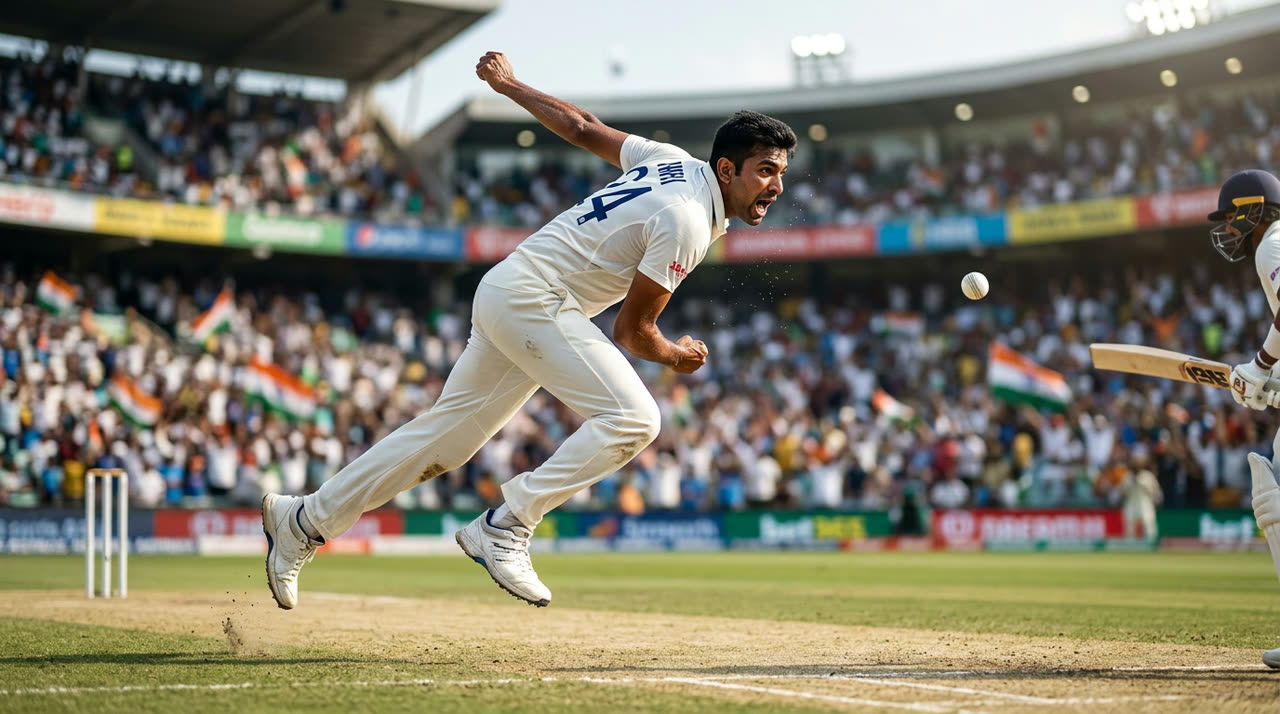
The Violent Biomechanics of the Fast Bowling Action
To understand why fast bowlers break down, one must first appreciate the physical forces generated during a single delivery stride. As the bowler plants their front foot at the crease, the sudden deceleration places forces through the front leg equal to roughly eight to nine times their total body weight. This immense energy is transferred upward through the kinetic chain, passing through the ankle, knee, hip, and lumbar spine.
At the exact moment of ball release, the bowler’s back undergoes extreme hyperextension combined with lateral side-bending and rapid torso rotation. This unnatural multi-directional torque puts extraordinary strain on the lower back, particularly the delicate bony bridges of the vertebrae known as the pars interarticularis.
When this action is repeated thirty, forty, or fifty times a day over the course of a multi-day Test match, the cumulative stress creates micro-tears in muscle tissue and stress reactions in bone. Without precise mechanical efficiency and sufficient rest, these minor stress reactions inevitably deteriorate into structural fractures.
- Ground reaction forces during front-foot impact reach up to 9 times body weight.
- Extensive lumbar extension combined with lateral rotation creates severe spinal shear stress.
- High-velocity deceleration demands extreme eccentric contraction from hamstrings and quadriceps.
The Lumbar Stress Fracture Epidemic
Historically, young fast bowlers hitting their physical peak between the ages of 19 and 23 were vulnerable to severe back injuries. The sudden transition from junior cricket to the intense demands of the senior international game frequently resulted in debilitating lumbar stress fractures.
In previous eras, the medical response to a back injury was simple: complete bed rest followed by an immediate return to full bowling loads once the pain subsided. Unsurprisingly, bowlers entered a chronic cycle of injury, rehabilitation, and re-injury, often cutting promising careers short before reaching their prime.
Modern sports medicine now recognizes that bone adapts to stress through remodeling, but this process requires calculated cycles of loading and recovery. Throwing an unconditioned or fatigued bowler into long spells without building adequate structural tolerance is a direct recipe for catastrophic bone breakdown.
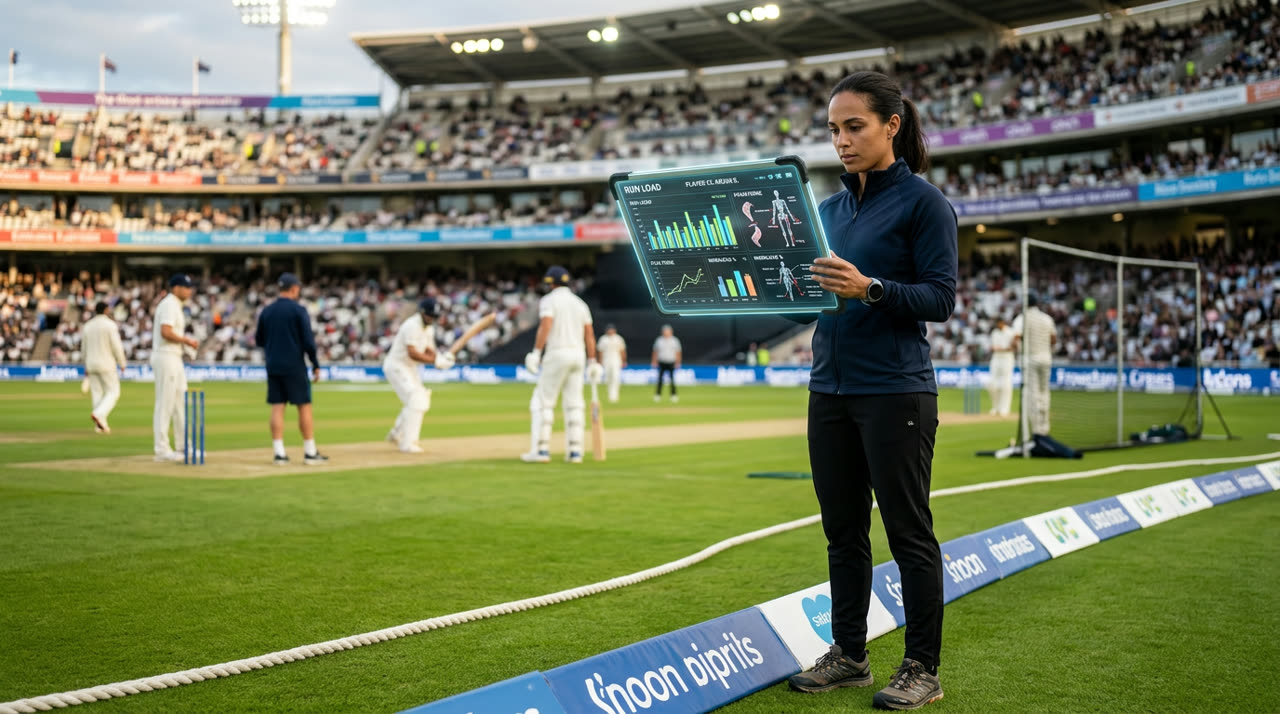
Telemetry, GPS, and the Acute-to-Chronic Workload Ratio
The most transformative tool in the modern fast bowler's arsenal is not a technical drill, but a small GPS pod tucked into a specialized harness between their shoulder blades. These micro-sensors measure distance covered, acceleration, deceleration, peak velocity, and specific player load metrics during every training session and match.
Sports scientists use this data to calculate a bowler's Acute-to-Chronic Workload Ratio (ACWR). The acute workload measures the force and volume of bowling performed over a single week, while the chronic workload represents the average weekly volume over the preceding four weeks. Maintaining a balanced ratio between these two figures is crucial for injury prevention.
If a bowler’s acute workload spikes significantly higher than their chronic workload—creating a ratio above 1.5—their injury risk multiplies dramatically. Conversely, if the workload drops too low, the bowler loses physical conditioning and becomes vulnerable when high intensity returns. Sports science aims to keep pacers in the optimal 'sweet spot' between 0.8 and 1.3, building structural resilience without causing fatigue-induced breakdown.
The Strategic Art of Rotation and Multi-Format Management
The explosion of year-round franchise T20 leagues alongside international Test and ODI schedules has made workload management a operational necessity rather than a tactical luxury. Elite pacers are now expected to shift rapidly between bowling four maximum-effort overs in T20s and grinding out twenty-five overs a day in red-ball cricket.
While white-ball cricket requires fewer total overs, the physical strain per delivery is often higher due to bowlers continuously attempting variations, slower-ball cutoffs, and explosive yorkers. Test cricket, by contrast, demands sustained endurance and repeatable mechanics over prolonged spells.
National boards and franchise teams now collaborate on dynamic rotation policies. Top-tier fast bowlers are intentionally rested during lower-priority series or rotated out of matches when telemetry data signals muscular fatigue, elevated heart-rate spikes, or mechanical degradation. Once viewed by fans as a lack of competitive fire, rest and rotation are now accepted as vital strategies to protect high-value athletic assets.

Biomechanical Refinement and Targeted Conditioning
Modern fast bowling coaches work hand-in-hand with biomechanists using high-speed multi-angle camera arrays to analyze a bowler's action in millimetric detail. Small flaws—such as a front foot planting too far across the body or an overly counter-rotated shoulder—are identified and corrected early before they cause physical damage.
Rather than forcing every bowler into a rigid, textbook technique, modern conditioning programs build strength around an individual’s natural bowling style. Strength coaches focus on building robust kinetic support structures: powerful gluteal muscles to absorb impact, deep core stabilizers to support the lower spine, and strong upper-back muscles to control shoulder rotation.
By enhancing muscular endurance around key joint complexes, bowlers can maintain accurate mechanics late into a long day of play, preventing technique breakdown when physical exhaustion sets in.
- High-speed video capture identifies biomechanical inefficiencies that cause joint stress.
- Targeted core and glute strength training absorbs ground forces during the stride.
- Asymmetry correction restores balance between the dominant and non-dominant sides of the body.
The Future: AI, Predictive Analytics, and Smart Wearables
The next phase of fast bowling preservation relies on real-time predictive technology. Emerging innovations include smart footwear with built-in pressure sensors that measure foot-strike impact forces in real time, alerting medical staff when a bowler's landing mechanics begin to falter due to hidden fatigue.
Artificial intelligence platforms are now trained on thousands of player-hours, combining heart rate variability, sleep quality scores, muscle oxygenation levels, and GPS tracking data to predict injury risk before an athlete even feels physical discomfort.
Instead of waiting for a bowler to report soreness, sports scientists can proactively pull a player from a match or alter their training load based on algorithmic warnings. This shift from reactive treatment to proactive prevention represents the complete maturation of cricket science.
Fast bowling will always demand immense physical courage, relentless drive, and supreme athleticism. Sports science does not eliminate the physical hardship of hurling a ball at extreme speeds; rather, it ensures that cricket’s most valuable pacers can perform at elite levels for over a decade rather than burning out in their mid-twenties.
As the modern cricket calendar grows ever more congested, workload management, telemetry, and biomechanical conditioning stand as the ultimate safeguards of the sport. By respecting human physiology alongside athletic excellence, cricket has ensured that express pace remains its most electrifying element for generations to come.





0 Comments