
Cricket is uniquely structured among global sports. Unlike fast-paced games governed by a continuous ticking clock, cricket unfolds across extended hours—or even days—punctuated by discrete individual contests between bowler and batter. This distinct rhythm creates a psychological landscape where fortunes can transform abruptly. A team dominating for hours can suddenly find itself in crisis after ten minutes of frenzy. This phenomenon is commonly called momentum, an invisible yet overwhelming force that shapes outcomes at every level of the sport.
While commentators frequently speak of momentum as if it were a mystical power, sports psychologists and elite coaches view it through a far more analytical lens. Momentum in cricket is the tangible result of psychological pressure, tactical execution, and emotional energy converging in real time. Deciphering how momentum builds, accelerates, and shatters offers deep insight into why world-class athletes perform under immense stress and how victory is carved out in tight contests.

What Is Cricket Momentum? The Psychological and Tactical Reality
At its core, momentum in cricket represents a sharp shift in perceived control. When a team holds momentum, their players experience a state of heightened clarity and confidence. Batters see the ball earlier, fielders react a split second faster, and bowlers locate their seam and swing with natural flow. Conversely, the team losing momentum experiences cognitive overload. Hesitation creeps into decision-making, fielders anticipate mistakes rather than opportunities, and captains struggle to stem the flow of runs.
This energy shift is not merely psychological; it has concrete physical and tactical consequences. When momentum swings, execution improves because stress levels decrease for the dominant side. The team riding the wave plays with proactive freedom, while the opponent drops into a defensive, reactive posture. Because cricket offers ample time between deliveries and overs, players have time to dwell on mistakes, which often amplifies negative momentum if left unmanaged.
Catalysts of the Shift: What Triggers a Match Turnaround?
Momentum rarely changes without a distinct catalyst. While spectators often notice big hits or dramatic bowling spells, the actual turning points can be remarkably subtle. A stunning piece of athletic fielding—such as a direct-hit run-out from the boundary or a diving catch at short leg—can instantly re-energize a flat fielding side and inject doubt into a cruising batting lineup.
Similarly, tactical risk-taking often serves as a primary ignition source for momentum swings. A counter-attacking knock by a lower-order batter breaks the rhythm of opposing bowlers who were previously operating in a comfortable groove. Understanding these catalysts helps coaches prepare their athletes to recognize and capture crucial game moments.
- An unexpected wicket against the run of play: Removing a set batter who seemed unshakeable instantly resets field placements and bowler confidence.
- A maidens-and-wickets sequence: Consecutive tight overs build dot-ball pressure that forces batters into high-risk shots.
- Brilliant athletic fielding: Out-of-nowhere run-outs or spectacular catches lift the entire team's emotional baseline.
- Aggressive counter-attacking batting: Hitting boundary balls early in an over disrupts a bowler's planned line and length.
The Captain’s Chess Board: Tactical Tools to Control Tempo
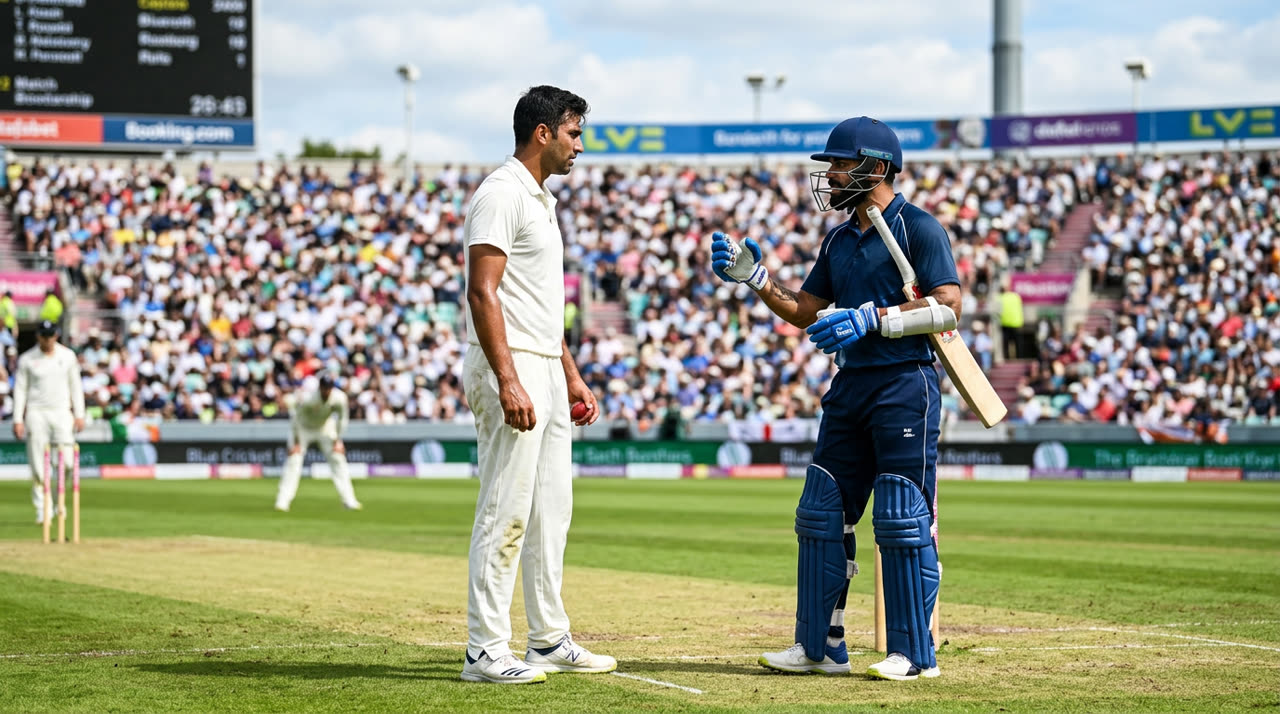
Elite cricket captains act as emotional and tactical dampers on the field. When momentum is surging against their team, a skilled leader does not simply hope for luck to intervene; they actively deploy tactical friction to slow down the opponent’s rhythm. Cricket offers a unique array of built-in micro-breaks that clever captains exploit to disrupt an opposition's flow.
Calling for extra gloves, re-adjusting the field after every single delivery, or changing the bowling end are classic methods used to break an opposing batter's concentration. Conversely, when a team has the upper hand, captains accelerate the over-rate. Fast bowlers return quickly to their mark, spinners bowl rapid overs, and the fielding side maintains intense vocal energy to keep the pressure mounting before the opposition can regroup.
The Amplification Effect: Crowds, Noise, and Environment
The environment surrounding the pitch plays a massive role in magnifying momentum. A roar from a packed stadium after a boundary or a close leg-before-wicket appeal creates a visceral surge of adrenaline. For host nations, supportive crowd noise validates aggressive play, making players feel invincible during positive phases.
For visiting teams, this environmental pressure can be suffocating. Conversely, total silence from a home crowd when a visiting batter hits a majestic boundary can be just as impactful, effectively dampening the host team’s emotional wave. Furthermore, pitch conditions and ball wear interact dynamically with momentum. A ball starting to reverse swing or a pitch offering sudden uneven bounce provides physical justification for psychological dominance.

Building Psychological Armor: How Modern Squads Reset Under Fire
Modern professional cricket programs invest heavily in sports psychology to teach players how to neutralize negative momentum. Instead of allowing bad overs to snowball into ruined sessions, elite players utilize personalized reset routines. These can include physical cues—like unstrapping gloves, focusing on deep breathing exercises, or picking a specific spot on the stadium roof—to ground themselves before the next ball is bowled.
Teams also prepare situational mental models during practice. By simulating high-pressure scenarios—such as needing 40 runs off 20 balls with two wickets remaining—players build familiar mental pathways. When those exact high-stakes scenarios occur in actual matches, the team views them not as an overwhelming crisis, but as an executed drill, effectively neutralizing the panic that typically feeds opposition momentum.
Momentum in cricket remains one of the most compelling aspects of elite sports competition. It is the invisible current that transforms routine matches into legendary clashes, turning clear favorites into struggling contenders in a matter of minutes.
While skill, athletic power, and technical execution are non-negotiable prerequisites for success, the ability to control, sustain, and survive momentum swings is what separates good teams from great ones. By understanding the mechanics of momentum, fans gain a deeper appreciation for the complex mental chess match unfolding on the green grass below.



0 Comments